From Lynch to Lexington, civil rights champion changed communities wherever he went
Apr 29, 2026 | 5:04 pm ET
Description
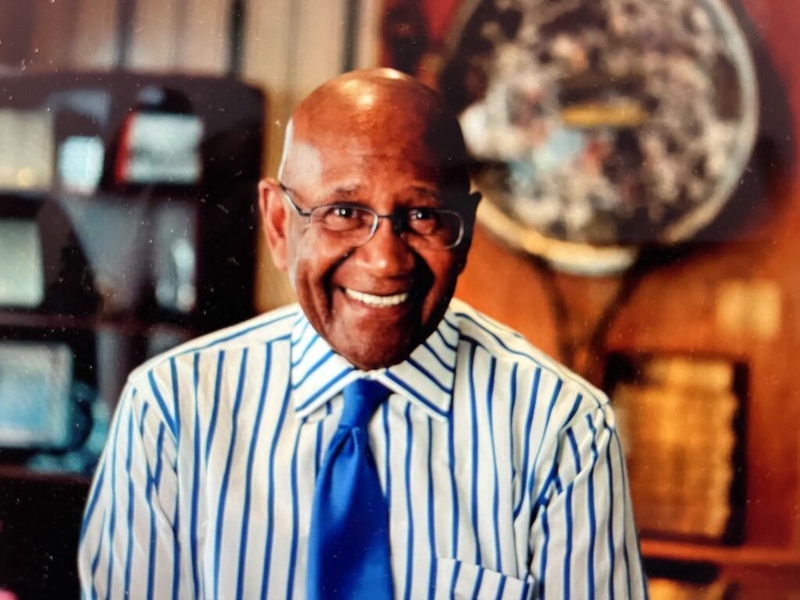
P.G. Peeples died on April 28, 2026 at the age of 80. (Photo by John Buckman)
Porter Geneal Peeples Sr. was born in Lynch, Kentucky, the fifth child of a coal miner and his wife, on October 26, 1945. He died Tuesday afternoon, April 29 at the age of 80, while at work at the Urban League of Lexington, an organization he led for more than 50 years.
Peeples “always knew he would work until his last breath,” the Urban League said in a statement. He died Tuesday afternoon after a day of “meetings on affordable housing, which will be one of his lasting legacies.”
Peeples’ life and career were intertwined with many of the major forces shaping Kentucky during his lifetime: coal, desegregation, the fight to give every Kentucky child a quality education and to extend access to higher education, the push to create affordable housing, even University of Kentucky men’s basketball.
“Kentucky has lost a true leader with the passing of P.G. Peeples, a civil rights champion who … transformed communities across Kentucky and beyond,” Gov. Andy Beshear wrote on Wednesday. “He championed civil rights, education, affordable housing and more and made an undeniable difference in the lives of many. This is a great loss, but his impact will be felt for generations.”
As one of the longest-serving Urban League heads, he worked with national leaders like the late Whitney Young Jr., himself a Kentucky native, and Marc Morial, the former mayor of New Orleans who now heads the national organization. Peeples knew a slew of governors, mayors and other officials and was given championship rings by three UK Men’s coaches, Rick Pitino, Tubby Smith and John Calipari. But he cautioned the many young people he mentored about the dangers of self-importance. “Be humble, respectful, take very seriously the responsibility (of your work) but don’t take yourself too seriously,” he said in a recent oral history interview. “It’s a problem for young people sometimes,” he added.
Peeples grew up in Harlan County and attended the Lynch Public Colored School until his senior year in high school when desegregation was achieved by moving his class to the white high school, where there were no black teachers, coaches or administrators. He was able to become the first in his family to go to college because the University of Kentucky had opened South East Community College in nearby Cumberland only a few years before he graduated from high school.
Later that college became part of the statewide system known as the Kentucky Community and Technical College System. Peeples was appointed to the board of regents of KCTCS by Gov. Ernie Fletcher in 2006 and became the first Black chairman of the board in 2011.
As a junior, he moved on to UK in Lexington where he was one of only about 50 black undergraduates. Peeples recalled hearing racial slurs hurled from cars driving by on campus, having dogs sicced on him as he walked by fraternity houses, and leaving basketball games early because he and his friends felt threatened when Kentucky’s all-white teams were losing to integrated squads. “Believe me, it was tough,” he said.
As UK sports integrated, Peeples helped coaches make connections with the black community in Lexington and helped mentor some of the young black players who came to town. He was friends with Leonard Hamilton, the first black assistant basketball coach at UK and took a special interest in one of Hamilton’s recruits, Kenny Walker.
Walker, who was a standout at UK and later played in the pros, recalled Peeples in a recent interview. “I can’t think of many people in life that I’ve met, and I’ve met a lot of people, that’s got as good a heart as P. G. Peeples,” he said.
Tubby Smith first met Peeples when he came to town in 1989 as an assistant to Rick Pitino. When he returned as UK’s first black head coach Peeples had a reception for Smith at the Urban League.
“It was one of the best things that happened to me, they embraced me,” Smith recalled Wednesday. He was “one of the people that I really confided in, he gave me guidance and support,” Smith said. He often took recruits by the office to meet Peeples and invited him to talk with the team, he said.
Peeples graduated from UK after the winter semester of 1968 with degrees in special and elementary education. But by the time he finished college he had already become involved as a volunteer with the newly-formed Urban League of Lexington. After one semester teaching he was offered the position of education director and began at the Urban League, where he worked until his death. He became acting executive director in 1970 and was named executive director in 1972.
Under Peeples Urban League programs focused in the early years on workforce training with initiatives like teaching single mothers from Lexington’s housing projects secretarial skills, and outfitting a mobile van with cash registers to prepare people for cashier jobs at local supermarkets.
Working with younger people, the League began a mentoring program that connected black professionals with high school students and another that placed young men in jobs at local law firms as “runners,” offering them both employment and exposure to legal careers. As the years progressed the programs expanded, from back-to-school rallies giving children backpacks and essential supplies to college preparedness programs that engaged kids and their caregivers with guidance both on how to aim for and pay for higher education.
Peeples was a leader in a decades-long fight for educational equity in the Fayette County Public Schools. He pushed to establish an Equity Council to monitor and report on the district’s efforts and chaired the Council for eight years. “We began a long friendship when we served together on the very first FCPS Equity Council,” Lexington Mayor Linda Gorton said Wednesday. “It was an honor to work with him to improve education, job training, housing and more.” Peeples, she said, “fought to make Lexington a better place for over five decades …. I loved him dearly! Our city is a better place because of his strong leadership.”
In 1981 the Urban League began working on affordable housing, combining the rehab of neglected properties with construction job training for former inmates. The houses were then sold to first-time home buyers and the money reinvested in future projects. In the decades that ensued the housing efforts became a signature for the agency, ultimately involving over $28 million in investment and branching out to include roomy, affordable rental properties. Today the Urban League has more than 100 rentals and is part of a partnership developing 12.5 acres that was formerly home to Transylvania’s baseball complex into affordable housing.
Housing was a passion for Peeples. “It just did something for the unity of the family,” he said, to own a home. One of his fondest memories was of attending the closing for one of the first four homes developed on Chestnut Street. The new owner was a woman who worked as a domestic but had saved the $1,500 downpayment. Peeples knew her employer who said he’d offered to come to the closing with her. “She said she wanted to do that by herself. I guess to her that was something, an aspiration or desire that she had and she wanted to see it through by herself. It’s that kind of story that is motivating.”
Peeples worked with the Kentucky Housing Corporation to secure low-interest loans for buyers and was appointed to its board in the 1980s and served as vice chair. He was serving on the board at the time of his death.
Peeples always spoke fondly of his childhood in Lynch, the community there and the strict teachers who demanded excellence in the segregated schools. As a child he hunted and fished with his father and remained a lifelong sportsman. He was active in the Eastern Kentucky Social Club, a group of African Americans with roots in the coal towns of Eastern Kentucky. He attended the annual conferences Labor Day weekends in different cities around the country and the spring homecomings in Eastern Kentucky.
For several years Peeples and several of his classmates from the Lynch Colored School have gotten together for monthly Zoom meetings. Among them is Dr. William H. Turner, who attended school with Peeples from first grade through their graduation from UK. Turner, author of “The Harlan Renaissance: Stories of Black Life in Appalachian Coal Towns,” said Peeples skillfully navigated the complexities of appealing to power brokers on behalf of marginalized communities.
Peeples, he said, knew how to “Be assertive without being aggressive … Demonstrate the strength to fight while remaining approachable; Be inspiring without becoming a distraction; Speak the truth while being mindful of the sensibilities of his listeners … Tailor his assertions to gain approval and financial support from conservative stakeholders.”
Peeples is survived by his wife, Wilma, a son, daughter and two grandchildren.
The family requests memorial donations in lieu of flowers be made to the Urban League of Lexington. A celebration of life is planned for a later date.
Frankfort