The lowest turnout, but the biggest jumps: What new election data show about voter participation in Gateway Cities
Nov 25, 2026 | 10:30 am ET
Description
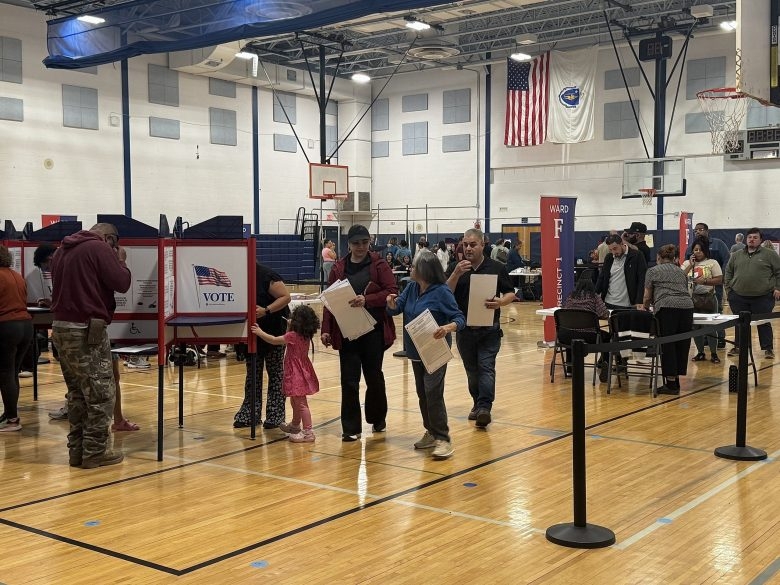
Lawrence voters cast their ballots at South Lawrence East Elementary School on Nov. 3, 2026.
IT’S NO SECRET that Massachusetts’s Gateway Cities — some of its most disadvantaged and diverse urban communities — have some of the state’s lowest voter turnout. In 2022, nine of the 10 municipalities with the lowest rates in Massachusetts were Gateway Cities.
None of that changed during this year’s midterm election, according to finalized election results released by Secretary of State Bill Galvin’s office on Friday, but most of the state’s 26 Gateway Cities still have reason to celebrate.
Voter turnout was up in nearly all the state’s cities and towns this year — 343 out of the Bay State’s 351 — compared to 2022. More than 2.7 million residents cast ballots this year compared to roughly 2.5 million in 2022, nearly matching the state’s record-high midterm election turnout set in 2018. Statewide, turnout was up by 9.5 percent.
Those gains were, for the most part, even more striking in the Gateway Cities. Of these 26 communities, 21 saw a jump higher than the statewide increase of 9.5 percent.
Nowhere was this truer than in the state’s lowest-turnout city.
Lawrence had the lowest voter turnout in the state in both 2022 and 2026, but it also had the state’s third-highest growth in turnout this year, at 29 percent — more than three times as high as the state’s. (Lawrence’s rate of growth was surpassed only by a pair of towns so small that any changes in their turnout are likely outliers.)
That majority-Latino city wasn’t the only one to see a significant jump in voter participation. Springfield, Chelsea, and Brockton — also majority-minority cities with some of the state’s lowest turnout — all saw jumps of 26 percent or more.
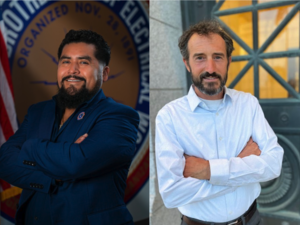
“The low voter turnout has not necessarily been evidence that residents don’t care about the city,” said Julio Mejia, executive director of the Merrimack Valley Project. “For too long, cities like Lawrence have been characterized in that way, but I think the recent gains have told a completely different story.”
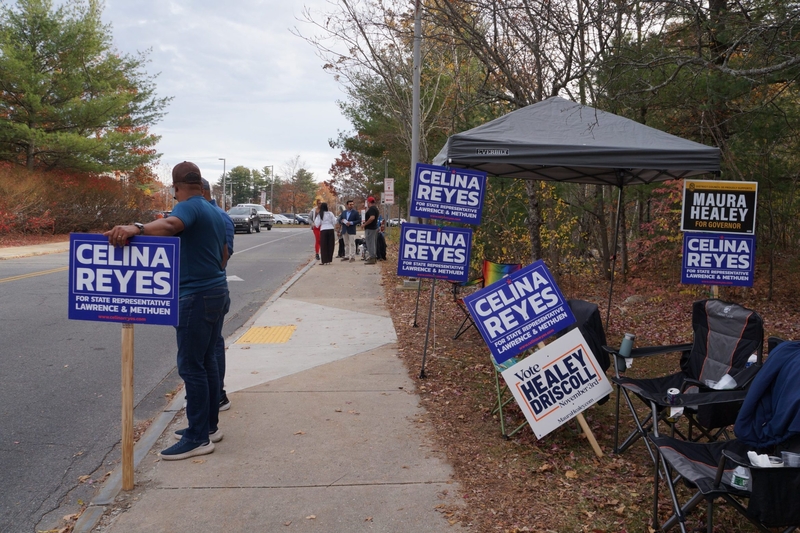
The number of registered Latino voters in cities like Springfield and Lawrence continues to climb as the state’s Latino adult citizen population nearly tripled from 2000 to 2024.
Shanique Rodriguez, executive director of the nonprofit Massachusetts Voter Table, which works to improve civic participation in Boston and the Gateway Cities, ascribed the rise in voter engagement to a list of factors, including a record-tying number of ballot questions, dissatisfaction with President Trump’s second term, and year-round civic engagement work by local organizations.
She hopes the dramatic jump in voter participation will carry over into the 2027 municipal elections, which are notorious for low turnout.
“It’s great to see people turn out in an election that everyone was publicizing, but if we can see that same sort of 26 to 29 percent increase in a municipal election, then I’ll feel like we are really progressing,” Rodriguez said.
Gateway Cities — home to 38 percent of the state’s foreign-born residents — were particularly impacted by the Trump administration’s Immigration and Customs Enforcement (ICE) raids last year.
Both Chelsea and Lawrence are majority-Latino cities, while nearly half of Springfield’s residents identify as Hispanic or Latino. Brockton is New England’s first majority-Black city and home to a large Haitian-born population.
“Folks are dissatisfied with the national climate, particularly around affordable housing issues, immigration, education, and health care,” Mejia said. “It has motivated people to participate, and folks are clearly paying attention in communities where we have dense immigrant populations.”
Chelsea, which became a sanctuary city in 2007, quickly found itself a target of the Trump administration’s immigration crackdown. Around 46 percent of the city’s population was born outside of the United States — the largest share of foreign-born residents of any community in Massachusetts.
Hundreds of students and families have since left Chelsea’s public school district; some left the country. Some residents said ICE agents showed up at their doors demanding to be let in. Others were stopped in their cars and arrested in the street. Chelsea’s usually bustling downtown emptied out as agents became a regular presence.
Latino voters were sharply critical. Pew Research Center polling from September and October found that 62 percent of Latino voters nationwide believed the Trump administration had gone too far in its deportation efforts.
Hispanic voters represented 6 percent of all voters in Massachusetts this year, and half of those didn’t vote in the last midterm election, according to The New York Times’s voter trends estimates. That’s a larger share than any other racial or ethnic minority. And compared to 2024, when Latino and Hispanic voters across the US swung right in support of Trump, these voters shifted more than 20 points to the left in the state’s House and Senate races.
“Latino voters are not a monolith. Their participation and political choices reflect a range of concerns, not simply about immigration or party affiliation,” Rodriguez said.
Rodriguez said concerns over economic security and federal immigration surges “may have heightened the sense of urgency” during this year’s midterm election, and federal policy changes might have felt “particularly personal” in cities like Lawrence.
But the unique political moment doesn’t mean turnout will stay this high, she warned.
“A healthy democracy cannot be dependent on political crisis to get people to vote and participate. Democracy must be a regular part of community life,” Rodriguez said. “It’s not just about November 2026, it’s about whether we can sustain these gains in 2027 and beyond.”
In Lawrence, roughly 3,000 more residents cast their ballots on November 3 than did in 2022. More than 50,000 people were registered to vote in the city this year — the highest that number has been in any election in well over a decade.
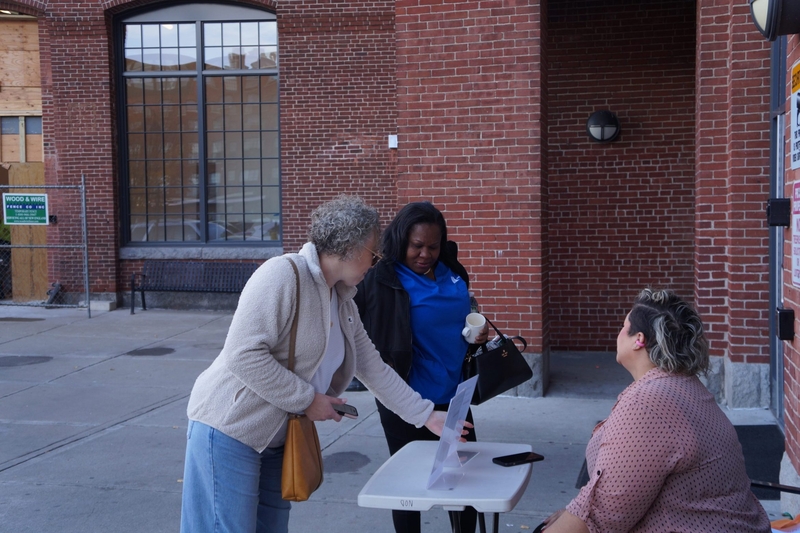
Mejia said organizations like his have continuously done registration outreach in Gateway Cities like Lawrence and Lowell, which may have helped expand the electorate.
The Merrimack Valley Project’s nonpartisan civic engagement work includes door-to-door outreach, phone calls, and resource-building. The organization has also held candidate forums and public assemblies in an effort to engage residents in local elections.
Yet Lawrence’s overall voter turnout this year was the lowest in the state at just 26.5 percent — up from 22.8 percent turnout in 2022.
This year’s surge in voter participation is a good sign, Mejia said, but cities like Lawrence still aren’t back up to their high 2018 turnout levels, meaning there’s still room to improve.
“Lawrence started with a very low baseline, which explains the potential for significant percentage growth. However, we shouldn’t minimize that progress,” Rodriguez said. “The important question is: What barriers remain?”
Lawrence voters face a litany of barriers when it comes to voting, including language, transportation and economic challenges. Nearly 83 percent of residents are Hispanic or Latino, nearly half are foreign-born, and 78 percent speak a language other than English at home.
But other factors may also have been at play in Lawrence — including numerous political scandals and campaigns that have energized residents and voters alike.
In August, Mayor Brian DePeña’s was arrested after federal prosecutors charged him with fraud and money laundering. State Rep. Francisco Paulino, a Democrat representing Lawrence and Methuen, was also arrested and charged that month with eight counts of wire fraud and three counts of money laundering. Both men have pleaded not guilty.
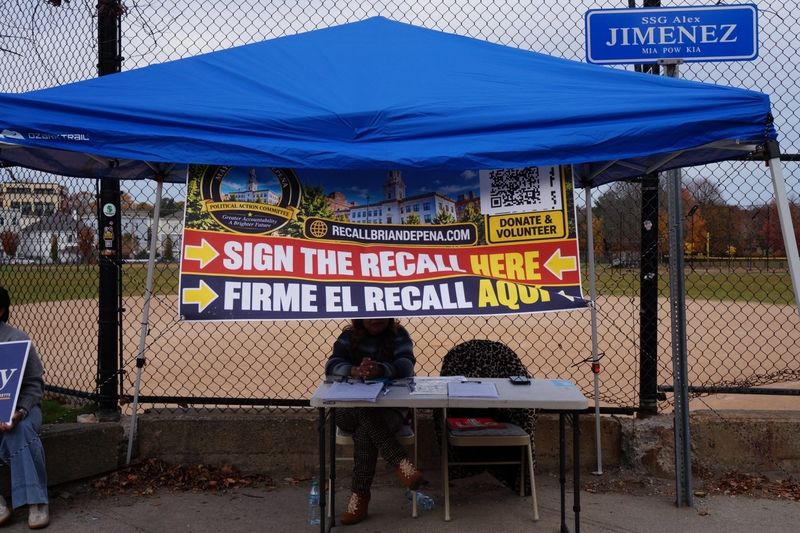
Paulino’s seat was up for grabs this year, and the race garnered some local attention after a write-in candidate from Lawrence launched his bid. And even though the mayor wasn’t on the November 3 ballot, organizers in Lawrence spent Election Day gathering signatures to recall DePeña.
“Lawrence residents are actively organizing around other issues, and I think the city experienced a unique local political moment,” Rodriguez said. “The recall signature campaign created additional opportunity for political conversations, grassroots organizing, and engagement from community.”
This year’s ballot also featured an unusually high number of widely debated ballot questions, including unsuccessful efforts to repeal recreational marijuana and upend the state’s primary election system. Those questions likely boosted turnout and engagement as they have in the past, Rodriguez said.
“Midterms are sort of that in-between place where a voter in Massachusetts isn’t super engaged because we don’t have super competitive seats on the congressional level,” she said. “These elections really boil down to what’s on the ballot for the state.”
She pointed to a successful 2022 ballot measure creating a new 4 percent tax on incomes over $1 million — commonly known as the millionaires tax — that generated widespread debate and voter engagement.
Other factors could be contributing to higher turnout in the Gateway Cities and statewide, Rodriguez said, including the state’s permanent adoption of mail-in and expanded early voting options in 2022. But this year’s early voting data showed that Gateway City residents did not use the option nearly as heavily as the rest of the state; many preferred voting on Election Day.
“In Gateway Cities particularly, we have folks that are working multiple jobs, hourly shifts, and they have schedules that don’t necessarily accommodate a trip to City Hall during the early voting hours,” Mejia said. “Early voting is convenient in theory, but still difficult in practice.”
Rodriguez and Mejia agreed that the significant jump in turnout this year doesn’t mean local organizations and civic groups can let off the gas. Voter turnout is just one piece of the civic engagement puzzle, they said.
“We cannot disappear from communities after election day and expect residents to remain connected,” Rodriguez said.
Boston