Louisiana’s US Senate race enters homestretch tighter than expected
Oct 29, 2026 | 5:00 am ET
Description
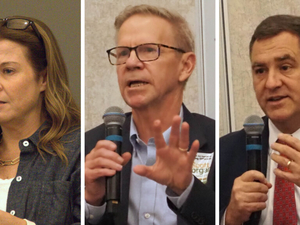
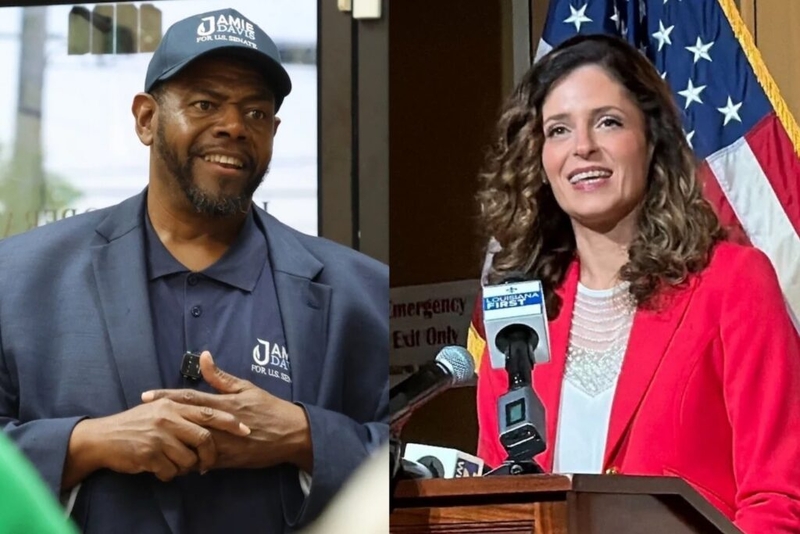
Polling shows Democrat Jamie Davis, left, drawing closer to U.S. Rep. Julia Letlow, R-Baton Rouge in Louisiana's U.S. Senate race, but political analysts still expect Letlow to prevail in the Nov. 3 election. (Louisiana Illuminator photos)
The U.S. Senate race in Louisiana is entering its final days much more competitive than many expected it to be even a few weeks ago.
Political experts from both parties said U.S. Rep. Julia Letlow, R-Baton Rouge, is still the strong favorite to win the election Nov. 3. But Democratic candidate Jamie Davis, a farmer and one-time Tensas Parish police juror, could finish closely behind her.
In Louisiana, where former Gov. John Bel Edwards is the only Democrat to win statewide office in the past decade, a competitive U.S. Senate race seemed improbable as recently as September. But a combination of strong Black turnout during early voting, better-than-expected fundraising for Davis and a national sentiment that favors Democrats has changed that outlook.
“Is it a stretch? Yeah, but less of a stretch than it was a week ago in people’s minds,” James Carville, the famous Cajun political consultant who helped Bill Clinton win the 1992 presidential election, said about Davis’ improving chances.
Letlow is still confident she will win the race.
“Louisianans know she has secured hundred of millions for our communities, fought for parents’ right in education, and worked to lower costs for working families, a record that stands in stark contrast to her opponent who would be nothing more than a rubber stamp for Chuck Schumer and the radical left,” Letlow’s campaign said in a written statement Wednesday.
Black voter turnout
Participation in Louisiana’s seven-day early voting period for the Nov. 3 election was the highest ever for a nonpresidential campaign cycle, according to John Couvillon, a Louisiana pollster who has traditionally worked with Republican candidates.
Almost 521,000 ballots were cast in-person and from absentee voters from Oct. 20-27, according to the Secretary of State’s office. By comparison, the early voting period for the 2022 U.S. Senate race, which Republican John Kennedy won over Democrats Gary Chambers and Luike Mixon, saw 363,000 ballots cast.
A Hart Research poll conducted in mid-September surveyed 500 likely voters and showed Letlow with a 48% to 44% advantage over Davis. It’s a margin that Couvillon and other observers feel will narrow based on early voting data.
What’s likely encouraging for Davis and other Democrats is turnout among Black voters, who make up the backbone of the state party, was higher than usual at 34% for the November election’s early voting period.
In the two decades since Louisiana started early in-person voting, Black people have only made up a larger share of early voters in four previous election cycles, Couvillon said on social media. Those included presidential elections where either Barack Obama or Donald Trump was on the ticket and the May party primary elections for this year’s U.S. Senate race, he said.
Black voters have been more motivated to show up at the polls since April, when the U.S. Supreme Court issued a ruling that weakened protections for minority voting districts, U.S. Rep. Cleo Fields, D-Baton Rouge, said.
The decision led Gov. Jeff Landry and Republican state lawmakers to rework Louisiana’s congressional map to eliminate one of its two majority-Black U.S. House districts. The seat that was lost is held by Fields, who is Black and decided not to run again in 6th District now that it favors the GOP under its new lines.
“People feel that their votes are being disenfranchised, and people are motivated to go to the polls and vote,” Fields said.
Increased early turnout among Black voters doesn’t always translate into election victories for Democrats. For example, Trump still carried Louisiana with 58% of the state vote in 2020.
That’s why several political consultants continue to believe Letlow will win the race over Davis, despite encouraging early voting results for Democrats.
“I don’t think it is enough to win, but I do think he is going to do really much better than people thought,” said Roy Fletcher, a GOP political adviser who helped Gov. Mike Foster get elected in 1995.
Better-than-expected fundraising for Democrats
Letlow’s campaign has collected far more money than Davis’, with $7 million compared to his $5 million. That’s to be expected, political consultants said, given that Letlow is a member of Congress, and Davis has only held elected office at the local level.
Letlow had to spend more money to even make it to the general election. Unlike Davis, she had to beat an incumbent, U.S. Sen. Bill Cassidy of Baton Rouge, in a primary election to earn her party’s nomination. Cassidy had far more resources than any of the Democrats Davis faced in his primary.
The Davis campaign also had more cash available heading into the final two weeks of the election than Letlow did. As of Oct. 15, the Democrat had $1.2 million in his campaign account compared to Letlow’s $443,000, according to their most recent federal campaign finance reports.
The Letlow campaign made a $900,000 television advertising purchase right before the Oct. 15 Federal Election Commission reporting deadline, which could have depleted the campaign’s reserves.
Davis’ campaign touted its cash advantage as a sign he is gaining momentum.
“The fact that Jamie Davis … enters the final week of this race with more cash on hand than his opponent tells you everything you need to know about the enthusiasm on the ground in Louisiana,” Lawrence Mason, Davis’ communications director, said in a written statement Wednesday.
Is Mississippi more competitive?
Even as local political consultants characterize Louisiana’s Senate race as competitive, national party and political donors haven’t paid much attention to it.
Most major political groups spending money on competitive congressional races around the country have not spent money in Louisiana yet.
“I beat my head against the wall trying to get some national money in here. It’s almost impossible,” Carville said.
That could change over the coming days, however. Trump announced Wednesday night he intends to hold a “telerally,” typically an online event that wouldn’t require him to travel, for Letlow Monday, the eve of the election.
Still, Louisiana Democratic Party Chairman Randal Gaines said he has also made several requests to his national party and donors for help in Louisiana, without success so far.
“They do have the perspective that the Deep South is the future of the party,” Gaines said. “If they want that to be reality, they have to put some money in here.”
The situation is different next door in Mississippi, where Republican incumbent Cindy Hyde-Smith faces Democrat Scott Colom, a district attorney, in its U.S. Senate race. National Republicans and Democrats are both putting money into advertising for that race ahead of the Nov. 3 election.
Several high profile politicians — including Trump, former President Bill Clinton and former Vice President Kamala Harris — have made in-person appearances in Mississippi to rally voters.
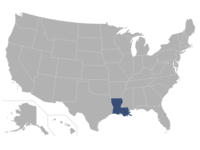
Baton Rouge, LA