Louisiana bans debit card surcharges, but card companies still get their cut
Aug 11, 2026 | 5:00 am ET
Description
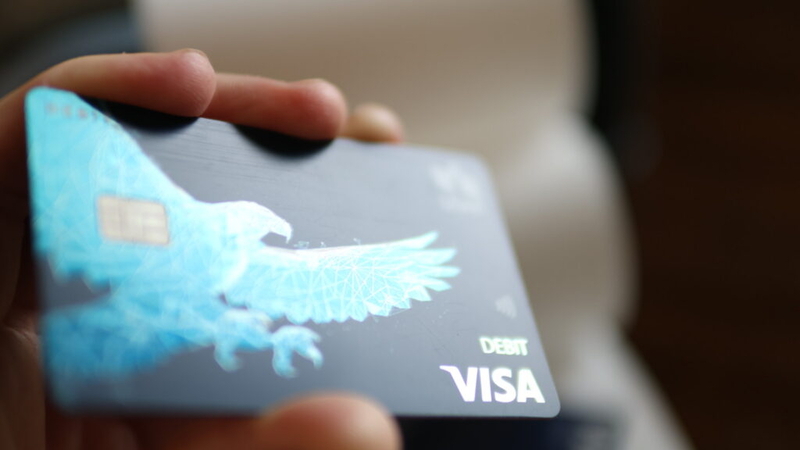
A new Louisiana state law prohibits merchants from adding surcharges to debit card transactions, but critics say the prohibition actually benefits banks and credit card companies. (Photo: Wes Muller/Louisiana Illuminator)
A new state law prohibits merchants from adding surcharges to debit card transactions, but critics say the ban actually benefits the banks and credit card companies that created the fees.
Supporters of Act 751, which took effect Aug. 1, have promoted the measure as a consumer protection law that bars merchants from imposing surcharges specifically on debit card transactions. It does not apply to credit cards, for which retailers can still add a fee to each customer purchase.
The legislation stops retail businesses from passing the costs of debit transactions onto customers in the form of surcharges, but it doesn’t actually get rid of the debit card fees themselves, which originate from banks and payment networks such as Visa and Mastercard.
Instead, the law cracks down specifically on retail businesses, which often have little control over the fees, while leaving untouched the financial institutions charging the businesses every time a card is swiped.
The state law reinforces a federal prohibition already on the books. The prohibition came from an amendment to the 2010 Dodd-Frank Wall Street Reform and Consumer Protection Act. The amendment, authored by U.S. Sen. Richard Durbin, D-Illinois, also capped fees charged to businesses who accept debit card payments. There was no limit on the fees prior to 2010.
Currently, for every swipe of a debit card, a business pays both a flat fee and a percentage of the total transaction. Different cards have different fees, but the Durbin amendment capped them at 21 cents per swipe and 0.05% of the final transaction amount, respectively.
It’s that variable fee, the percentage, that irks small business owners the most.
“The banking surcharges are out of control,” state Rep. Nicholas Muscarello, R-Hammond, said in a phone interview. “First of all, you can’t figure it out. It’s so complicated and convoluted that you don’t know what you’re paying for and not paying for.”
Muscarello is a lawyer and co-owner of a convenience store that he said pays about $2,500 per month in debit and credit card fees.
Mastercard spokesman Will O’Connor would not say why Mastercard charges both the flat and percentage fees and whether they have any connection to the actual cost of processing a transaction — an issue that remains under debate in Congress.
In an effort to cover the fees, some business owners, such as New Orleans restaurateur Conrad Churra, have opted to raise their prices across-the-board rather than try to parse through the complex web of financial regulations to figure out when they’re allowed to place a card surcharge on a bill.
“So it’s another cost that we’ve just factored into our overall price, which is why it cost $18 for a sandwich right now,” Churra said.
The other option would be to pay for a third-party point-of-sale system that differentiates between the many rules and fees of the various cards and banks that exist. Raising prices is often a simpler solution for some business owners.
The financial institutions benefit from both options, but since the card fees are a percentage of the final bill, Churra’s method of raising his menu prices also generates more fees for the card companies. Additionally, the card company’s cut stays hidden from the customer because there’s no surcharge listed on the receipt.
Knowing he’s helping the banks make more money is a thought that’s always on his mind, but Churra said it would be impractical to do it the other way.
“I really can’t tell you how often I think about that,” he said. “It’s tens of thousands of dollars a year.”
The costs of swiping a card have become particularly noticeable at grocery and convenience stores that sell cheap foods with narrow profit margins.
Muscarello said card fees have made it costly for stores to sell certain snack items. A small bag of potato chips, for example, has a 10-cent profit margin, which is less than half the flat swipe fee. That’s why so many stores now require a minimum purchase amount of $5 or $10 to use a card, he said.
“The consumer should be aggravated as well,” Muscarello said. “Everybody should raise the red flag on this. They’re slowly taking money out of everybody’s pockets, and we need to put a stop to it.”
Raising prices isn’t always an option because particular brands can refuse to do business with a store that strays too far from their suggested retail prices. State Rep. Roy Daryl Adams, D-Jackson, who owns a grocery store, said beer distributors are particularly sensitive about this and often pressure him to lower his retail prices.
Adams said he pays about $3,000 per month in credit and debit card fees.
“It’s no money no more,” Adams said. “They done took the profit out of it.”
Sen. Beth Mizell, R-Franklinton, authored Act 751, which could generate cost and legal concerns for small and large businesses in Louisiana. Although debit card fees have been illegal under federal law since 2010, violations have gone largely unenforced by the government.
“This is already a federal law, and businesses in Louisiana have been ignoring it more and more as I hear from people,” Mizell said during Senate floor debate on her bill back in May.
Mizell has not returned multiple calls and voicemails requesting comment for this report.
Peter Robins-Brown, executive director of Louisiana Progress, said Mizell’s law could have the opposite of its intended effect of reducing costs for consumers.
“I applaud Sen. Mizell’s effort and intent, but my fear is that this ends up as yet another shell game being played on consumers and small businesses by giant corporations, in this case banks, that is continually making everyday life more unaffordable,” Robins-Brown said. “So many of our cost-of-living problems stem from corporations gaming the system and thus all of us, who are their clients and consumers.”
The law creates ways for consumers and state officials to go after merchants that add surcharges to debit card purchases. Customers now have the right to file a lawsuit against a business for repeated violations,and the Louisiana attorney general has authority to enforce the new ban through civil penalties.
Attorney General Liz Murrill has not said whether she has any specific plans for enforcing the law.
The lack of government interest hasn’t stopped major credit card companies from mounting their own enforcement. Some have hired undercover shoppers to catch merchants in the act of imposing debit card surcharges, which can hurt a card company’s brand and make consumers more hesitant to pay with a card. News reports have covered Visa’s use of undercover shoppers to bust businesses.
Muscarello said Visa did it at his store, catching a mistake by one of his clerks and fining him $1,000 with no opportunity to contest the allegation.
“No warning or nothing,” he said. “We got a letter in the mail saying they just took it right from our account.”
Visa did not respond to multiple requests for comment.
Mastercard also enforces its own rules, though the company wouldn’t elaborate on its methods.
“Mastercard’s rules prohibit debit-card surcharging, and we monitor compliance through our network participants, including issuers and acquirers,” O’Connor said. “Consumers who believe they were improperly surcharged on a debit-card transaction should retain their receipt, contact the merchant for clarification and reimbursement, and notify their card issuer.”
Muscarello and Adams said they plan to work on legislation next year to address the underlying issues of card fees in a way that protects the consumers and businesses paying them.
Baton Rouge, LA