Longtime treasurer, career financial examiner vie to be SC’s chief banker amid federal investigation
Oct 28, 2026 | 11:50 am ET
Description
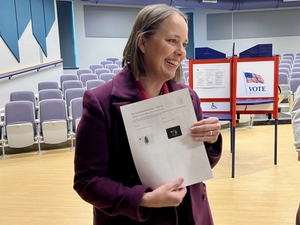
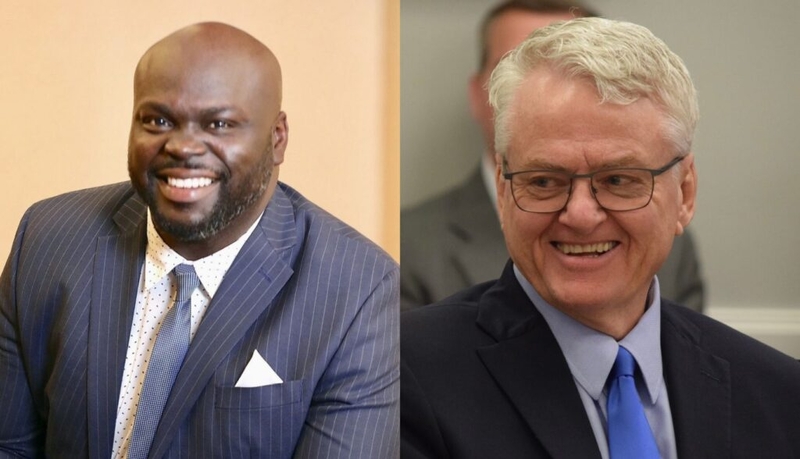
Democrat Vincent Coe, left, is taking on incumbent Treasurer Curtis Loftis in the race to be the South Carolina's top banker. (Photo by Jessica Holdman and courtesy of Coe campaign)
COLUMBIA — South Carolina voters are weighing their choices for state treasurer as the state remains under a federal securities investigation. The question is which candidate will best calm the waters and work to further prevent errors that led to the inquiry in the first place.
The choice lies between the 16-year incumbent — a businessman with no banking experience before taking office — or a career banker with no political pedigree.
What happened
The investigation stems from fallout over a series of multibillion-dollar accounting errors, which sat on the state’s ledger for nearly a decade.
Forensic accountants hired by the state have said the errors were a paperwork problem and involved almost no actual money. Still, the issue raised eyebrows at the U.S. Securities and Exchange Commission, which has been looking into the matter since at least 2024.
SC under federal investigation as auditors determine mystery $1.8B didn’t actually exist
Two of the state’s three top financial officials at the time, including longtime Comptroller General Richard Eckstrom, have resigned since the problems with the state’s books first came to light publicly in early 2023.
But one — Treasurer Curtis Loftis — has clung to office, despite efforts to oust him and an earlier statement that he would not seek re-election.
The accounting mistakes happened amid a decade-long changeover from the state’s legacy accounting system to a new bookkeeping program. During that process, electronic ledger entries made it appear the state had $1.8 billion sitting untouched in a fund with no record of its origins.
Loftis has maintained that the error did not occur within his office and none of the cash in the bank that the Treasurer’s Office manages was misspent or lost.
The error, Loftis told the SC Daily Gazette, was with the comptroller general’s records. Those records have since been corrected and that office has been the focus of the federal securities investigation.
But a Senate-led investigation into the matter and subsequent impeachment proceedings against Loftis were less about which office controlled the records and more that Loftis’ office knew and did not alert the General Assembly, instead leaving it to linger.
It was the bipartisan push to oust him, led by members of his own party, that ultimately led Loftis to change course and enter the race.
“There is important work that remains unfinished, and I believe my experience and leadership continue to be valuable to our state,” Loftis told the Daily Gazette.
SC treasurer avoids being ousted this year over $1.8B accounting error
His Democratic challenger, Vincent Coe, agrees the fault does not lie with Loftis alone but said the long-time treasurer did shirk his reporting responsibility. And when it comes to finances, perceptions matter.
“When you have things like this, you have to do a shift or change in leadership to get back on track,” Coe said. “Because if you don’t, you’re going to have a continuation and that breeds into mistrust.”
Candidates’ experience
Despite the issues that have dogged Loftis, Coe faces an uphill battle. He doesn’t have Loftis’ political following and he’s running as a Democrat in a state that has not elected a member of that party to statewide office in two decades.
Coe said he thinks the Treasurer’s Office should be nonpartisan. And he contends that what he lacks in political know-how, he makes up for in professional expertise.
He studied finance, risk management and insurance at the University of South Carolina before going to work as a bank examiner with the Federal Deposit Insurance Corporation, the U.S. agency that regulates the industry.
He took a break in his FDIC service to attend law school at Case Western Reserve University in Cleveland, where he studied constitutional law and financial institutions regulations.
He left the FDIC and moved back to his home state of South Carolina at the end of 2015, helping his mother start a rural health clinic.
The Florence native then worked as a consultant for financial giant PricewaterhouseCoopers for a couple years before taking a job with the Federal Reserve Bank in Atlanta.
He came back to South Carolina in 2020, amid the COVID-19 pandemic, and started his own bank consulting business — Balcony Advisor — and spent time at United Community Bank in Greenville, advising them on investments.
Loftis ran and grew his family’s pest control company and worked in real estate until running for treasurer in 2010.
He beat out former state Rep. Converse Chellis, R-Summerville, who was seeking his first public election to the office. The Legislature elected Chellis, a certified public account, to the role following Thomas Ravenel‘s resignation in July 2007 — just six months after being sworn in — amid a federal indictment on cocaine distribution. (He pleaded guilty to possession two months later and spent 10 months in prison.)
Loftis billed himself as a GOP outsider who would combat waste and corruption amid the state’s ranking politicians.
Voters elected and continued to re-elect him for four terms. Now he’s seeking a fifth.
Campaign promises
If elected, both Loftis and Coe vow open access to the state’s bank records and to work alongside the comptroller general.
“My priorities are straightforward: even greater transparency and accountability, protecting taxpayers’ money, preserving South Carolina’s excellent credit ratings, and enhancing programs that directly benefit our citizens,” Lotis said.
‘Mismanagement’ by SC treasurer could have added millions to voting machines’ cost, report finds
“South Carolina needs accurate financial reporting, greater transparency, and better cooperation among its financial agencies,” he added.
But some of the criticism lobbed at Loftis by senators is that he was behind on making reports and his ongoing rift with the state’s current top accountant, Brian Gaines. Gov. Henry McMaster appointed Gaines, his budget director, to replace Eckstrom in May 2023 when the legislative session ended without the Legislature filling the vacancy.
Most recently Gaines and Loftis sniped at each other over an $11 million records discrepancy related to the state’s Capital Reserve Fund, which is used to finance major infrastructure projects. Gaines accused Loftis of holding up bank statements and delaying issuance of the state’s annual report to Wall Street investors. That report has since been released.
“If I’m elected, I’ll make sure that the books are open every single month so that the taxpayers can see where the money is,” Coe told the Daily Gazette. “Just about any and all money that flows through South Carolina, in some way, shape, or form flows through the office, and so we have to have good management, good practices, so that people understand that their money is being managed well.”
Coe pointed to his Democratic colleague, Tiffany Boozer, who is running for comptroller general. Boozer has been working in the office as an internal auditor. Coe said he wants to make a similar hire within the Treasurer’s Office.
And he said achieving a clean audit should be the first step to satisfying federal investigators.
Other issues
More South Carolinians with disabilities qualify for a savings program providing a ‘Better Life’
Beyond the treasurer’s record-keeping duties, the office also runs the state’s unclaimed property program, meant to return money turned over to the state by companies that cannot locate the owner.
Loftis has touted returning more than $470 million since his election.
But the state still has $1 billion available to claim.
Coe said, if elected, he wants to send out checks automatically to get more of that back to South Carolinians.
Loftis has automated some of the office’s claims.
“However, not every claim can or should be automated,” he said. “As technology advances, we’ll continue expanding automation where it is accurate, secure, and affordable. Our goal is to return every dollar possible while protecting citizens and taxpayers.”
Coe also wants to see more of the state’s money invested with smaller community banks, so long as it aligns with state and federal law and continues to generate good returns.
Coe said 90 cents of every dollar that the Treasurer’s Office currently invests is in national banks.
Loftis said this earned $1.8 billion in investment income last year for the state and local governments.
But Coe said smaller banks, which he called “the lifeblood of communities,” would benefit from holding some of the state funds. The towns they serve would, too, because the banks would have more funds to lend out to local businesses.
Columbia