Local officials look to fill in gaps left by closure of birthing center in Cecil County
Sep 08, 2026 | 5:00 am ET
Description
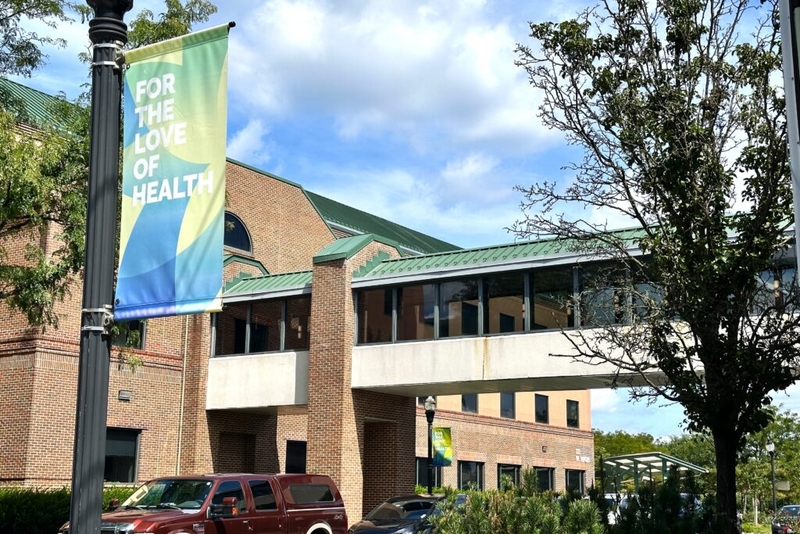
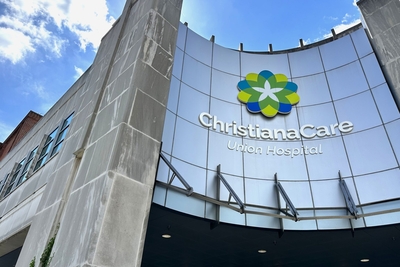
ChristianaCare Union Hospital in Elkton. (Photo by Danielle J. Brown/Maryland Matters)
Cecil County leaders and community members are scrambling to piece together solutions to the loss this summer of the county’s only birthing center, after the closure of the unit at ChristianaCare Union Hospital in Elkton.
Talks have included recruiting new hospital systems to build a new maternity unit to relying on local emergency medical services to transport pregnant patients to other hospitals. Until a solution is found, problem pregnancies could be affected by the increased time it takes to get to another available hospital for care, Cecil County Executive Adam Streight said.
“Depending on where you’re at in the county, on a good day it’s a 45-minute trip,” Streight said. “Most places in the county, you’re talking an hour or more.”
Celia Karp, assistant professor with the Johns Hopkins Bloomberg School of Public Health, said the closure of labor and delivery units leads to worse health outcomes and other logistical challenges, particularly for rural counties like Cecil.
“Closures of rural hospitals with obstetric care units have resulted in higher rates of preterm births,” Karp said. “Higher rates of births in hospitals that don’t have labor and delivery units, which aren’t equipped to deliver high-quality obstetric care … oftentimes result in added risk for pregnancies and deliveries by increasing the distance that people have to travel when they’re in labor.”
Rural hospital closures would mean long drives for pregnant women seeking care
The most recent March of Dimes report on maternity care deserts showed that the Eastern Shore had “moderate” access to maternal healthcare in 2024, when the Elkton labor and delivery unit was still open, whereas the rest of the state had “full” access. The data does not reflect how the closure of the Cecil County facility will affect other counties.
“It leaves a maternity care desert,” Karp said. “These closures are especially impactful for people who have pregnancy complications that might require immediate interventions.
“They disproportionately impact people who have less access to resources, as they’ll be forced to drive greater distances – oftentimes taking more time off of work, paying for childcare costs, just to reach the places where prenatal care is available,” she said.
Back in May, ChristianaCare executives announced that they would close the maternity ward this summer, leaving the county with little time to prepare for the absence of what can be life-saving obstetric care.
Streight said the county is in early talks with healthcare and hospital systems that may be interested in developing a new birthing center to Cecil County. But even if county officials find a good fit, construction of the unit could take 18 months to two years to complete, Streight said.
“You want to make sure that … you work with the right people and not just somebody who’s looking to take advantage of the situation or might have good intentions but doesn’t know what they’re doing,” he said.
He said that the closure is hurting the county and his biggest fear is that someone will die as a result of the loss in a birthing center.
“There’s this feeling of helplessness, not only for the community, but also because people elect us to solve problems, and this is something that we really didn’t have any control over,” he said, “but you’ve still got to find solutions.”
For the time being, ChristianaCare provides transportation services to patients who are inconvenienced by the labor and delivery unit closure. Those needing postpartum and prenatal care can receive those services in the outpatient facility in Elkton, while labor and delivery patient will be taken across the border to their Delaware obstetrics unit.
But Streight says that it’s a temporary Band-Aid to help with the transition. Once those services are no longer available, he said the local Department of Emergency Services has offered to step up to ensure patients can quickly receive urgent pregnancy care.
“They’ve been rockstars in saying, ‘We’re going to make this work,’ but it’s going to put a lot of strain and stress on an already strained system,” Streight said. “They haven’t been inundated with a lot of these calls, partly because folks are going to ChristianaCare [which] is providing transportation for where they need to be.”
But distance will remain a major hurdle until a solution is found, Streight said. Distance is a particular concern for certain high-risk pregnancies that require urgent attention. In those situations, every minute counts, according to Karp.
“People who have pregnancy complications like gestational diabetes or hypertension, they’ll also be most affected by the closure of a local hospital that has a labor and delivery unit because those types of health complications can escalate really quickly,” Karp said.
“Having to drive an extra 20 minutes or an extra hour to reach the next closest hospital with an obstetric care unit can really make a huge difference in whether moms and babies get the care they need at a really critical time in their lives,” she said.
Karp said some of the care could theoretically be picked up by nearby health facilities through additional training.
“The biggest piece is for patients that are going into labor and having life-threatening obstetric emergencies,” she said. “This type of training can help providers who are not normally part of an LND [labor and delivery] unit at least stabilize patients that are coming in with these life-threatening obstetric emergencies.”
Karp says that it’s important for patients and healthcare providers to create “safe childbirth plans.”
“Including things like arranging transportation and potentially planning to stay a night in advance of potential delivery to a hospital further away and that may be in a different state,” she said. “Making those plans with the people in their lives and with their healthcare providers to ensure that they have a plan and it incorporates this additional time element needed had this hospital not closed.
“That’s unfortunately the reality of when health systems close,” she said. “It puts the onus on patients to do more of the mental gymnastics and the financial and time planning to make sure they’re able to get the care they need. It is a really unfortunate situation.”
Medical systems, health agencies get $80 million from feds to boost rural health
Karp also suggests that local health departments affected by the closure communicate with their constituents to ensure they are informed of the closure and what their options may be in the meantime.
Meanwhile, Cecil Health Officer Dr. Karyl Rattay has called for a taskforce on perinatal care to find short-term solutions for the absence of the hospital. She recently announced that Cecil County will receive more than $4.65 million from Maryland Rural Health Transformation Program, some of which will support the taskforce and boost maternal care in the county.
Streight adds that he’s been talking with the Moore administration, Maryland’s congressional delegation and state lawmakers, and is willing to “work with anyone” to ensure Cecil County residents are safe.
“Our community service folks are working together to try to find the best use of that money in terms of what we can do, at least short-term solutions, to try to mitigate the damage that this has caused,” he said. “This isn’t a political issue. It’s a human issue.”
Annapolis, MD