Local issues provide motivation to vote in North Dakota primary
Jun 08, 2026 | 12:32 pm ET
Description
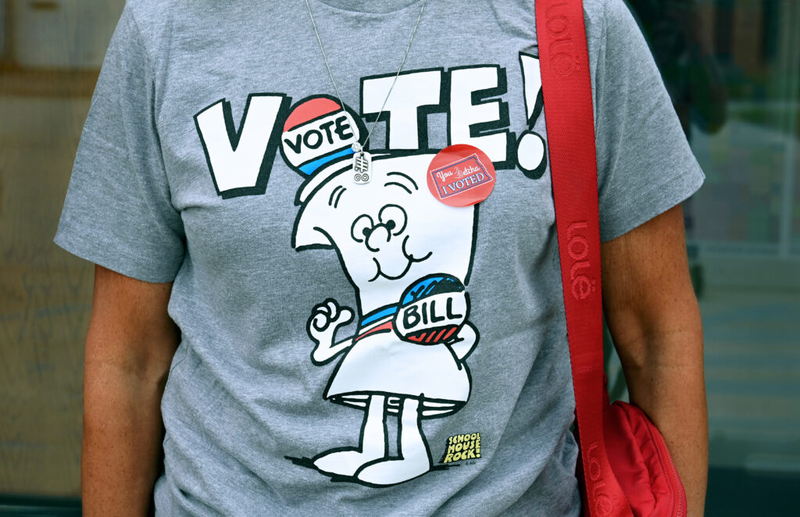
Karen Kost wore a T-shirt encouraging people to vote as she took part in early voting for the North Dakota primary election on June 3, 2026, at City Hall in Casselton, North Dakota. (Photo by Dan Koeck/For the North Dakota Monitor)
North Dakota voters take justifiable pride in voter participation that usually matches or tops the national average in general elections. But in primaries and elections without high-profile races – president, senator, governor – the turnout is always low. It usually falls on either side of 20% of eligible voters. That likely will be the results in Tuesday’s primary, which will determine which candidates will move on to the November general election ballot. Election officials wring their hands about the apparent apathy, but it is nothing new for North Dakota.
There will be exceptions to the usual poor turnout because of contested local elections. Fargo is the best example of that situation, where for the first time in about a decade the mayor’s seat is vacant and five contenders are waging vigorous campaigns. As reported by the Monitor’s Jacob Orledge, early voting in Fargo set the pace for the rest of the state. Voters in Cass County cast 7,000 of the nearly 30,000 statewide total as of June 4. Polling place officials said the pace of voting has been brisk for a June election.
Several cities and counties have tax increase questions on the ballot which often drive up voter turnout. For example, voters in about a dozen cities and counties are being asked to raise the local sales tax. One example is Minto in Walsh County, where the auditor said the proposal is primarily due to inflation, but in part influenced by the Legislature’s mandate that caps property tax increases at 3%.
Nonetheless, overall voter turnout in North Dakota’s June primary will not be impressive, no matter how often and how sincerely election officials urge voters to get to the polls. One of the principal causes of voter disinterest is the timing of the primary. It’s June, after all, and elections and voting are not among North Dakotans’ priorities. It’s the time of year when the education calendar changes, college and high school graduations take center stage, farmers are wrapping up spring field work, the youngest voters are beginning summer jobs, and families are happily embracing vacation mode.
Newsies and political junkies can’t help but be modestly interested in the primaries for state offices because of the ideological fracture in the North Dakota Republican Party. Traditional conservative office holders face challenges from a noisy, noisome splinter group that has taken over party leadership. Every one of those popular office holders skipped the party’s endorsing convention, further exposing the widening chasm between the factions. Endorsements went to marginal candidates who have no chance of winning on June 9, and will likely finish their going-nowhere campaigns with less than 10% of the vote.
On the Democratic side, candidates (most of them unchallenged) who win primary voting will move on to the November ballot where, with the exception of a handful of legislative contests, they will lose to Republicans.
Still, it’s fashionable to urge voters to get to the polls. While the voting won’t mean much for many statewide contests, local issues on the June 9 ballot are important because the outcomes will immediately affect the people in those cities and counties. That’s reason enough to vote.
Bismarck, ND