A little less Idaho in Oregon
Aug 27, 2026 | 1:00 pm ET
Description
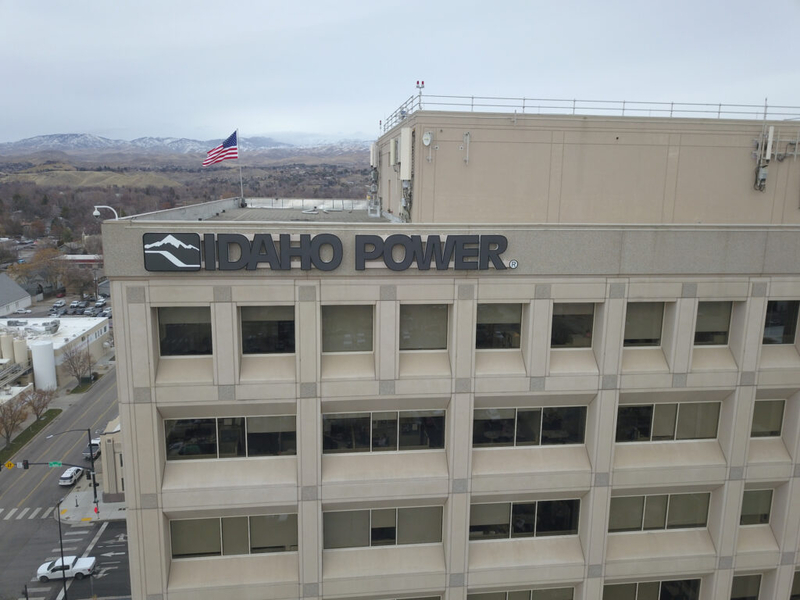
Idaho Power serves more than 660,000 customers across Idaho and Oregon. The Boise-based utility is looking to sell its Oregon service territory, which represents 4% of its customers, to the Oregon Trail Electric Cooperative for $154 million by early 2027. (Courtesy of Idaho Power)
Enthusiasts of the Greater Idaho proposal, which proposes to shift much of eastern Oregon to jurisdiction of the state of Idaho, may have just suffered a setback.
Its nature is economic, not political.
Greater Idaho is an idea supported by significant numbers of eastern Oregonians to break away from the state of Oregon — which as a whole is led by Democrats whose policies often differ from those of the Republicans in the east of the state — and unite with Idaho, which tends to vote more the way they do.
Voters in many eastern Oregon counties have backed ballot issues supporting the idea, though the most recent such election, in Wallowa County in May, went down as a crashing loss for the Greater Idaho movement.
In the most eastern Oregon counties many people have connections to Idaho, from commercial and shopping to media links and broadcasts to social connections. Ontario in particular gets heavy shopping and service traffic from Idaho, sometimes involving buying whatever isn’t legal in Idaho (or avoiding the Idaho sales tax).
But the largest direct and firm organizational link Oregon has had to Idaho in the last century has been an investor-owned electric utility company.
Idaho Power, based in Boise since its 1915 founding, serves a large chunk of southern Idaho and about a century ago expanded into a parts of four eastern Oregon counties: Baker, Harney, Malheur and Wallowa, with about 20,000 customers.
The land area is significant, but the population and commercial and industrial base is small, amounting to only about 3% to 4% of Idaho Power’s overall reach. By around the 1950s and especially before the era of massive interconnected power grids, there was technical logic to it because much of Idaho Power’s electric generation came from the Hells Canyon dams located on the Oregon-Idaho border.
This may be the Idaho-based organization with the tightest local connection in Oregon. There are of course other Idaho-based businesses with Oregon operations, but none that reach so directly into the lives of Oregon communities, and few reach people so directly where they live.
Where it operates in Oregon, it has to abide by Oregon laws and rules and operate under its regulators. That need to work within the different rules of different states does complicate life for Idaho Power, as it does many other utilities ranging across states.
On May 21, Idaho Power and the Oregon Trail Electric Cooperative at Baker City said it filed a request with the Oregon Public Utility Commission for IPCo to sell its Oregon territory to the Baker City cooperative, for $154 million. Assuming no regulatory hangups, and none seem apparent, the agreement will be final next year.
Operationally, as Idaho Power noted, “As Idaho Power’s geographic neighbor, their teams and resources are well-positioned to serve Oregonians with quick outage response times, a new service center and customer-facing office in Ontario, and a local board of representatives made up of member-owners from across their territory.”
Geographically, the agreement also seems to make sense. The existing Idaho Power territory ranges across four counties but includes only one regional center city (Ontario) and a few smaller communities (such as Vale, Jordan Valley and Nyssa).
Oregon Trail is larger, serving four counties (Baker. Union, Grant and Harney) and cities including La Grande, John Day and Burns.
OTEC said, “Oregon represents a small portion of Idaho Power’s business, and reducing the complexity of operating in two states allows Idaho Power to focus on Idaho’s growing population and energy demand. Because OTEC’s existing service territory is adjacent to Idaho Power’s Oregon operations, OTEC is well positioned to welcome these customers as member-owners and serve them efficiently. Increasing membership also gives OTEC additional economies of scale.”
So how does all this relate to the Greater Idaho project, which would carve away most of Oregon east of the Cascades and make it part of the state of Idaho?
One way to look at it: A large chunk of the pro-Greater Idaho area,which was divided between Idaho-based and Oregon-based utilities, now will be united under the Oregon operations.
Another way to look at it: Idaho is not terribly interested in eastern Oregon — at least to the point of concluding that, at least financially, it doesn’t pencil out as a long-range investment.
Meanwhile, the Oregon Trail cooperative saw enough value to spend what in its terms were a lot of money for the new service territory and physical operations.
For Greater Idaho, this may be another bit of air escaping from the balloon.
Salem, OR