Legislative study committee begins look at Wisconsin floodplain restoration
Sep 09, 2026 | 4:45 am ET
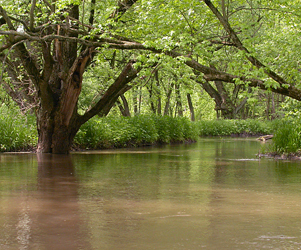
Description
A legislative study committee is weighing how to ease regulations to allow for the restoration of floodplains across Wisconsin. (Photo courtesy of Wisconsin Department of Natural Resources)
A legislative study committee on restoring floodplains across the state began its work Tuesday with an all-day meeting in which committee members heard from a number of scientists, state Department of Natural Resources staff and policy experts on the flood management landscape.
Floodplains exist in flat areas along waterways marking where the water rises to during a flood event. Historically, waterways have been diverted, deepened or stifled to shrink these floodplains for development, navigability and agriculture — often making the effect of a flood more harmful and harming the health of the overall watershed.
The committee is beginning its work to assess how floodplains can be restored to improve watershed health, restore wetland habitats and better control flooding as climate change has made floods more common and more severe.
“Why are floodplains important? They promote habitat and biodiversity,” Tracy Hames of the Wisconsin Wetland Association said. “They’re really important for maintaining public health and safety.”
Among the benefits of floodplains, Hames said, are reducing erosion, improving water quality and filtering out nitrate pollution, stopping sediment from flowing downstream and protecting waterways against drought.
To restore a floodplain, policymakers can remove dams and levees, let waterways return to their original meandering paths, reconnect waterways to nearby wetlands and promote the growth of native plants. But waterways across the country are governed by the Federal Emergency Management Program’s flood insurance program, limiting the tools available to the state.
The committee is made up of state Sens. Romaine Quinn (R-Birchwood) and Jodi Habush-Sinykin (D-Whitefish Bay), state Reps. Joy Goeben (R-Hobart) and Vincent Miresse (D-Stevens Point) and local government officials, non-profit staff and policy experts.
The meeting Tuesday focused on presentations explaining what a floodplain is, what policy tools are available to restore them, the existing state and federal regulatory landscape and how proposed floodplain projects should be analysed for viability.
Lawmakers have already been working on proposals for floodplain restoration. During the most recent legislative session, Rep. Todd Novak (R-Dodgeville) began writing a bill that would allow the DNR and local governments to work together to approve and fund floodplain restoration projects. Under a preliminary draft of the Novak bill, local governments would have to approve projects before the DNR could authorize them.
In recent years, lawmakers of both parties have been supportive of wetland restoration projects. While floodplain restoration is subject to stricter regulations, there appears to be a path forward for future legislation.
“Land use in floodplains is subject to extensive regulation under federal, state, and local laws. Broadly, these laws seek to mitigate risks to life and property and reduce costs associated with flood response,” the Wisconsin Legislative Council wrote in an introductory brief for the committee. “However, these laws may also pose burdens to floodplain restoration projects, which have garnered bipartisan interest in recent years due to their ability to improve flood storage and support other ecosystem services.”
Madison, WI