Legal protections for nearly 350,000 Haitians at risk as US Supreme Court nears ruling
Jun 23, 2026 | 12:29 pm ET
Updated:
Jun 25, 2026 | 12:26 pm ET
Description
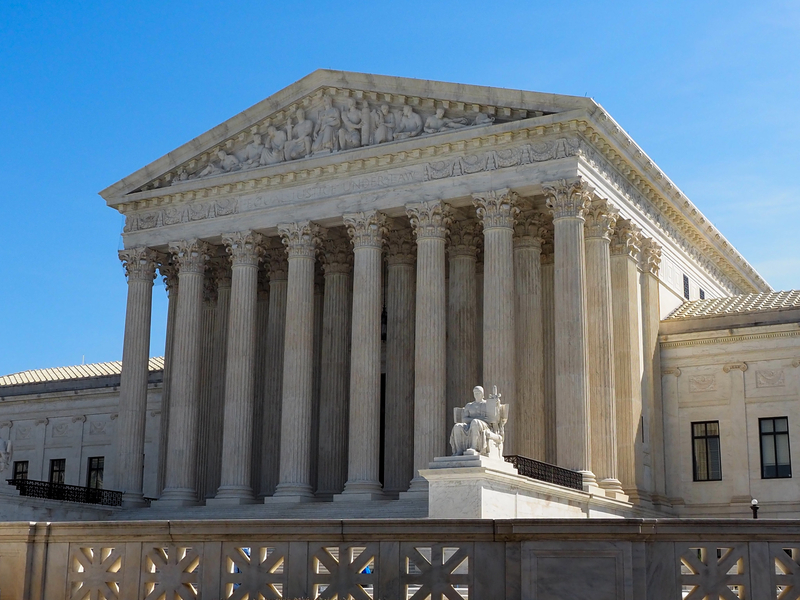
The U.S. Supreme Court, on April 9, 2026. (Photo by Ashley Murray/States Newsroom)
By Kaitlin Bender-Thomas/Medill News Service
WASHINGTON — Even with a valid driver’s license, Maryse Balthazar knows she lacks protection from what she dreads most: deportation back to Haiti.
Balthazar, a nursing assistant, often hesitates to leave her home in South Florida, worried that something as simple as a broken taillight could upend the life she’s spent 16 years building in the United States.
“If you get stopped for a traffic violation, what's going to happen to you?” Balthazar said. “It’s a fear that lives with me every day.”
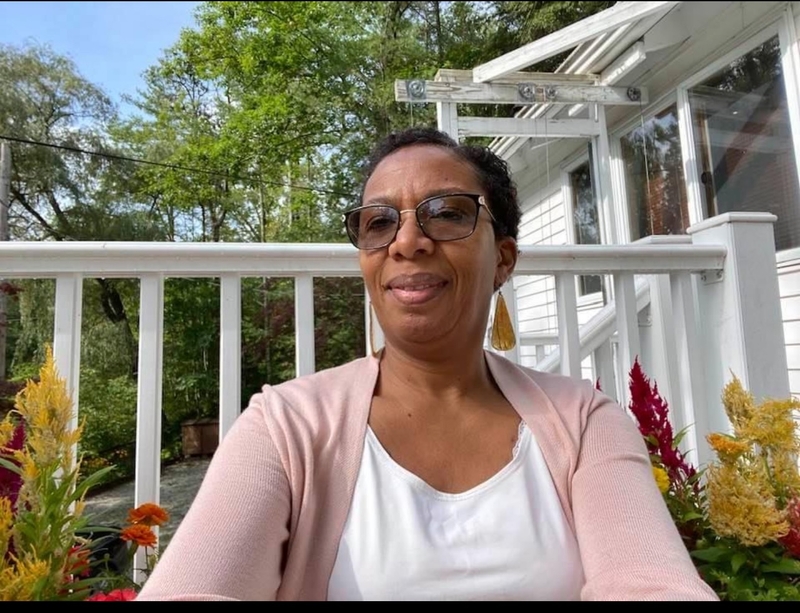
Balthazar is one of nearly 350,000 Haitians living in the U.S. with Temporary Protected Status, or TPS. The program allows people from countries facing armed conflict, natural disasters or other extraordinary crises to live and work in the U.S. temporarily.
Her fear comes as the Supreme Court weighs whether the Trump administration can end TPS for Haitians, as well as Syrians. Although protections remain in place while the case is pending, a Haitian TPS holder in Florida was recently detained during a routine traffic stop and deported, before being allowed to return to the U.S.
What is TPS?
Balthazar came to the U.S. under TPS in 2010, when Haiti was first designated for the program following a devastating earthquake that killed more than 200,000 people and destroyed more than 100,000 homes, including her own.
Congress and President George H. W. Bush created TPS in 1990 to protect immigrants from being deported to unsafe countries. The designation grants temporary legal status and work authorization for up to 18 months and can be renewed if conditions do not improve. It does not provide a pathway to citizenship.
Since 2010, the Department of Homeland Security has repeatedly extended Haiti’s TPS designation due to ongoing instability, including natural disasters, widespread gang violence and the 2021 assassination of President Jovenel Moïse.
The government had set Haitian TPS to end on Feb. 3, but on Feb. 2, U.S. District Judge Ana Reyes blocked the termination, finding it was unlawful and likely motivated in part by “racial animus.”
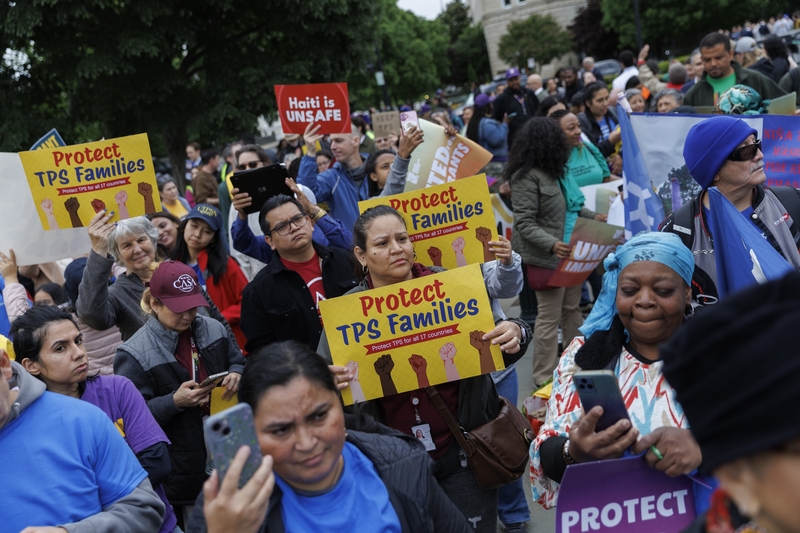
The Trump administration has argued that TPS has become a “de facto asylum program” and that conditions in Haiti have improved enough to end the designation. It appealed the ruling to the Supreme Court in March, and the justices heard oral arguments on an emergency basis.
The court is expected to issue a ruling by the end of the term in late June or early July. The decision will determine whether the administration acted lawfully in its attempt to revoke TPS, including whether it consulted with the State Department when reviewing the country’s conditions.
An uncertain future
Immigration attorneys and advocates say the uncertainty surrounding TPS and immigration enforcement has heightened fears within the Haitian community.
“Everyone is scared across the board,” said Tremaine Hemans, founder and managing attorney of an immigration law firm in Fort Lauderdale, Florida. “But specifically our Haitian clients.”
Balthazar said she no longer feels entirely safe here, either.
She said she used to fly to Massachusetts for months at a time to care for a patient. Now, she would refuse any nursing assistant job that required air travel, even if it paid $50 an hour, because she fears encountering Immigration and Customs Enforcement agents at the airport.
“They handicap you, make you uncomfortable to live here, to be here,” Balthazar said.
Violence and humanitarian instability continue to worsen throughout Haiti, said Brian Concannon, a human rights attorney and executive director of the Institute for Justice and Democracy in Haiti, a nonprofit focused on advancing human rights and justice in Haiti.
By U.N. estimates, armed gangs control approximately 90% of the capital, Port-au-Prince, and hunger and displacement have risen sharply in recent years.
“There’s literally no metric by which you can say that conditions in Haiti are improving or are in any way safe,” Concannon said.
In Ohio, troubling phone calls
For Rose-Thamar Joseph, a Haitian TPS holder and community advocate in Springfield, Ohio, that reality hits close to home.
Joseph came to the U.S. under TPS in 2021 after former President Joe Biden redesignated the program for Haiti. She said she speaks with her family back home almost every day, including her 12-year-old son. Calls rarely end without her hearing gunfire in the background.
She recalled her family sending photos of bullets that landed in their yard.
One night, Joseph said she stayed on the phone with them until the morning, unable to sleep because she was worried about their safety.
“It was a real, real challenging and stressful situation for me,” Joseph said.
Sometimes the violence becomes so severe that her son cannot go to school. What worries her even more, she said, is when the country’s poor network service prevents her from reaching her family at all.
Although Joseph has asylum status to fall back on if TPS ends, which would allow her to continue living and working in the U.S, she said many Haitian TPS holders don’t have that option.
“It is so heartbreaking for me to see or to know that a lot of people will be out of work, will be laid off… because of TPS,” Joseph said.
Consequences in the US for families, employers
Concannon at the Institute for Justice and Democracy in Haiti said the Supreme Court’s decision could have immediate consequences for TPS holders and their families.
Of the 350,000 Haitian TPS holders in the U.S., about 200,000 of them are already in the U.S. workforce, according to FWD.us, an immigration and criminal justice advocacy organization.
Many send money home to support relatives in Haiti because ongoing violence and economic instability have left many families struggling to get by.
“It's literally thousands of families that are being kept afloat by remittances from TPS holders,” Concannon said.
But the impact would also be felt by employers across the country.
Many Haitian immigrants work in critical industries throughout the United States. FWD.us estimates that about 15,000 work in agriculture, 13,000 serve as nursing assistants, and another 8,000 work as caregivers.
Todd Andrews, chief operating officer for Asbury Communities, a continuing care retirement community with campuses in Maryland, Pennsylvania, and Delaware, said immigrant workers play a critical role in caring for elderly adults.
Asbury employs about 2,000 workers and serves more than 4,000 residents across its senior living communities. At the organization's Gaithersburg, Maryland, campus alone, Andrews said employees represent more than 90 nationalities.
“These jobs are very important, they’re very difficult, and they’re very, very integral in the care management of the residents,” Andrews said.
He added that providers already face staffing shortages and warned that losing TPS workers could create disruptions similar to those experienced during the COVID-19 pandemic.
“Employees that are employed today won’t be there tomorrow,” Andrews said. “So we’ll have to figure out a way to provide that care.”
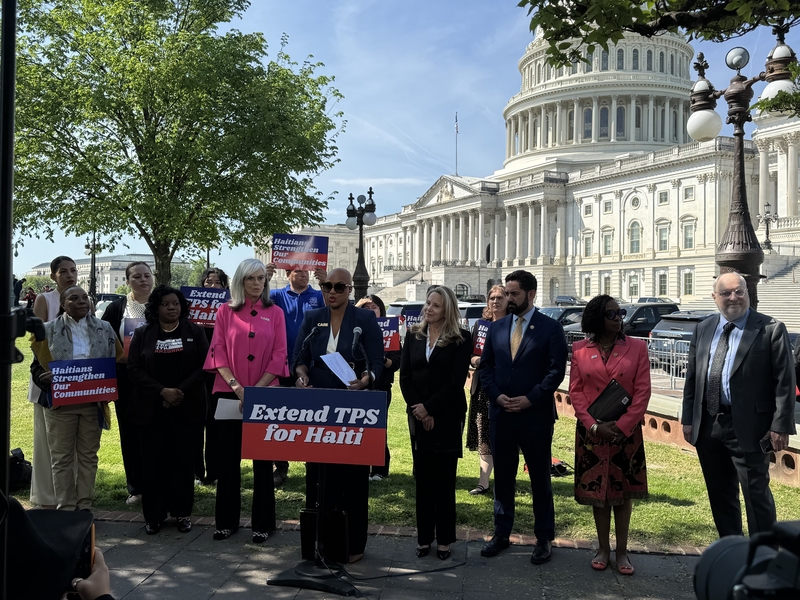
Lawmakers remain divided over the program’s future.
Sen. Rick Scott, R-Fla., declined to explicitly say during an interview at the Capitol whether he believes TPS for Haitians should continue. Instead, he noted that Florida is home to “a lot of wonderful Haitians” and said the broader immigration system needs reform.
“TPS was never a permanent program,” Scott said. “What I'd rather do is focus on, okay, so how do we fix the program where people can come here that are fully vetted that want to add to our economy.”
Sen. Raphael Warnock, D-Ga., said immigrant communities make significant contributions to the U.S. economy and criticized the Trump administration's efforts to end TPS for Haiti.
“How can you deny Haitians who are here Temporary Protected Status, while at the same time put Haiti under the travel ban?” Warnock said. “It doesn't make any sense.”
Painful conversations
While lawmakers remain divided over the future of TPS, Balthazar said the uncertainty has forced painful conversations with her daughter, a U.S. citizen and college student, about what might happen if she is deported.
“That will affect her a lot,” Balthazar said. “She will be more at ease, more relaxed, if mama is around because she knows that she can rely on me…but if I'm not around, she will have to take care of herself.”
For now, Balthazar said she is focused on living in the present. She spends her time caring for elderly patients, running her small online hair care business, and being with her family.
Like many Haitians living under TPS, she said she still hopes for the day her country is stable enough to return.
“As Haitians, we all dream, we all are dreaming to go back because we love our country. We just don't have a system like here.”
Medill News Service articles are reported and written by graduate student journalists in the Washington program of the Medill School at Northwestern University.
This report has been corrected to reflect the correct title for Todd Andrews and the correct number of workers at Asbury Communities.
All States Newsroom content is free to republish. Read our republishing policy for more information.