Lawmakers Join Battery Developers in Fight With ConEd Over NYC’s Grid
Mar 13, 2026 | 3:52 pm ET
Description
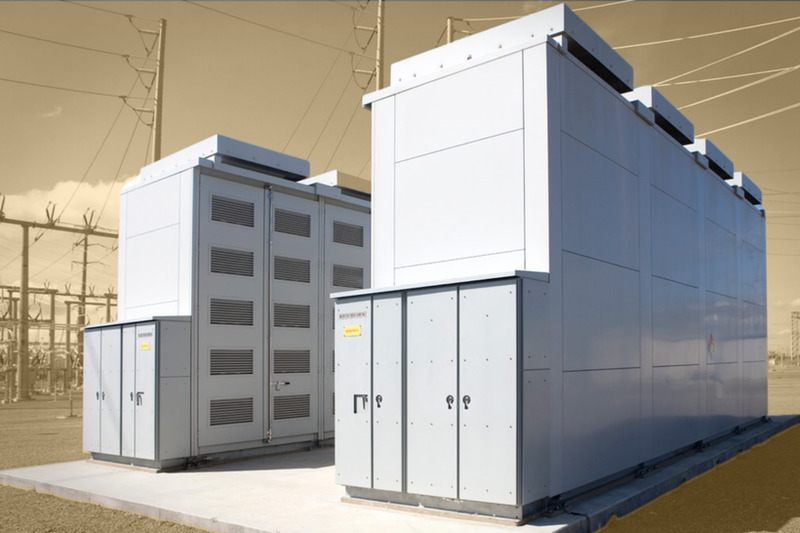
Con Edison, the city’s electric utility, is pumping the brakes on a race to build battery storage in New York City. / Photo: California Energy Commission/Flickr | Illustration: Leor Stylar
A fight over the future of New York City’s electric grid is heating up.
Energy developers are racing to build community-scale battery storage projects across the five boroughs, a push that the city is counting on to bolster reliability while cutting costs and pollution. State energy officials estimate that a rapid battery buildout over the next few years could yield $2 billion in statewide energy system savings, with much of the benefits concentrated in and around New York City.
Already, about two dozen projects have been built around the city, and scores more are in advanced stages of development. But Con Edison, the city’s electric utility, is pumping the brakes.
ConEd says the battery rush has been a victim of its own success. So many new projects are seeking to plug into the grid, the utility says, that they risk overloading local infrastructure and causing outages. To avoid that, in recent months the company has started asking developers to pay tens of millions of dollars for upgrades if they want to move ahead with their projects.
The battery industry is crying foul — and has a growing chorus on its side. On Wednesday, seven city and state lawmakers, two industry groups, and more than a dozen community and climate groups sent a letter to ConEd asking the utility to reverse its position and allow projects to move ahead without the additional fees, New York Focus has learned.
“Instead of slamming the brakes on batteries, Con Edison should be doing everything in its power to accelerate battery development because it would save money for customers,” said Patrick Robbins, director of the Utility Customers Association, a signatory of the letter.
The letter came the same day as an emergency petition from the industry to New York’s utility regulator accusing ConEd of taking “arbitrary” action and jeopardizing $1.5 billion worth of battery projects in New York City. That includes 25 projects that developers have already canceled in response to the policy change and 91 others at risk, according to the trade group New York Battery and Energy Storage Technology Consortium, or NY-BEST.
ConEd spokesperson Jamie McShane said the company would respond formally to the petition, and declined to comment further on the specific allegations.
More generally, the utility insists that it supports New York’s battery buildout, but says a reset is needed to protect the grid.
“As the market scales, storage must deliver real benefits to customers — not drive new infrastructure costs that show up on bills — which is why we are working with regulators and stakeholders to align growth with real‑world grid conditions,” said Raghu Sudhakara, ConEd’s vice president of distributed resource integration, in a statement.
“Without reforms, current policies risk shifting significant new costs to customers, undermining both affordability and the long‑term success of storage,” Sudhakara said.
New York City’s battery industry is being built from the ground up.
The first community-scale battery project in the city was completed in 2019, and they remain rare. Picture a few shipping containers’ worth of batteries and electrical equipment sitting in a small lot. The installations could become a common sight for New Yorkers in the coming years, with hundreds proposed across the outer boroughs.
Altogether, there are currently about 2.5 gigawatts’ worth of storage projects waiting to be connected to ConEd’s grid, equivalent to about a fifth of total peak load; more than 650 megawatts’ worth applied in just the second quarter of last year.
The rush to build — accelerated in part by battery-friendly zoning reforms in Mayor Eric Adams’s “City of Yes” plan — has met pushback in many neighborhoods, with residents worrying that the projects could pose fire hazards and depress home values. (Developers insist that their projects are safe, pointing to New York’s strict fire codes.)
The industry has long complained of hurdles to plugging into the grid. But ConEd’s recent policy change is in another league, developers say.
At first glance, ConEd’s claim that batteries could overload the grid is surprising. The systems are supposed to charge when there’s plenty of spare power — typically overnight in New York — and put that power back on the grid when demand is high. That helps smooth out peaks in demand and reduce the amount of traditional infrastructure needed to meet them, which in turn should reduce energy bills.
ConEd says that a surge of projects clustered in certain areas risks defeating that purpose. If they all charge at the same time, the utility says, they could create new overnight peaks that would overload neighborhood electric hubs called substations. ConEd has started asking developers in certain areas to pay for a portion of infrastructure upgrades to accommodate those peaks. Those upgrades can run from about $100 million to $1 billion or more.
ConEd’s New Standards for Battery Hookups
Con Edison studies proposals for energy projects to make sure they can be added to the grid safely and estimate the costs. Last October, according to filings, the utility implemented a new “two-step test” to determine costs for battery storage projects. If a project would cause local energy demand to exceed 70 percent of infrastructure capacity, ConEd says it needs to build infrastructure to accommodate it. That infrastructure could range from new transformers (costing $100 million or more) to entire new substations (costing $1 billion or more).
Even paying a small portion of such upgrades would be cost-prohibitive for battery projects, developers say.
The result for developers? An average of $21 million per project in added costs, according to the NY-BEST petition. That’s made the cost of hooking a project up to the grid grow from a fraction of a project’s cost to, in some cases, more than its total budget, developers say.
William Acker, executive director of NY-BEST, said ConEd is overcompensating for a problem that may be years away. He said that energy storage could create new overnight peaks if you put enough on the grid and “operate it all at exactly one time … all the way out in the future.”
“But those are things that will be evolving,” he said.
The industry and its backers say ConEd is blocking development at a time when it’s urgently needed. The state’s grid operator warned last fall that New York City could face a power shortfall as soon as next year, due to delays in building major new clean energy projects like offshore wind. In response, the state’s utility regulator, the Public Service Commission, in December directed ConEd to “turn over every stone” in order to meet energy needs without increasing pollution.
That means finding an alternative to the fleet of aging gas and oil plants, known as “peaker” plants, that the city has traditionally relied on when demand spikes — and that the state has been trying to close for years. Experts say batteries offer a neat substitute.
ConEd’s new standards are “a double whammy, in the sense that we’re stalling the exact solution that the city needs right now,” Acker said.
Developers are also fuming over what they call a lack of transparency in how ConEd implemented its recent policy changes. The company first suspended all battery projects in affected areas last August, before saying it would seek to amend its rules through a public proceeding.
Instead, in January, the company issued a “notice” laying out its new methodology for calculating costs, which the industry says it wasn’t consulted on. And ConEd applied the new method retroactively to dozens of projects that had already completed interconnection studies.
ConEd maintains that it has gone out of its way to be transparent. It made the recent changes purely on technical engineering grounds and was not required to provide public notice but chose to anyway, the company says.
Both sides agree that the rules for managing how batteries plug into the grid are in need of updates as the market grows.
Claudia Villar-Leeman, senior director of policy at NY-BEST, said that current Public Service Commission regulations don’t reflect battery systems’ ability to turn off and on at short notice when the grid needs it. They were designed to get technologies like solar and batteries “off the ground,” she said.
“That was good for the beginning of the market, but now we have a lot more resources and a lot more potential,” Villar-Leeman continued. She said developers want to work with all parties to figure out a long-term fix. But for now, they want the utility to reverse course on its recent changes and allow planned projects to move ahead.
The Public Service Commission is fielding public comments on the issue through the beginning of May, but NY-BEST wants regulators to step in sooner. Public Service Commission spokesperson Kim Mashke said the commission would review the filings, but declined to say whether or when the regulators might take action.
State Senate energy committee chair Kevin Parker, who signed the letter to ConEd this week, said he’s considering bringing the legislature into the fight if it isn’t resolved soon.
“I’m hoping that the [Public Service Commission] can help just mediate a solution that gets us there because if we have to legislate something, that’s the slowest possible outcome, and we need electrons now,” he said. “But if not, we are at the ready and prepared to do our jobs.”

Albany