Lansing protesters block Flock cameras over license plate reader contract
Sep 29, 2026 | 4:00 am ET
Description
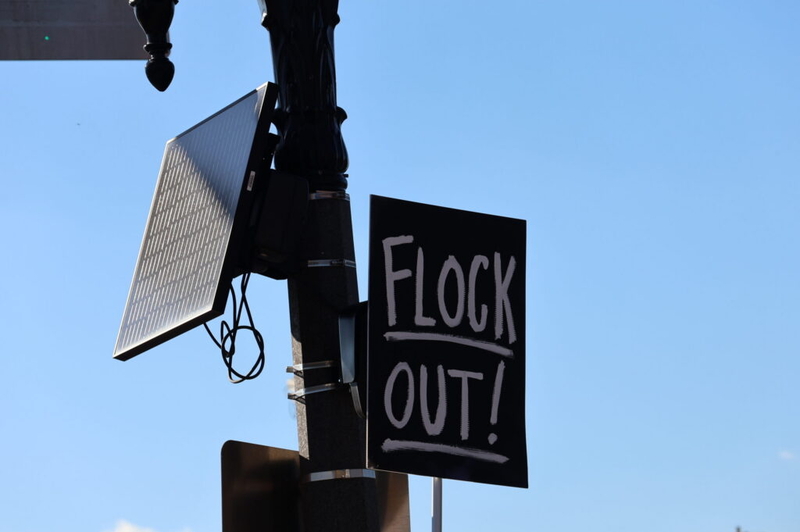
A sign reading "Flock Out!" blocks a Flock license plate reader camera in Lansing, Mich. on Sept. 28, 2026. (Photo by Kyle Davidson/Michigan Advance)
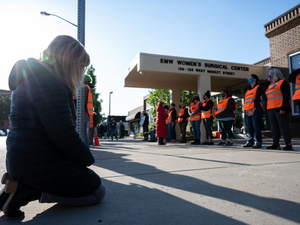
As Lansing residents press the city to end its automated license plate reader contract with Flock Safety, members of DeFlock Lansing and the Michigan Capitol Visibility Brigade gathered at the intersection of Michigan Avenue and Pennsylvania Avenue, where four Flock cameras are installed.
At its Aug. 24 meeting, the Lansing City Council voted 7-1 in favor of a resolution requesting the city administration and Lansing Police Department terminate all contracts with Flock, pointing to privacy concerns and the growing number of local governments reconsidering the use of automated license plate reader technology.
“The mayor has not acted on this resolution, so we’re out here doing more than the mayor to keep Lansing safe from AI-powered mass surveillance by blocking the view of these four cameras for the next hour,” said John Warmb, an organizer with DeFlock Lansing.
In a statement shared with Michigan Advance, Lansing Mayor Andy Schor said he was speaking with a variety of parties about the contract.
“We have a contract that goes for another year and a half that we cannot unilaterally get out of,” Schor said. “As such, I’m talking to those interested and impacted. We have heard from the Deflock Lansing folks, as well as City Council after taking this up four days after the resolution was introduced. I am also listening to those that didn’t have an opportunity to be part of that conversation at City Council including Constituents, victims of crime, different constituency, groups, and others before making any final determinations.”
Warmb said they would like to see the city adopt an ordinance banning the use of automated license plate reader cameras, but acknowledged that these processes can take time.
“I would love to see some action from the mayor to just cover these cameras up in the meantime,” Warmb said. “It is clear that the citizens and city council do not want these in our community.”
Multiple communities across the state have begun to cancel their contracts with Flock. While local law enforcement officials have described the cameras as a tool for deterring crime, tracking stolen vehicles and responding to AMBER Alerts, opponents have pointed to the lack of legal guardrails around the technology, and their potential for abuse by law enforcement officials.
At least 22 law enforcement officials have been arrested, fired or placed on leave following a USA Today investigation into alleged misuse of Flock cameras, including a Florida police officer who was charged with four felony counts of accessing a computer network without authorization after Flock audit logs showed he had searched a woman’s license plate at least 189 times over an eight-month period.
William Lawrence, a Lansing-area political organizer and Democratic candidate for Michigan’s 7th Congressional District who has made opposition to big tech a cornerstone of his campaign, joined protesters in opposition to the cameras.
“This is a violation of our right to privacy, which is enshrined in the Fourth Amendment,” Lawrence told Michigan Advance. “For over 200 years, people in this country have held a healthy suspicion of concentrated power at the top of big business and government and this is a violation of that. It’s been developing for a couple of decades now, but now is the time where people are drawing the line and saying it’s time. No further.”
Lawrence will face U.S. Rep. Tom Barrett (R-Charlotte) in the general election on Nov. 3.
Barrett is a co-sponsor of Rep. Tim Burchett’s (R-Tenn.) Protection Against Mass Surveillance Act, which bars federal agencies from purchasing and deploying automated surveillance systems like Flock cameras. The bill would also bar state, local and tribal governments from using federal funds to purchase and operate automated surveillance technology.
Lansing, MI