Landlines, Magazines, Puzzles: This NYC Suburb Is Bringing Back Screen-Free Childhoods
Sep 21, 2026 | 5:00 am ET
Description
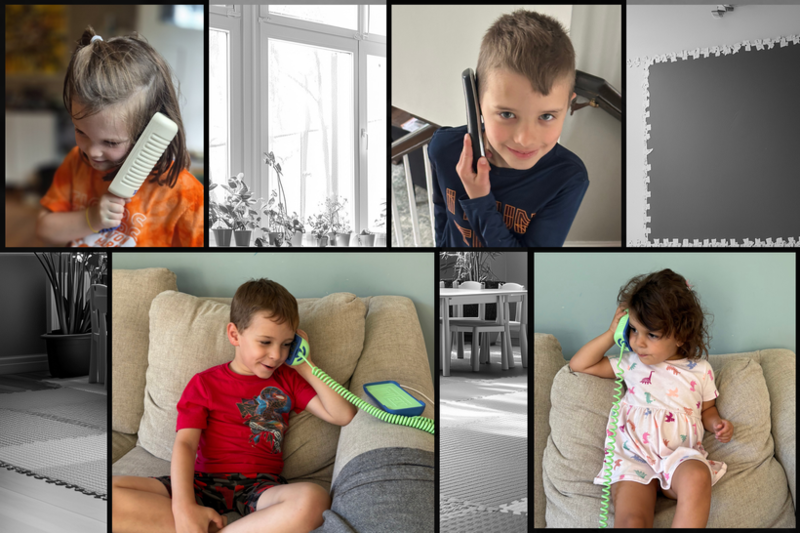
Over 100 families in Croton-on-Hudson have installed landlines in their homes to help children stay connected sans cellphones. / Photos courtesy of Croton Community Collective | Collage: Leor Stylar / New York Focus
When Croton-on-Hudson’s youngest students returned to school earlier this month, a familiar — and increasingly controversial — classroom tool was missing from their desks: iPads.
A new districtwide policy prohibits the devices in kindergarten through second grade with few exceptions. Instead, teachers are emphasizing traditional, hands-on learning through activities like games, puzzles, and pen-and-paper assignments.
The screen-free classrooms arrived after a grassroots effort from local parents in Croton-on-Hudson, an affluent, highly educated suburban village on the Hudson River, 40 miles north of Manhattan.
Formed in July 2025, the Croton Community Collective has amassed more than 400 local members, built a network of parents who’ve tried to give their children a screen-free childhood, reshaped the school board, and secured several changes limiting the use of educational technology in instruction
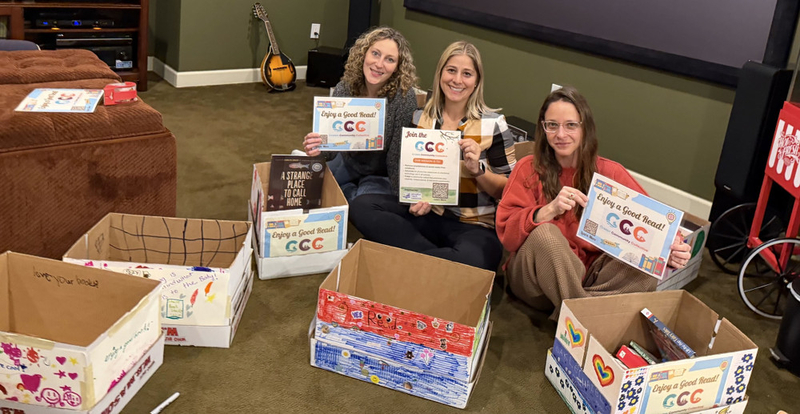
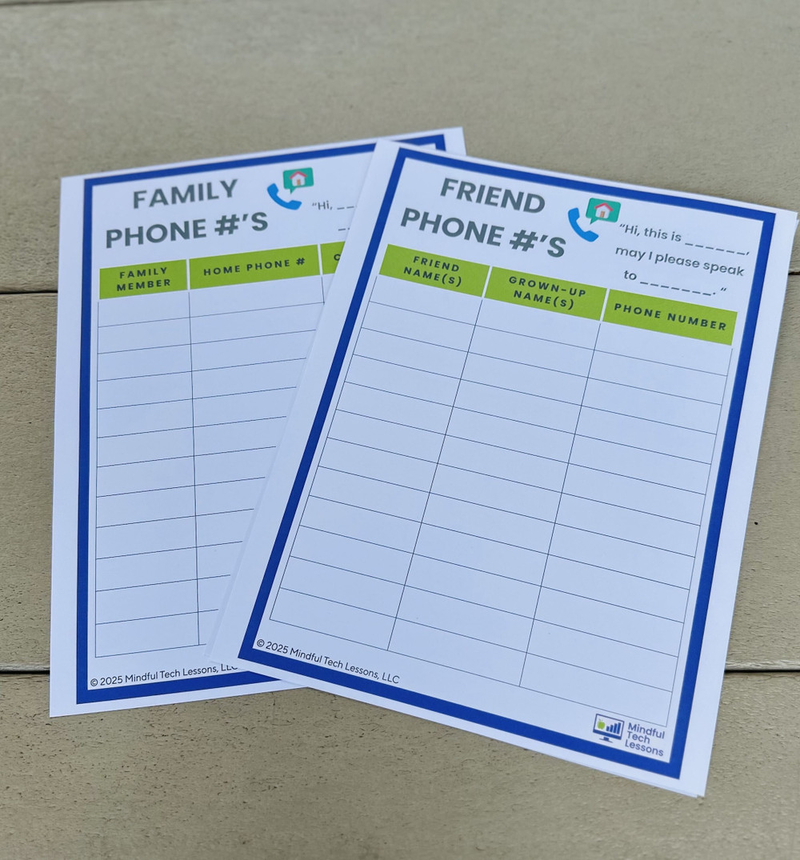
It’s part of a larger push by the community, where many parents have pledged to delay giving their children smart phones. Volunteers have stocked scores of local businesses with boxes of books and magazines, so that kids have a screen-free way to pass the time while waiting for a haircut or sitting at a diner. And over 100 families have installed landlines in their homes to help children stay connected sans cell phones.
“We want Croton to be famous for being a town that brought back childhood, at home and at school,” said local parent Jill Anderson, who founded the coalition. “We want people to move here for their kids to have a different life, like the way it used to be.”
Ed tech has become a fixture in classrooms nationwide in the past decade. Today, most US children spend at least part of their school day on a laptop or tablet. Advocates say the shift in instruction is key to preparing students for a technology-driven workforce, while critics say it sets students back, citing research that has linked excessive screen time to poorer academic performance, lower attention spans, and behavioral issues.
A growing number of parents and teachers are mobilizing to put the brakes on the trend.
Danny Zeliger, a local parent who teaches high school English in another district, is one of them. A decade ago, when he was instructed to have his students use an online grammar and writing program, he remembers looking out at a classroom full of students absorbed in their screens and thinking, “It looked less like joy, and more like opiates.”
So Zeliger does not allow his own young children to use iPads. But at a parent orientation for his daughter’s school just over a year ago, he learned that teachers regularly provided them to students in the classroom.
“You can imagine how hard it is to not give your kid an iPad at home, and then the first one they receive is from their kindergarten teacher,” he said.
As a member of the Croton Community Collective, Zeliger said he’s excited by the district’s new guidelines.
In addition to the early elementary school changes, students in grades 3 and 4 now share iPads from classroom carts rather than keeping individual devices at their desks. Fifth graders are no longer allowed to bring their iPads home at the end of the school day, and sixth graders can’t take them home on weekends. Teachers have stopped using online read-alouds, letting students watch videos during snack and movement breaks, or offering technology as a reward for students who finish work early.
And at the high school level, teachers are also instructed to limit the use of devices and avoid relying on video-based lessons.
More districts could follow in Croton’s footsteps soon. A bill filed by Sen. Andrew Gounardes last month would sharply limit screen use in schools and “create a right to analog learning.” New York City Public Schools has taken its own approach, announcing a one-year moratorium on student-facing generative AI and caps on screen time through middle school.
Croton Superintendent Stephen Walker said the 1,500-student district’s new approach is to ensure technology “earns its way into a classroom rather than becoming a default resource within each student’s experience.”
But it took Croton time to get there.
For more than a year, ed tech and screen time have been a recurring source of discussion — and at times, tension — at Croton school board meetings, as parents questioned how children were using devices in the classroom.
At a June 2025 meeting, for example, Don Laird told board members that he’d made the “heartbreaking” decision to withdraw his children from the district due largely to concerns over screen time. For several years, the district had provided all of its elementary and middle school students with iPads. Laird said his kindergartener would come home describing advertisements he had seen on classroom screens, his teacher showing a video of someone reading a book instead of reading it aloud, and students watching videos during snack time.
“These aren’t isolated incidents,” Laird told board members at the time. “They paint a picture of a classroom where technology is being used to subdue and distract students rather than engage and develop them.”
Six months later, in December, Claire Benoist told the school board that her 5-year-old daughter was watching videos on YouTube and online learning platforms in kindergarten throughout each school day. “We feel that we are feeding our kids brainrot, and it is being disguised as ed tech,” she said.
The group started making concerted efforts to get the district to implement three of its priorities: enforcing the state’s cell phone ban throughout the entire school day, including during passing periods and lunch; keeping young children off iPads; and ensuring school-issued devices are not being sent home after school.
Parents zeroed in on the May 2026 school board election as a way to make sure they were taken seriously. In April, the Croton Community Collective held a packed forum asking board hopefuls to discuss their views on ed tech. While the group did not directly endorse any candidates, two of its members ran on platforms that prioritized reducing screen time in schools and both went on to defeat incumbent candidates, including one who had been on the board since 1998.
Around the same time, the push to rein in ed tech was gaining momentum both nationally and across New York: The American Federation of Teachers, a national labor union, unveiled its “devices-down, eyes-up, hands-on” policy framework, and the New York State United Teachers union issued a statement advocating for strict, developmentally appropriate limits on tech use.
By the time the board election approached, the Croton-Harmon school district had already started reexamining its technology usage, Walker told New York Focus. In March, the district reported reducing its spending on ed tech software by nearly 33 percent and stopped sending devices home with K-5 students. According to a school board presentation, average daily screen use from January through April began to decline over the previous year.
In June, the district held a teacher summit to discuss ed tech in the classroom, and shortly after, it told teachers it would adopt new guidelines for screen use, step up enforcement of the phone ban, and prioritize pen-and-paper instruction.
Walker said he’s heard from more parents concerned about screens than on any other issue over the course of his career.
“This was one of those times when we were able to say, ‘There’s a movement here, and there’s an impetus to ask some really challenging questions about our system,’” he said.
The district allocated around $40,000 to replace digital tools with high-quality, analog resources including manipulative math games, new class sets of books, workbooks, dictionaries, and puzzles. The hope is that the district will save some money in the long term by canceling its subscriptions to online learning programs and no longer having to keep up with a 1-1 device program.
So far, it’s been an adjustment for some local teachers.
Losing access to digital learning resources feels “like the rug was pulled out underneath us,” said Tara Carlucci, who has been teaching kindergarten in the district for two decades.
Last school year, she said her students used iPads at learning stations to practice handwriting and learn to count. But while she believes that most teachers used technology responsibly, she understands why the changes were necessary to address educators who have become overly reliant on it.
Kindergarten teacher Dana Buckhout echoed the sentiment, noting that she is still trying to figure out how to differentiate instruction for struggling students who used the iPad as a tool. But since the school year started a couple weeks ago, she said she’s really not feeling the loss of devices.
“It feels so troubling when you are just one person trying to reduce technology, or even if it’s just one grade level or school,” she said. But acting collectively creates more impact, she said. “We’re all fighting for the same thing, because obviously there needs to be a shift.”

Albany