KY lawmakers could still pass a housing bill but its prospects are complicated
Apr 13, 2026 | 5:50 am ET

Description
Framed out in Letcher County, as seen in 2024, is a four-bedroom, solar-powered home under construction by nonprofit Homes Inc. (Kentucky Lantern photo by Liam Niemeyer)
Kentucky lawmakers worked against the clock and late into the night before breaking April 1 to send a pile of legislation to the governor’s desk, including reserving a spot in the statehouse for a statue of U.S. Sen. Mitch McConnell and banning sales of the herbal supplement kratom.
One thing that didn’t make it under the wire: A slew of proposals for tackling Kentucky’s worsening housing shortage.
The legislature can still vote on a housing bill when it returns Tuesday and Wednesday to override vetoes and wrap up this year’s session, though the outlook for it is complicated.
Awaiting action is Senate Bill 9, which grew from 14 pages to 60 pages as the House turned it into a mashup of other housing bills. The House added what a Democrat called a “poison pill” and omitted any increase in the real estate tax that subsidizes affordable housing construction, even though the funding increase has bipartisan sponsors.
The legislature did approve $15 million in one-time money for affordable housing construction and residential infrastructure as part of a $1.7 billion spending package, along with spending for specific housing projects around the state.
A nonprofit housing developer told the Lantern the amount of new funding is disappointing in light of the need. “When you look at the scale of the problem that’s been studied and documented, and then you look at what’s come out of the legislature, there’s a real disconnect,” said Scott McReynolds, executive director of the Perry County-based Housing Development Alliance.
The so-called poison pill, added by the House in the final hours before lawmakers went on break, is a ban on local governments regulating short-term rentals such as Airbnb. The House provision does provide an exception allowing cities to create a rental registry and punish short-term rental owners who don’t comply.

The House version of SB 9 also includes less controversial provisions supported by advocates for affordable housing. They include Rep. Susan Witten’s proposals to reduce the minimum amount of parking required for a housing development and to expunge eviction records in court cases that are dismissed so they don’t follow renters as they seek housing. Witten, a Republican from Louisville, was co-chair of a legislative housing task force that developed housing proposals during last year’s interim between legislative sessions.
Short-term rental controversy
Louisville, Lexington and several cities in Northern Kentucky already have short-term rental ordinances that go beyond what the House amendment would allow. The ordinances, some of which set limits on the number of short-term rentals in a neighborhood, would be voided if the bill becomes law.
On the House floor before joining other Democrats in voting against SB 9, Rep. Lindsey Burke, D-Lexington applauded the bill’s housing reforms but said that preempting local governments from regulating short-term rentals was “just too much.”
“I have to recognize that for every single single-family home that turns into a short-term rental, that’s a Kentucky family that can’t purchase their first home,” Burke said. “Our choice to prioritize short-term rentals over Kentucky families is unfortunately the nail for me that is sealing my ‘no’ vote.
Last year, House Speaker David Osborne, R-Prospect, tried to preempt local governments from enacting limits on short-term rentals but his proposal was not approved.

Adrienne Bush, the executive director of the advocacy nonprofit Homeless and Housing Coalition of Kentucky, told the Lantern that more research is needed into the impacts of short-term rentals on local communities and neighborhoods. A 2022 article by the Urban Institute, a think tank, found that the proliferation of short-term rentals does increase rent prices and long-term housing instability, though researchers from Harvard University and the University of Pennsylvania note that short-term rentals are not the biggest driver behind higher rents.
Other provisions in SB 9 are aimed at increasing the supply of housing, Bush said: “Things geared to build up gentle density, to build more housing — those were really the areas that we focused on in the latest version of Senate Bill 9, and those are the things that we will continue to advocate for.”
How Senate Bill 9 ballooned
SB 9, sponsored by Sen. Robby Mills, R-Henderson, the other co-chair of the legislature’s housing task force, began as a much simpler piece of legislation. It would have allowed local governments to create development districts that could spread the cost of building infrastructure for housing, such as water or sewer service, over time instead of paying upfront.
That bill passed the Kentucky Senate in February 35-2 and was sent to the House, where it sat without action for weeks.
Then on April 1, the final legislative working day before the 10-day veto period break, a House committee approved a substitute bill, adding provisions from other housing-related bills that hadn’t advanced through both chambers — including the controversial provisions on short-term rentals.
Republicans in the House passed SB 9 that evening, but Republicans in the Senate declined to take up the bill before adjourning.

“It just really got over just a little too late for us to digest everything,” Mills told the Lantern. “I spent probably 30 minutes in the caucus meeting talking about all the different parts of it, and we just typically don’t try to jam things down our members’ throats. And I think they just weren’t prepared to vote on it.”
Among the bills the House melded into SB 9, House Bill 536, sponsored by Rep. Josh Bray, R-Mount Vernon, would create an incentive program that local governments could offer to housing developers and Senate Bill 224, sponsored by Mills, giving a housing developer vested property rights. That provision would protect developers from falling subject to new local regulations after filing for a building permit.
Funding debate and disappointment
One of the bills that didn’t make it into the expanded version of SB 9 is a bipartisan bill that would have increased the annual funding going into a decades-old trust fund subsidizing affordable housing construction.
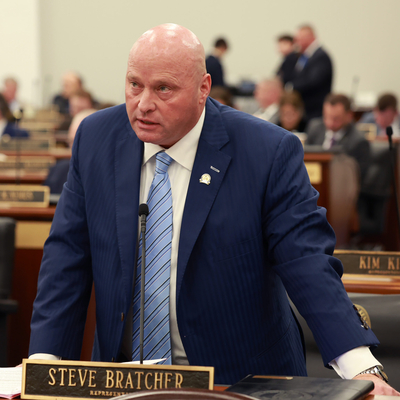
Housing advocates for years have tried to increase the fee on home sales that goes into the Affordable Housing Trust Fund, arguing the current fee hasn’t kept up with inflation. House Bill 411, sponsored by Rep. Steve Bratcher, R-Elizabethtown, would have increased the $6 fee on each home sale to $23 and would increase the fee over time with the rate of inflation.
Mills said Realtors and “other folks involved in the purchase process of a new home” had opposed the bill because “they don’t want any new fees added to anything related to buying a new home.”
“Typically Realtors carry a big stick, and there’s a lot of them across the state,” Mills said. “They’re the closest to that purchase transaction, and they probably have more up to date knowledge on what slows down real estate purchases.”
Sam Baroff, the director of government affairs for Kentucky Realtors, did not respond to Lantern emails Friday afternoon about Mills’ comments.
The Affordable Housing Trust Fund did receive a $5 million one-time appropriation. The legislature put another $10 million into a revolving loan fund to subsidize housing infrastructure. Those appropriations were among $1.7 billion in proposed one-time spending taken from the state’s Budget Reserve Trust Fund, colloquially known as the “rainy day” fund.
Both Mills and Witten had said they wanted more funding for the trust fund. Witten called the $5 million for the trust fund a “win” but also said she generally wants to “incentivize and not subsidize” housing construction.
Democrats, however, called for substantially more funding to go into the affordable housing trust fund. House Democrats and Democratic Gov. Andy Beshear each proposed more than $100 million for the fund. That funding level is similar to past calls from housing advocates who wanted lawmakers to invest hundreds of millions of dollars into rebuilding housing across the state, including in rural areas still recovering from flooding and tornadoes. Republicans have previously been skeptical of the ability of nonprofit housing builders to efficiently use such large amounts of funding.
Mills told the Lantern the calls from developers for more funding, compared to what lawmakers are willing to allocate for housing, was a “difference of opinion between somebody that actually has to put a pencil to a paper and balance the budget” versus “somebody that’s wanting, asking for the kitchen sink.”

McReynolds, leader of the Housing Development Alliance in Perry County, spoke at a January press conference with state lawmakers in Frankfort that touted various housing legislation.
At that time, he felt that there was a lot of momentum for “big things to happen.” But with the potential failure to increase the Affordable Housing Trust Fund fee and only allocate $5 million into the trust fund, he’s disappointed.
“It will fund some projects and make a huge difference to those people who are able to get assistance from that funding,” McReynolds said. “It’s nowhere near what the need is.”
He said incentives for housing developers work when the housing market in a community is robust. But direct appropriations or subsidies are needed to build lower-income and affordable housing projects, something the “market doesn’t serve.”
Veto threat
Hanging over any bill passed this week by the Republican-controlled General Assembly is the threat of veto by Beshear. The Kentucky Constitution says lawmakers must give the governor 10 days to consider a veto and therefore, cannot override a veto of bills passed Tuesday or Wednesday before the required sine die adjournment on April 15. Because SB 9 is not an appropriations measure, Beshear would have to veto the entire bill instead of issuing line-item vetoes for the parts he doesn’t like.
Citing SB 9’s “really great components” developed with input from home builders, Realtors and affordable housing advocates, Witten said, “If we’re going to work so hard to put forward a housing bill that’s going to be meaningful, it really has to be something that is not going to get vetoed.”

Frankfort