Klobuchar, Demuth want fewer building regulations; neither commits to zoning reform
Sep 02, 2026 | 9:17 pm ET
Description
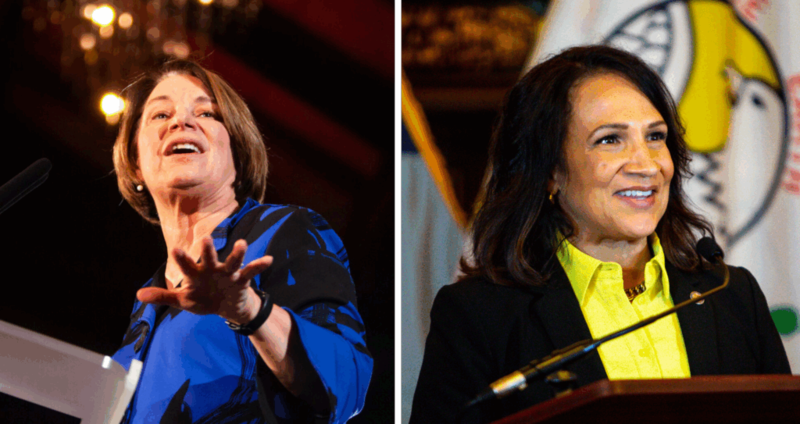
U.S. Sen. Amy Klobuchar (left) and Minnesota House Speaker Lisa Demuth, R-Cold Spring (right). (Photos by Nicole Neri/Minnesota Reformer)
U.S. Sen. Amy Klobuchar and House Speaker Lisa Demuth, two candidates running for Minnesota governor in November, broadly agree that the state needs to build more homes to increase supply and slow rising costs.
In-back-to-back interviews with KARE 11 on Wednesday at the Minnesota State Fair, Klobuchar and Demuth said addressing rising rents and mortgages is a top concern and agreed that the state has too many regulations that are stymieing the construction of more homes.
Klobuchar said the red tape around construction was what was hurting housing supply, while Demuth took aim at labor policies like paid family leave implemented by the Democratic-Farmer-Labor trifecta a few years ago.
Klobuchar, the Democratic-Farmer-Labor nominee for governor, said she would work with the private sector to build 100,000 new housing units, cut construction regulations and streamline permitting processes and utilize federal funding to increase the supply of housing.
“If you want to take a job, you can’t if you don’t have a place to live. If you want to have kids, you can’t if you don’t have a place to put them, and that’s why I’m so devoted to this issue,” Klobuchar said, pointing to her affordable housing plan.
Demuth, the Republican nominee, said she would get rid of government mandates that are driving up costs for businesses, which are then passing those additional costs onto the price of homes. But she was light on specifics, pointing vaguely to “energy codes,” minimum sick leave and paid family leave.
“When you look at the energy codes and the energy things that have pushed up the cost of housing — yet it’s done just as safe, but less expensive in our bordering states — we really need to reimagine that. We want to take care of our environment. We want to make sure that energy is there and available, but we also have to bring down the cost and the regulation,” Demuth said.
The House speaker has not yet released an affordable housing plan though she said she intends to.
Klobuchar released an affordable housing plan in June which includes making permanent the state housing tax credit; launching a low-interest revolving loan fund for rural developers; protecting manufactured home owners from exploitative practices by corporate park owners; and banning price-fixing algorithms, which companies use to coordinate rents.
Both Klobuchar and Demuth were noncommittal about forcing local governments to allow more density by overriding local zoning control, a contentious issue at the Minnesota Legislature. A bipartisan coalition of housing advocates for years has sought changes to restrictive local zoning codes at the Legislature, but cities have fiercely pushed back on the legislation.
Klobuchar said she supports “many elements” of the legislation, but didn’t say whether she would support the bill that stalled earlier this year in the Legislature.
Demuth praised the bipartisan group of legislators, housing advocates and local government officials who were able to make progress on the legislation this year. She said every community is different and she’s heard that cities are worried about increasing the strain on water and sewer infrastructure if zoning reforms are implemented. The bill never came up for a vote in the Legislature earlier this year.
Klobuchar said she believes that more people are wanting to move to the state after witnessing Minnesotans’ resistance to the incursion of thousands of immigration agents earlier this year during Operation Metro Surge, which she called “one of the top five civil rights moments of the century.” She said this will be a good thing for Minnesota’s housing supply.
“We stood up for people. We stood up for strangers, and I believe, in the end, when you’re a beacon like that, that makes people want to move to your state. That makes them want to start businesses here. All of that is tied in with housing,” Klobuchar said.
Demuth said the state in recent years has put many millions into preventing homelessness and affordable housing but doesn’t have the increased number of housing units to show for it. She said she wants to analyze how many homes are built in a certain time period to make sure taxpayer dollars are being used appropriately.
“The way we bring that affordability back in check is less regulation, less mandates put on by the state across all sectors that are really hitting families really hard,” Demuth said.
The KARE 11 interview was put on in partnership with Family Housing Fund, Greater Minnesota Housing Fund and Housing First Minnesota.

Saint Paul, MN