Kansas attorney general secures $1M restitution order against builder in consumer fraud case
May 21, 2026 | 2:35 pm ET

Description
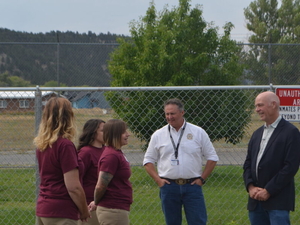
Kansas Attorney General Kris Kobach says a Hays contractor's penchant for fraud led a consumer protection lawsuit that will be settled with a commitment to pay $1 million in restitution to former clients and $20,000 to the state for investigative costs. Builder Rodney Rippe cannot again operate a business in Kansas and must comply with court orders or pay a civil fine of $480,000. (Photo by Sherman Smith/Kansas Reflector)
TOPEKA — The owner of an Ellis County construction business agreed to a district court order obligating payment of more than $1 million in restitution to eight customers and compliance with a permanent ban on operating any type of business in Kansas.
Attorney General Kris Kobach said the consent order against Rodney Rippe, of Hays, included a requirement that he pay the state $20,000 for the cost of investigating his deceptive business practices. The state sought enhanced civil penalties of $480,000, but exchanged that judgment for the injunction blocking Rippe from conducting business in the state and to protect customers’ restitution claims in any future bankruptcy proceeding.
“This judgement sends an unmistakable message to any business thinking about defrauding Kansas consumers,” Kobach said. “We will shut you down, we will ban you from doing business here, and we will ensure that you cannot escape remedies owed to victims.”
Rippe operated Straight Line Remodeling, a limited liability company that was registered in Kansas for the purpose of contracting for residential home construction and remodeling. His LLC registration for the company was forfeited in July 2025.
In the judgment obtained by the attorney general through a consumer protection lawsuit, Rippe was held personally liable for deceptive business practices and consented to the ban on operating, directly or indirectly, any business in the state. He cannot attempt to operate a business by using third parties, family members, shell entities or successors.
“The consent judgment constitutes an admission by defendant Rippe of the violations to the extent necessary to establish that the restitution debts owned arise from fraud and false pretenses,” the court document says.
Under the order, restitution owed to eight Straight Line Remodeling clients range from $13,000 to $417,000. That obligation by Rippe would survive the death of his former customers and would become property of the deceased individual’s estate or trust. The recipients of the payments were identified in court by their initials rather than by name.
If Rippe committed no violation of provisions of the agreement for 10 years, one half or $240,000 of the enhanced civil penalty secured for the state would be waived by the attorney general. Rippe could have the balance of the enhanced civil penalty discharged if he complied with the agreement for 20 years.
The attorney general’s office said if the defendant “materially breached” the consent judgment during the initial 10-year period the entire $480,000 would become immediately due. If that breach transpired in the second decade of the order, the remaining $240,000 penalty would be payable.

Topeka, KS