Judge denies Greenpeace request for new Dakota Access Pipeline trial
Nov 02, 2026 | 5:20 pm ET
Description
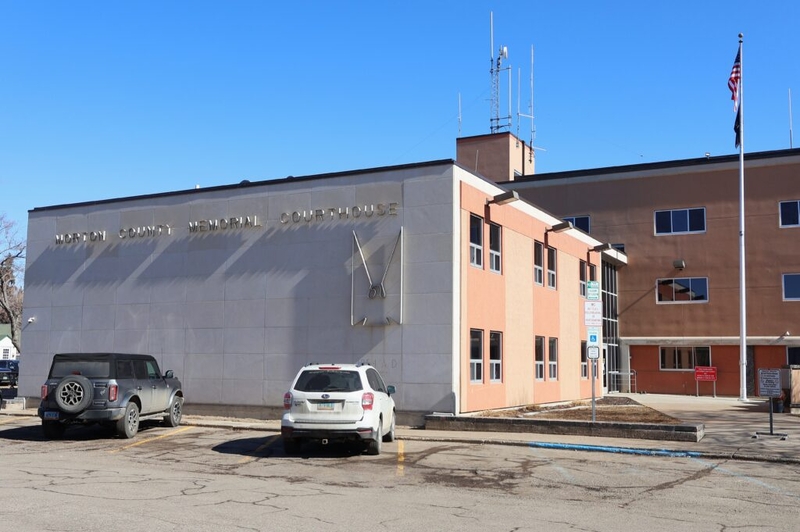
Exterior of the Morton County Courthouse in Mandan on Feb. 27, 2025. (Photo by Michael Achterling/North Dakota Monitor)
A North Dakota judge on Monday denied Greenpeace’s request for a new trial in the case brought against the organization by the developer of the Dakota Access Pipeline.
Greenpeace will now move forward with its appeal of the $345 million judgment entered against it earlier this year, the organization announced Monday.
“Since the district court refuses to right the wrongs committed at trial, we will next appeal the many wrongly decided and unresolved errors in the case to the North Dakota Supreme Court,” Kristin Casper, general counsel for Greenpeace International, said in the announcement.
Standing Rock Sioux Tribe files lawsuit to shut down Dakota Access Pipeline
In early 2025, a Morton County jury directed Greenpeace to pay Energy Transfer about $667 million, finding the environmental group at fault for inciting illegal acts against the company during anti-pipeline protests in North Dakota in 2016 and 2017 and for publishing false statements that harmed Energy Transfer’s reputation.
Southwest Judicial District Judge James Gion later slashed the jury’s award to $345 million.
Following Gion’s judgment, the environmental group requested a second trial, alleging that the first trial was not fair. Attorneys for Greenpeace argued Energy Transfer was allowed to present inaccurate and irrelevant evidence, and that the instructions and verdict form given to jurors contained major errors, among other alleged issues. The jury’s decision contradicted the credible evidence shown during the trial, Greenpeace said.
The group also claimed the jury pool was biased in Energy Transfer’s favor. Attorneys for Greenpeace noted that many Morton County residents have negative memories of the Dakota Access Pipeline protests, and the local economy is dependent on the energy industry. They also pointed to mailers and other media circulated in Mandan and Bismarck before the trial that contained anti-Dakota Access Pipeline protest and pro-energy industry content. Greenpeace suggested Cass County as a venue for a new trial.
Attorneys for Energy Transfer have defended the jury’s verdict and disputed Greenpeace’s claims that the court proceedings were unfair.
“Today’s order denying Greenpeace’s motion for a new trial confirms what a North Dakota jury unanimously found after a full trial: Greenpeace is responsible for the harm it caused,” Energy Transfer said in a Monday statement.
Greenpeace seeks new trial, claiming jury pool biased in case over Dakota Access Pipeline
Gion in the order said he did not find Greenpeace’s arguments persuasive. He noted every juror pledged under oath that they could make an impartial decision in the case when they were seated.
He also voiced concerns about the burden such a lengthy trial would place on the court system in Cass County. A second trial in Fargo “could lead to years of delay” for other cases, Gion wrote.
Greenpeace also asked for a new trial because it believes Gion made several legal errors while overseeing the case. Gion wrote in his opinion that it would be best for those claims to be addressed in the appeal process.
Before the Morton County trial kicked off, Greenpeace also asked for the trial to be moved to Cass County, which Gion and the North Dakota Supreme Court denied.
The lawsuit is against three separate Greenpeace organizations — Greenpeace USA, Greenpeace International and Greenpeace Fund.
The more than three-week trial in Gion’s court last year featured dozens of witnesses, including current and former Greenpeace employees, Indigenous activists, Energy Transfer representatives and law enforcement.
Greenpeace International last year filed a separate lawsuit in the Netherlands that accuses Energy Transfer of weaponizing the U.S. legal system against the environmental group.
Following a May decision from the North Dakota Supreme Court, Gion in August ordered Greenpeace International to withdraw any claims in the overseas case that argue that the North Dakota lawsuit lacks a legal foundation. Under the order, Greenpeace International is also barred from seeking any financial compensation that would offset the Morton County jury’s verdict.
Bismarck, ND