Grinnell College Poll shows increased confidence in correct vote counts for midterms
Nov 02, 2026 | 6:15 pm ET
Description
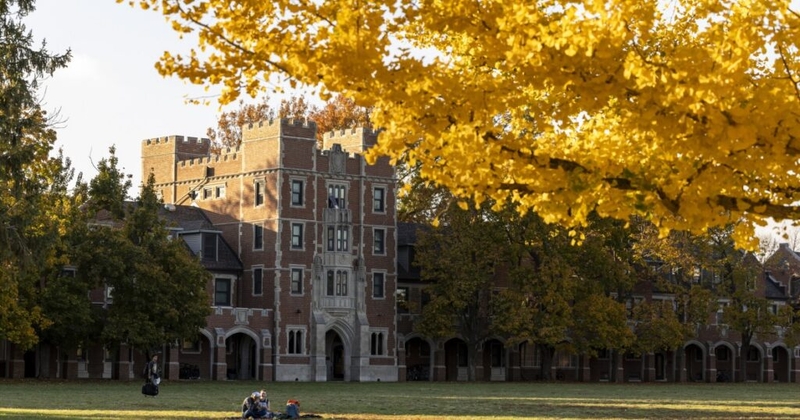
The Grinnell College Poll gathered responses on voting and other topics from 1,500 U.S. residents. (Photo courtesy of Grinnell College)
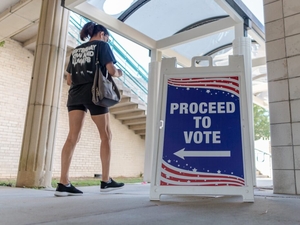
More Americans are confident in the integrity of vote counts for the midterm elections than in past election cycles, according to a poll authored by Grinnell College students and faculty.
The Grinnell College Poll, delivered every two years since 2018, was administered by YouGov through a web survey in mid-October and recorded responses from 1,500 U.S. residents over 18. It runs the gamut of current political topics, asking respondents about the election and national issues like the economy, immigration and technology.
According to a news release announcing the poll results, 64% of respondents are confident that votes will be counted correctly in Tuesday’s midterm elections, in which Iowans will cast their vote for the state’s next governor and federal and state lawmakers.
Peter Hanson, Grinnell political science professor and director of the Grinnell College Poll, said confidence in the correct counting of votes grew in this poll by 4 percentage points from the previous survey in March 2024, which placed confidence at 58%. Hanson’s students help co-author questions for the Grinnell College Poll, he said, and they’re paying close attention to the midterm races.
That increase came mainly from Republicans, of which 41% reported confidence in the vote in 2024 and 66% indicated the same in this year’s survey. Just under three-quarters of Democrats and respondents who reported leaning that direction this year reported feeling either somewhat or very confident in the vote.
“We have about a 25-point jump in Republican confidence in the vote, and I think that’s really primarily a function of Donald Trump being president,” Hanson said. “Now, with him being president, they think it’s more likely that votes will be counted as intended.”
It’s an interesting finding when looking at the “constant drumbeat of attacks from the president questioning the integrity of our elections,” Hanson said. As Democrat confidence in the vote has remained high through previous iterations of the poll, he said he interprets that to mean that they didn’t believe President Donald Trump’s claims, which have not been substantiated.
Close to 90% of respondents, regardless of party leaning, stated they believe it’s very important that “free and fair elections are conducted without fraud, led by Democrats at 91% and followed by Republicans at 89% and independents at 82%. This is one of the “core democratic values” the poll touches on, Hanson said, and provides a contrast to responses to a question of American democracy.
A majority of both political parties, as well as independent voters, reported their agreement with the statement, “American democracy is in crisis,” with somewhat or strong agreement from 84% of Democrat respondents, 60% of Republicans and 66% of independents.
“We have this contrasting view of the electorate, where they say they believe deeply in core democratic values, but they are very worried about the state of American democracy,” Hanson said.
Only 5% of Democrat respondents said they approve of Trump’s handling of his job leading the U.S., compared to 78% of Republican respondents and 22% of independents.
When it comes to the midterm elections and how political parties could potentially come out, Hanson said that when “looking at the structure of the political environment… it’s very clearly a very good year for the Democrats,” based on Trump’s 35% approval rating in the Grinnell and other polls and perceptions of the economy.
The poll asked respondents about their expectations for the U.S. economy in the next 12 months, to which 43% of Republicans, 12% of Democrats and 10% of independents reported their belief that it will be better. More than half of both Democrats and independents responded that they expect the economy to be worse, compared to 15% of Republicans.
Hanson said his go-to line about elections is that they’re decided by turnout and persuasion. He thinks the Democrats have the turnout advantage. Democratic voters are “likely to show up to vote in larger numbers than Republicans,” he said, as they’re motivated and “deeply concerned about the state of the country.”
“Then in terms of persuasion, that’s really a story about independents, and independents have really soured on President Trump,” Hanson said. “They disapprove of the job he’s doing in office. They’re very concerned about the economy, and those are things that are likely to lead them to vote for Democrats in larger numbers than they would for Republicans.”
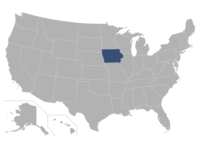
Des Moines, IA