It’s Election Day. Here’s what Michigan voters need to know.
Nov 03, 2026 | 4:00 am ET
Description
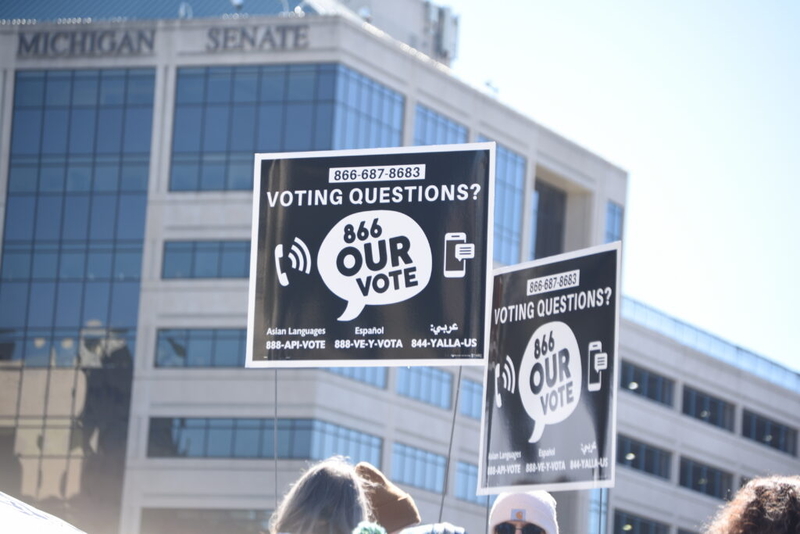
Signs informed attendees at Lansing's No Kings protest on Oct. 17, 2026 of a nonpartisan voter protection and information hotline. (Photo by Katherine Dailey/Michigan Advance)
Election Day marks the culmination of months of campaigning in Michigan for races that will likely determine party control of crucial seats on both a state and federal level — including the U.S. Senate, governor’s office, a number of key U.S. House races and both chambers of the state Legislature.
As of midafternoon Monday, the Michigan Department of State reported that more than 2.3 million Michiganders had already cast ballots, including more than 743,000 who voted in person at early voting sites and more than 1.5 million who returned absentee ballots by mail.
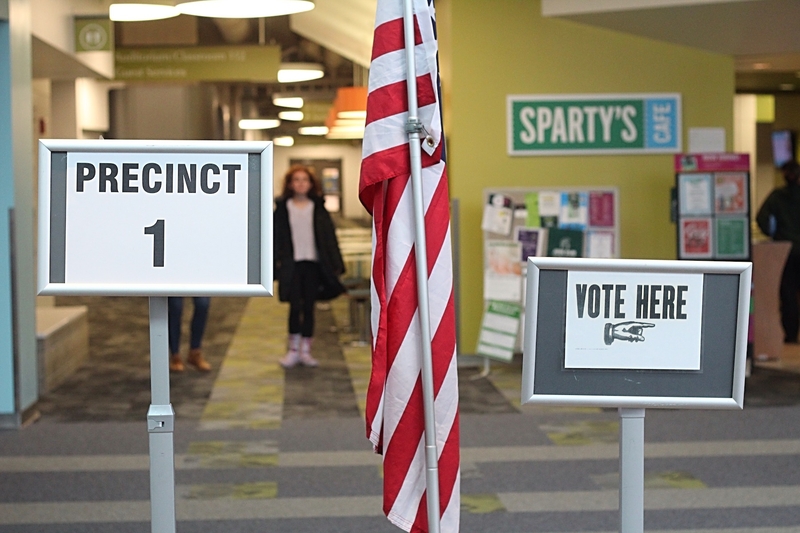
For those who still have to cast their ballots, polls are open from 7 a.m. to 8 p.m. local time in Michigan. While most of Michigan voters will be casting ballots in the Eastern Time Zone, four counties in the Upper Peninsula — Dickinson, Gogebic, Iron, and Menominee — use Central Time instead and won’t finish voting until 9 p.m. Eastern Time
Concerns about a federal presence at the polls have been voiced throughout the election cycle, and local clerks throughout Michigan have worked to ease fears from potential voters.
Advocates are also working to ensure voters know what to do if they do encounter election interference, law enforcement presence or any other problems while voting. The national, nonpartisan Election Protection Coalition has launched a hotline, 866-OUR-VOTE, for reporting voting problems and seeking assistance.
Hotlines are also available in Spanish at 888-VE-Y-VOTA, in Arabic at 844-YALLA-US, and in Asian languages at 888-API-VOTE.
Federal election monitors from the Department of Justice are expected in Detroit, East Lansing, Flint, Grand Rapids, Hamtramck, Lansing and Warren. Federal monitors are standard and have been present at elections around the country for years. They function as observers to ensure voters are able to freely cast their ballots, and in Michigan’s primary, were described by election officials as “polite and unobtrusive.”
Andrew Walchuk, the policy director and counsel for Common Cause, did express concerns about a potential lack of proper training for DOJ poll watchers after the Civil Rights Division has been “decimated by this administration.”
The real concern, however, comes if federal troops or armed federal law enforcement, including ICE, are present at polling places, which is illegal.
A “Know Your Rights” flyer from the National Police Accountability Project explains that local police can be present if election officials or members of the public call for assistance — though “sustained law enforcement presence at a polling location could constitute voter intimidation or interference under state criminal law.”
In Grand Rapids, advocates with GR Rapid Response to ICE are maintaining a hotline of their own, 616-238-0081, to report any local ICE presence.
“If there are armed federal agents, whether they are from DHS or the FBI or any other federal entity, they’re not allowed to be there,” Walchuk said. “Federal law for 150 years has forbidden federal agents, armed agents, from being at the polls, and so that is something that, if anyone does see agents at the polls, they should call the hotline.”
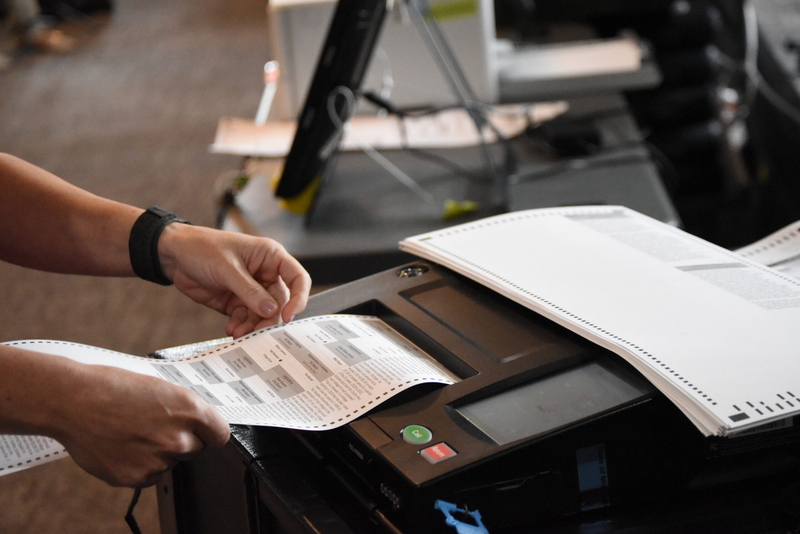
Once polls close, results will not be immediately available, especially in elections that may come down to just a few percentage points.
Though many concerns about election interference are centered on Election Day itself, advocates, including Jessica Ayoub, the deputy political director of the ACLU of Michigan, are also preparing to combat any interference in the election certification process.
“Michigan law is clear: boards of county canvassers in Michigan must certify the election results based solely on the record of votes cast. They tally the votes and certify the results,” Ayoub said in a press call with the Election Protection Coalition. “The role of boards of county canvassers is not discretionary. Canvassers double check the math. They do not police our elections.”
Ballotpedia’s summary of Michigan law states, “Automatic recounts are required if the vote differential between the two candidates is .1% or less for statewide elections, including ballot measures, 75 votes or less for state senate elections, and 25 votes or less for state house elections.”
A candidate can also request a recount if they meet certain requirements and file a request officially “not later than 5 p.m. of the second day after the day the board of state canvassers certifies the results of the election.”
In Michigan, canvassers are required to certify results no later than the 14th day after the election.
Lansing, MI