Iowa Supreme Court upholds dismissal of former Dordt student appeal in religious discrimination case
Oct 28, 2026 | 4:54 pm ET
Description
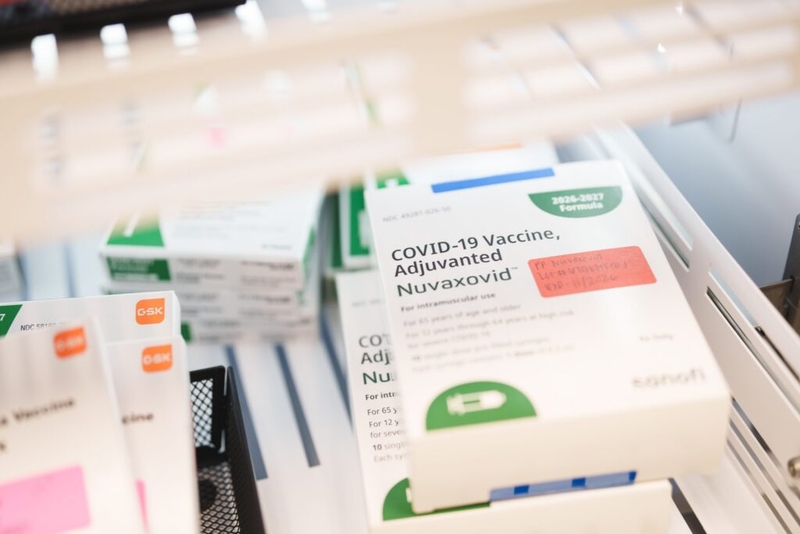
The Iowa Supreme Court has upheld the dismissal of a case in which a Dordt University student was denied a religious exemption from the COVID-19 vaccine. (Photo by Spenser Heaps for Utah News Dispatch)
The Iowa Supreme Court has upheld a lower court’s dismissal of a Dordt University student’s claim of religious discrimination that stemmed from a request for a COVID-19 vaccination exception.
Andrew Perry, a former nursing student at the Sioux Center private university, sued Dordt for religious discrimination in 2022 after the university denied his exemption request for receiving the COVID-19 vaccine, which Dordt’s clinical partners in 2021 began requiring for students completing clinical rotations in healthcare settings.
His lawsuit was dismissed in district court “primarily because the student did not have a sincerely held religious objection to the vaccine,” the Iowa Supreme Court’s opinion on the case stated. Iowa Supreme Court Justice David May said in the opinion that the justices found “no grounds for reversal,” agreeing with the district court’s ruling.
“Ultimately, the court found that the student’s claim was not credible. It was really his parents who opposed the vaccine, not the student,” May said in the opinion.
According to the court opinion, Perry’s mother, Gayln, expressed greater issues with the vaccine mandate than Perry had expressed himself, and was “adamantly opposed to Andrew getting the vaccine” while Perry volunteered and trained in how to administer the vaccine to patients.
She emailed back and forth with Dordt nursing program chair Deb Bomgaars about the requirement from Dordt’s partners for clinical rotations, the opinion stated. When asked by Perry about getting the vaccine to continue his studies, she allegedly threatened to cut off all of his financial assistance — including money for tuition, room and board.
Perry sent an email to Bomgaars stating he didn’t have a personal problem with the COVID-19 vaccine but wanted to respect his parent’s wishes, testifying later that he sent it “out of fear” rather than financial threats from his parents, but the district court found his testimony lacked credibility as to his true intentions behind the email.
The student discussed getting the vaccine behind his mother’s back with Bomgaars and others in the fall 2021 semester, the opinion stated, but submitted an exemption request based on his belief that “his body is a temple of God and that he must be a steward of his own body.” Three days before Perry put in his request, his parents sent a letter to the institution supporting his ask.
Perry’s request was denied on the basis that he didn’t submit a statement from his denomination opposing the vaccine or provide evidence of previous religious exemptions during his time in primary and secondary school.
No longer able to participate in Dordt’s clinical rotations as a student, Perry applied for other programs and was accepted into Palm Beach Atlantic University and started there in spring 2022.
The district court found that Perry wasn’t credible in his claimed opposition to knowingly introducing anything in his body that would put him at risk, noting that during cross examination it was disclosed that he vaped and had consumed alcohol to excess. It was also shown that Perry was more motivated by “pleasing his parents and financing his continued education” than by his religious beliefs, the court found.
In cases where a student claims religious discrimination through the Iowa Civil Rights Act, the court opinion stated the must student must demonstrate a “bona fide belief” that complying with the institution’s requirements would go against their religious beliefs or practices, that they told the institution about this issue, and that they were penalized for not complying.
While Perry fulfills two of the three criteria, the opinion stated it agrees with the district court’s finding that the request “was not sincere and cannot form the basis for a claim of religious discrimination in this matter.”
“Ultimately, the court’s sincerity determination was based on facts relating to Andrew’s credibility, not his performance or observance. Those facts showed that although Andrew was personally willing to take the vaccine, he was also well aware of the financial repercussions of defying his mother’s prohibition,” the opinion stated. “We find no error in the court’s approach.”
Des Moines, IA