FCC moving forward on rule to allow prison cellphone jamming
Oct 28, 2026 | 4:29 pm ET

Description
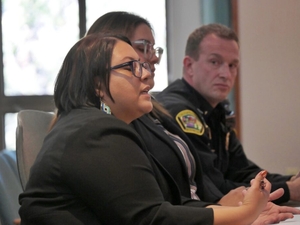
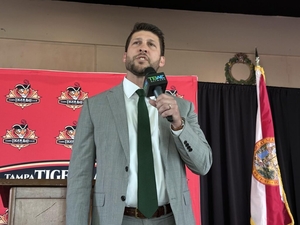
Federal Communications Commission Chair Brendan Carr during an Oct. 28, 2026 press conference in Little Rock, Arkansas. (Photo by Ainsley Platt/Arkansas Advocate)
The Federal Communications Commission said Wednesday it is moving forward with a rule change that will allow local and state correctional facilities to jam cellphone signals.
The commission will vote in three weeks on the final rule change, FCC Chair Brendan Carr told reporters at a press conference in Little Rock.
He was joined by U.S. Sen. Tom Cotton and Arkansas Attorney General Tim Griffin — both Republicans — as well as state Corrections Secretary Lindsay Wallace, Division of Correction Director Dexter Payne, South Carolina Department of Corrections Director Joel Anderson and a representative of the Federal Bureau of Prisons.
The announcement came just over a year after Carr, Cotton and Griffin first announced the effort. While federal prisons are able to use jamming within their facilities, state and local prisons have not been allowed to do so under a federal law that prohibits states or individuals from “willfully or maliciously” interfering with “licensed or authorized” radio communications, which include cellphones.

The rule change will allow the jamming technology to be deployed by deauthorizing the use of cellphones within prison facilities. Carr said last year that the longstanding ban was due to a “misreading” of the law.
Once the rule change is in place, “corrections officials can apply to the FCC, outline how they’re going to do their jamming. They’ll get approval from the agency and they’ll be able to get going,” Carr said.
Cotton, who is running for reelection against Democrat Hallie Shoffner and Libertarian Jeff Wadlin, has been an advocate for allowing state and local prison officials the ability to jam cellphones. Cotton has at least twice introduced a bill to prohibit the FCC from disallowing state and local corrections agencies from jamming — though neither time has the measure advanced to a vote in its assigned Senate committee.
Standing behind a table displaying cellphones they said were confiscated from people incarcerated in state prisons, Cotton, Griffin and Carr called contraband cellphones a public safety threat.
“A major prison drug ring in Georgia moved 14 kilograms of meth and nearly a kilogram of heroin into the Atlanta area using contraband cellphones behind bars,” Cotton said. “Also, in South Carolina, prisoners used contraband cellphones to run a sextortion scheme that targeted hundreds of our troops and tragically led to the suicide of several victims.”
He did not cite specific examples of cellphones being used for similar purposes in Arkansas, though he said sheriffs and correctional officers told him last year that finding and disposing of contraband cellphones was “one of the most dangerous parts of their jobs.”
Cellphones are common in prisons around the country, and have been used to coordinate hits, drug smuggling and other crimes within prison walls. But they are also used in other ways.
Incarcerated people have used them to stay connected with family and friends in the outside world. One person used one to take virtual college classes. Contraband cellphones were also used in the making of The Alabama Solution, an Oscar-nominated documentary shining further light on the dangerous conditions inside Alabama’s prisons.
Kaleem Nazeem, a co-director of decARcerate who was previously incarcerated in state prison, said in a text message that the changes would do little to address what drives most incarcerated people to use the cellphones in the first place.
“If the prices on using the (prison) phones wasn’t so high, then I don’t think you’ll have this problem where they’re running into problems with individuals having cellphones,” Nazeem said. “The majority of the individuals who are using these cellphones are only trying to, basically, stay in contact with their loved ones or try to stay up to date with technology and information.”

Cotton said state and local corrections officials would not be required to use cellphone jamming, and that the use of the technology would be “targeted” and would not “interrupt with lawful communications outside of prisons or jails.”
State prison officials said last year that increased gang violence in Arkansas’ prisons coincided with an increase in cellphone confiscations.
Carr said there could be legal challenges to the new rule if it’s approved by the commission, but expressed confidence that it would be upheld in the courts. He also denied that jamming cellphones in prisons opens the door to doing so in other places.
“That’s not something that’s been under consideration by the FCC at all,” Carr said. “Our view is that the jamming authorization is unique as to prisons and jails.”
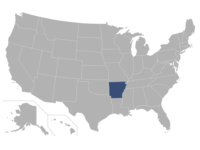
Little Rock