Iowa judge blocks ICE’s efforts to deport Bolivian man to Congo
Apr 08, 2026 | 5:11 pm ET

Description
A federal judge in Iowa has blocked the federal government from deporting a Bolivian asylum-seeker. (Main photo by Caspar Benson/Getty Images; logo courtesy U.S. Department of Homeland Security)
A Bolivian asylum seeker who was unlawfully jailed in Muscatine County before his release in January now faces deportation to Congo.
Attorneys for José Yugar-Cruz, 36, say their client was detained Wednesday by Immigration and Customs Enforcement agents who now plan to deport him to the Democratic Republic of Congo.
By midday, Yugar-Cruz’s attorneys had filed an emergency motion in U.S. District Court for the Southern District of Iowa, seeking to immediately block ICE’s deportation efforts.
Less than four hours later, U.S. District Judge Stephen H. Locher issued an order blocking ICE and the U.S. Department of Homeland Security from either deporting Yugar-Cruz or moving him outside the Southern District of Iowa, at least until further order from the court.
Locher also gave the U.S. Department of Justice until April 13 to file affidavits and exhibits establishing the lawfulness of Yugar-Cruz’s detention and to make a recommendation as to whether an evidentiary hearing in the matter should be conducted.
The move by ICE to deport Yugar-Cruz comes just two days after the Trump administration announced a new international agreement that allows the United States to send to the Democratic Republic of Congo individuals who, without authorization, have come to the United States from third-party countries. Several African nations have signed such deals with the administration, raising concerns among advocacy groups who cite the repressive nature of their governments.
Congo’s government has said there will be “automatic” transfer of the deportees who arrive there from the United States, but added that “each situation will be subject to individual review.”
Getsy Hernandez of the immigrant advocacy group Escucha Mi Voz Iowa said Wednesday that deporting Yugar-Cruz to Congo — where he has no ties, financial resources, or legal status — would place him at significant risk of persecution or torture.
“This is exactly what asylum law is meant to stop,” Hernandez said. “Deporting people to countries they’ve never lived in — with no support and with real danger — is putting their lives at risk, and it must end. No deportations to third countries.”
Jailed for 11 months by ICE
Court records show that Yugar-Cruz entered the United States from Bolivia in July 2024. In court filings, he alleged that while living in Bolivia, he operated a small business and had “refused to facilitate the drug trade by police officials” who then detained him and tortured him.
In the court filings, Yugar-Cruz said he fled to Mexico, then entered the United States on foot at the Arizona border, and then “sought out and surrendered” himself to federal immigration officials. He was then taken into custody and jailed, after which he applied for asylum based on the threat of persecution in Bolivia.
In December 2024, a federal immigration judge held a hearing on Yugar-Cruz’s asylum request. In January 2025, a judge ruled the U.S. government could not send Yugar-Cruz back to Bolivia due to the ongoing threat of torture.
The judge granted Yugar-Cruz “withholding-of-removal relief” — a form of protection for individuals who face persecution if returned to their home country. It prevents the U.S. government from deporting an individual to a country where their life or freedom would be threatened.
In February 2025, however, Yugar-Cruz was still being held in the Freeborn County Adult Detention Center in Albert Lea, Minn. While there, he spoke to ICE officials who first indicated he’d be released in “15 days or so,” but later informed him they would continue to hold him while looking for some third-party country to which he could be deported.
The lawsuit alleged ICE officials proposed that Yugar-Cruz be deported to Argentina, Chile or Paraguay, all of which border Bolivia, but Yugar-Cruz objected, noting that Bolivians, including the police, can easily travel to those countries without a passport. Mexico was proposed as an alternative, but Yugar-Cruz expressed concern officials there would simply deport him to Bolivia.
On Dec. 3, 2025, Yugar-Cruz was transferred from the Albert Lea jail to the Muscatine County Jail in Iowa. Nine days later, Yugar-Cruz’s attorney sued the Muscatine County jail administrator, as well as Homeland Security officials, alleging they were violating federal law by continuing to detain Yugar-Cruz after the immigration judge had ruled in his favor.
As part of that lawsuit, Yugar-Cruz’s attorney noted the Trump administration had adopted a practice of deporting people to third-party countries with no guarantee those individuals wouldn’t immediately be sent to their home country, where they faced persecution or torture.
A federal judge in the District of Columbia has ruled the practice amounts to a “widespread effort to evade the government’s legal obligations by doing indirectly what it cannot do directly.”
Yugar-Cruz has no criminal record, according to his attorney’s court filings. His lawsuit alleged violations of his due process rights and the Immigration Nationality Act and sought his immediate release from the Muscatine County Jail.
Earlier this year, Locher ordered the Muscatine County Jail to work with ICE officials in securing Yugar-Cruz’s immediate release, and on Jan. 7, 2026, ICE officials confirmed for the court that Yugar-Cruz had been discharged from the county jail while remaining subject to the supervision of ICE.
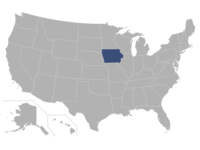
Des Moines, IA