‘This industry is the future:’ Clark County teachers union wants state to deal with data centers
Sep 10, 2026 | 8:56 am ET
Description
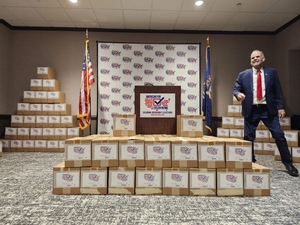
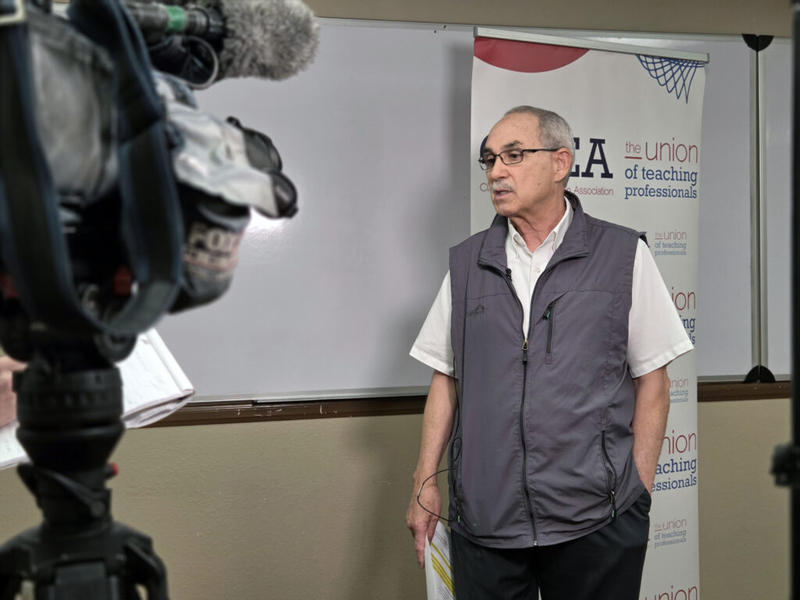
“The industry isn’t going away. This industry isn’t stopping. This industry is the future. And if Nevada gets too far behind, they won’t catch up," said Clark County Education Association John Vellardita at a press conference Wednesday. (Photo: April Corbin Girnus/Nevada Current)
The Clark County Education Association is calling on Nevada lawmakers to stop pushing to ban data centers entirely and instead focus their efforts on ensuring revenue from the data center boom benefits public education.
CCEA, which represents teachers and licensed staff within the Clark County School District, on Wednesday unveiled a plan they say could help bring the state closer to reaching the national average for per-pupil spending. The plan involves ending the abatement of the local schools support tax (LSST), which is a portion of the state sales tax, and “revisiting” the abatement of personal property tax.
Currently, new or expanding data centers are able to receive a 75% abatement on personal property tax and pay a reduced sales and use tax rate of 2%. Those abatements last for 10 or 20 years, depending on the level of capital expenditures made by the data centers and jobs created.
The state abated $240 million in sales tax for data centers in 2023 and 2024, according to the most recent biennial report by the Nevada Department of Taxation. That’s up significantly from $90 million abated in 2021 and 2022.
CCEA estimates their proposal could bring $2 billion in LSST to the state’s pupil-centered funding formula in four years.
Union representatives did not provide a complete breakdown of how that estimate was reached, but they acknowledged that it assumes massive growth in the data center industry in Nevada. They also acknowledged the state would likely still be abating hundreds of millions of dollars in taxes for data centers each year under their envisioned scenario.
“There’s potentially $200 billion that is going to be invested in this state by several big players of the industry,” said CCEA Executive Director John Vellardita during a press conference. “The industry isn’t going away. This industry isn’t stopping. This industry is the future. And if Nevada gets too far behind, they won’t catch up.”
That $200 billion estimate comes from the industry, according to a union spokesperson. Vellardita said there are “seven to nine” new data centers planned to open in the state.
Vellardiata emphasized that the union has had conversations with the data center industry, legislative leadership, and Gov. Joe Lombardo’s office.
“We’re looking for leaders to step up and be able to move this discussion,” he added.
Vellardita criticized state Sen. Dina Neal (D-North Las Vegas) for requesting the drafting of a bill to end tax abatements for data centers and implement a statewide moratorium on new or expanded data centers.
“That’s more of the same by an individual that voted for” the establishment of the tax abatement program in 2015, he said. Other politicians, he added, have “suddenly gotten enlightened” and taken stances against data centers.
Changes to the state’s data center tax abatement program would require legislative action but would likely not require a two-thirds majority since it would not directly raise revenue.
CCEA’s goal is to ensure data centers aren’t allowed to abate the LSST.
“What’s negotiated beyond LSST, that’s something that we’re not claiming to have a stake in,” said Vellardita.
Tax-abated data centers currently pay a reduced sales and use tax rate of 2%, with none of that revenue going directly to the state’s education fund. Lawmakers could change the reduced sales tax rate to 4.6% — the existing 2% rate plus the 2.6% LSST. They could also bump the reduced sales tax rate to 2.6% and dedicate all of it to schools.
Something like that second option would increase funding for schools but result in reduced funding for state agencies and services currently funded by sales tax.
The end goal is to ensure data centers are “good corporate partners,” said CCEA President Kristan Nigro.
Lombardo, who CCEA has endorsed, is supportive of data centers, saying the state already has safeguards in place around water, energy, and jobs.
Neither Lombardo’s gubernatorial office nor his campaign responded to the Nevada Current’s request for comment on CCEA’s proposal.
Attorney General Aaron Ford, the Democrat hoping to unseat Lombardo, has said he supports a pause on data center tax abatements.
In a statement Wednesday, Ford for Governor spokesperson Prerna Jagadeesh reiterated Ford “will stop all new tax breaks for data centers,” but did not directly respond to the CCEA proposal.
Several groups, including the Sierra Club Toiyabe Chapter and Battle Born Progress, quickly panned the CCEA data center proposal.
The Nevada State Education Association in a statement called it “a pro-data center policy with some education funding attached to make a deeply unpopular industry easier to sell.”
“Adequately funding Nevada’s public schools should not depend on the continued growth of an industry facing increasing public opposition and raising serious concerns about our power grid, water supply, and rising utility costs,” said NSEA Deputy Executive Director Alexander Marks.
Sierra Club Toiyabe Chapter Executive Director Olivia Tanager expressed a similar sentiment, saying in a statement that data centers “are already forcing us to confront difficult questions about our electric bills, our water resources and our ability to meet our climate commitments. The answer cannot be to simply build more of them and hope the revenue makes the impacts worthwhile.”
Other options?
In 2017, Nevada state lawmakers established a Commission on School Funding and tasked it with exploring options for bringing Nevada to the national per pupil funding average. The commission recommended reforming the state’s property tax and expanding the sales tax base so it captures not just physical goods but also digital products or services. The state could, the commission concluded, make the change gradually and get to the national average in a decade.
“Pass the plan” has become a rallying cry for NSEA.
Bills proposing changes to property and sales tax have been introduced in various legislative sessions but nothing substantial has been successful. (Neal, the senator Vellardita called out by name, has sponsored several of them and appears to be gearing up for another attempt next year.)
Vellardita said he sees no path forward for the options laid out by the commission.
Their plan has “been sitting on the shelf for four or five years because there’s no political will,” he said. “There’s no political will to raise taxes in this state.”
Las Vegas, NV