Indiana Supreme Court weighs limits of religious exemptions to abortion ban
Sep 10, 2026 | 1:15 pm ET
Description
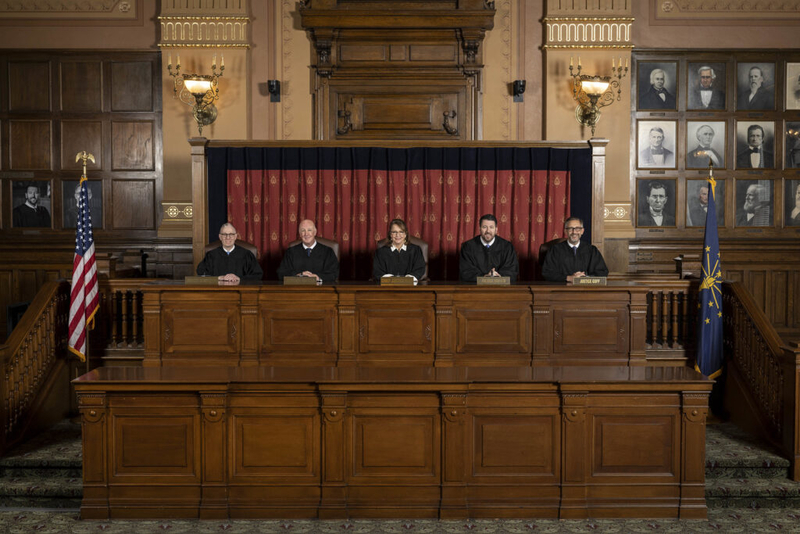
The Indiana Supreme Court is weighing whether the state’s religious freedom law protects access to abortions that its near-total ban otherwise prohibits. (Courtesy photo)
The attorney general’s office urged Indiana’s highest court Thursday to dismiss a religious freedom challenge to the state’s near-total abortion ban, arguing that women who are not pregnant or seeking abortions have brought their case too soon.
But Indiana Supreme Court justices questioned whether women should have to wait until they are pregnant and seeking abortions to go to court — while also pressing the plaintiffs’ attorney on how a religious exemption would work and who would qualify.
The hourlong argument centered on two Indiana laws: the abortion restrictions lawmakers enacted in 2022, and the 2015 Religious Freedom Restoration Act, or RFRA, which limits when the government can “substantially burden” a person’s religious exercise.
The state is asking the high court to overturn a March ruling by Marion Superior Court Judge Christina Klineman that permanently bars the defendants from enforcing the ban against two anonymous women, Hoosier Jews for Choice and a certified class, when denying an abortion would substantially burden their religious exercise.
The injunction does not overturn the abortion ban for everyone, however. The lawsuit seeks protection for people whose sincere religious beliefs call for abortions in circumstances Indiana otherwise prohibits.
There is no timeline for a decision.
“Plaintiffs’ entire claim is built on a chain of speculation,” Indiana Solicitor General James Barta told the justices. “During the four years that this case has been pending, plaintiffs have never been pregnant or wanting an abortion.”
Ken Falk, legal director of the American Civil Liberties Union of Indiana, countered that the women already are being harmed because they have changed their intimate relationships and family planning to avoid pregnancies they might be unable to terminate in accordance with their beliefs.
“They’re being injured today. They’re changing their behavior today,” Falk said.
When can women sue?
Much of Thursday’s argument focused on standing and ripeness — whether the plaintiffs have suffered an injury that allows them to sue and whether the dispute is sufficiently concrete for a court to decide.
Barta argued that the case depends on a series of uncertain future events: a plaintiff becoming pregnant, wanting an abortion for religious reasons, lacking an acceptable alternative and being unable to obtain the procedure under the ban’s existing exceptions.

Asked whether a woman must already be pregnant to bring such a case, Barta said “they need to be pregnant and wanting an abortion, for the most part.”
The justices tested that position against other circumstances when someone might seek a ruling before an anticipated conflict with the law.
One hypothetical involved a devout Catholic nurse who objects to assisting with abortions at a state hospital. Another involved a woman who wants a child but has a history of serious pregnancy complications and wants to know whether an abortion would be available before risking another pregnancy.
Barta said those cases would turn on specific facts, including how likely the feared conflict was to occur. He said the state was drawing a line against indefinite future intentions, rather than offering a rule that could resolve every possible case.
“I think the bright line we are drawing is that you need more than someday intentions,” Barta said. “You need actually a concrete course of action that you’re going to undertake that will run up against the statute.”
Both sides repeatedly pointed to the U.S. Supreme Court’s 2014 Hobby Lobby decision, which addressed business owners’ religious objections to providing insurance coverage for certain contraceptives.
Falk compared the Hoosier women’s situation to that of business owners having to change their behavior because of possible future conduct with religious significance.
Barta maintained, however, that the owners faced an immediate choice between purchasing the coverage and financial penalties, not a series of uncertain future events.
The plaintiffs believe that uncertainty about abortion access is already reshaping their lives.
One anonymous plaintiff, who is Jewish, attested in court documents that she believes her physical and mental health must take precedence over the potential life of a fetus. She wants another child but fears becoming pregnant without assurance she could obtain an abortion if her beliefs required one.

The second woman does not belong to a particular religious tradition but describes spiritual beliefs centered on human connectedness and bodily autonomy. She does not want another child and says anxiety about an unintended pregnancy has reduced physical intimacy with her husband.
Falk argued that forcing women to wait until they are pregnant overlooks those present injuries.
“The plaintiffs are always going to be in the position of either having to forgo personal behavior so they don’t become pregnant,” Falk said, “or showing up to court when they’re pregnant.”
Still, the justices questioned whether the case depended on too many events that might never happen and asked how the court could evaluate religious burdens without knowing the circumstances of a particular abortion. They raised concerns, too, about whether the named plaintiffs fit a class defined to include people who need, or will need, abortions for religious reasons.
Barta maintained that changes in behavior alone do not establish a legal claim. He argued that the women’s decisions reflected concerns beyond the abortion ban — including access to quality obstetric care and child care costs — and that they had not shown the law caused their alleged injuries.
“Anonymous (plaintiff) one testified that even if she won the case, she’s not sure her behavior would change,” Barta said. “She’s concerned about a lot of things other than this law.”
Religious protections and prenatal life
If the court finds that the women can bring the case, it must then decide whether enforcing the abortion ban against them violates RFRA.
Under RFRA, the government can substantially burden religious exercise only if it shows that applying the burden to the person furthers a “compelling” governmental interest through the least restrictive means.
Indiana’s abortion law allows limited exceptions for rape or incest, a lethal fetal anomaly and circumstances in which an abortion is necessary to save a pregnant woman’s life or prevent a serious health risk. Different time limits apply. The statutory definition of a serious health risk excludes psychological or emotional conditions.
Barta argued that Indiana has a compelling interest in protecting prenatal life and that the existing exceptions reflect narrow circumstances in which lawmakers balanced competing interests.
Indiana abortion ban law stands as state Supreme Court rejects challenge
Justice Geoffrey Slaughter pointed to the roughly 99% decline in abortions cited by the state and questioned whether that demonstrated the exceptions were narrow in practice.
Falk said the question under RFRA is more specific.
“The point of course, under RFRA, is not for us to talk about the general compelling interest of the state, but to ask, ‘What is the compelling interest in not allowing an exception for religious reasons?’” he told the justies.
Falk maintained that Indiana could establish a process to evaluate requests for religious exemptions, just as it evaluates religious accommodations in other settings. He pointed to religious diets in prisons and exemptions from immunization requirements as examples.
“There’s plenty of ways to do this,” Falk said. “The state could develop procedures to decide that.”
Who would qualify?
The justices further pressed Falk on the limits of the relief he sought, including whether a ruling for the plaintiffs would permit abortions at any point in pregnancy simply because someone claimed a religious reason.
Falk said it would not.
“The limiting principle obviously always is sincerity. And I know sincerity must be assessed with a light touch,” he said. “But it’s assessed, right?”
He also agreed that the state’s interest increases as a fetus reaches viability and said he is not arguing for an unrestricted exemption extending from conception to birth.
The point of course, under RFRA, is not for us to talk about the general compelling interest of the state, but to ask, 'What is the compelling interest in not allowing an exception for religious reasons.
The court also explored the consequences of ruling against the class on the merits rather than dismissing the case as premature.
A decision on the merits could bind class members, while a dismissal on standing or ripeness grounds would leave room for a later case presenting different facts.
Barta affirmed that the state wanted dismissal on those threshold grounds and was offering its arguments on the merits if the court decided the case could proceed.
“For four years we have fought an unprecedented and radical attempt to weaponize the state’s Religious Freedom Restoration Act to effectively create a right to abortion on demand,” Indiana Attorney General Todd Rokita said in a statement on X. “We’re not standing for it. From the early constitutional attacks through this RFRA case and beyond, we have remained steadfast in defending Hoosiers’ pro-life protections and await a decision that upholds the rule of law.”
Another abortion case before the court
The ACLU filed the religious freedom lawsuit in September 2022. A preliminary injunction followed that December. The defendants include members of the state Medical Licensing Board and prosecutors in Marion, Lake, Monroe, St. Joseph and Tippecanoe counties.
In April 2024, the Indiana Court of Appeals largely upheld that preliminary relief, but ordered a narrower injunction so it would not block enforcement in circumstances that did not violate RFRA. The Supreme Court declined to take up that appeal later that year.
Klineman made the protection permanent in March.
“This Permanent Injunction is meant simply to capture those rare instances where an abortion does not fall within the enumerated exceptions but is likewise a necessary religious exercise,” she wrote.
The Supreme Court agreed in April to hear the state’s appeal directly, bypassing the Court of Appeals.
The case is separate from abortion providers’ challenge to the ban’s health exceptions under the Indiana Constitution. The Supreme Court declined in May to take up that challenge, leaving lower court rulings upholding the restrictions in place.
Other abortion-related litigation has produced narrower protections.
The state Supreme Court unanimously declined to review a ruling keeping individual abortion reports confidential, and a federal appeals court last month upheld protections for Planned Parenthood’s information and referrals to minors seeking lawful abortions outside Indiana.
This story has been updated with a statement from Indiana Attorney General Todd Rokita.

Indianapolis, IN