Indiana could license younger drivers under little-noticed provision
Jan 30, 2026 | 7:00 am ET
Description
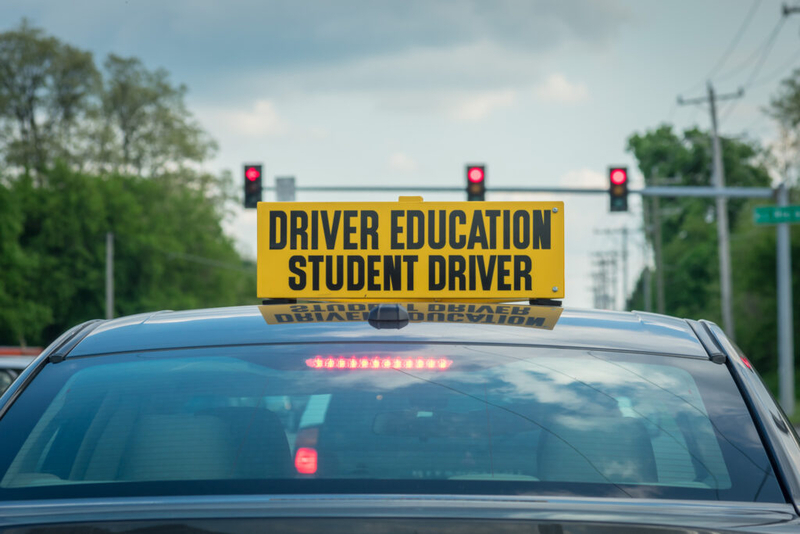
Lawmakers are considering moving up by three months when teens can get their driver's license in Indiana. (David Prahl | iStock, Getty Images)
I remember getting my driver’s license the day I turned 16 — and promptly locking my keys in the car. But it’s such a different time now.
Younger members of Generation Z are either entirely opting out of getting their license or delaying the process, according to a 2024 USA Today article. Since 2000, the number of 16-year-olds with driver’s licenses has decreased nearly 27% nationwide.
That’s why a small section in an Indiana Bureau of Motor Vehicles bill caught my attention recently.
House Bill 1200 walks back part of the Indiana graduated driver’s license system put in place in 1999. Right now, Hoosier teens must wait until they are 16 years and 90 days to get a license if they pass a driver’s education course. The bill would drop that to just 16 years old.
If you don’t take driver’s education, it would remain at 16 years and 270 days. And according to BMV data, about 75% of new licensees don’t take driver’s ed.

If teens are waiting longer to get their licenses, why are we moving up when they can get them?
Rep. Jim Pressel, R-Rolling Prairie, authored the legislation. and had this to say in committee on why he inserted the change:
“I’ve never really understood why it’s 16 years and 90 days… It’s been kind of all over the place. So, this just lowers it to 16 years of age.
“I have had nobody push back on this idea,” he said. “It just seems to be consistent.”
More than 30 states have 16 as the age for a license — not a learner’s permit — and a few are even at 15.
No one was there to testify for or against it because the bill itself is mostly agency inner-workings.
The state legislature took aim at the problem of teen driving fatalities in 1998 by passing Indiana’s graduated driver’s license law, which limits the freedom 16- and 17-year-old drivers have in the car. They pushed back when teens could get a permit, how long they had to hold it, required a practice log of hours and limited when a teen could drive and who could be in the car. They also delayed when a driver’s license could be obtained, which meant adding maturity to the process.
The law was strengthened again in 2009.
A large body of research has found that graduated licensing systems have substantially reduced the rates of crashes, injuries, and deaths of 16- and 17-year-old drivers, according to the AAA.
Indiana’s driver’s test and high failure rates draw criticism
And yet, here we are in 2026, and teens are still dying.
Data from the National Highway Traffic Safety Administration shows that in 2023, there were 151 traffic fatalities involving traffic crashes with drivers aged 15 to 20. Of those, 65 were the teen drivers.
And Indiana ranks 7th highest in the country for teen involvement in fatal crashes.
So, it probably is time to see if all those changes made a difference. But I’m not sure what the need is to revert — especially when fewer teens are driving now than ever before.
The change will likely be an administrative hassle for the BMV.
This type of provision should be debated in a standalone bill with all stakeholders weighing in, including traffic safety experts, parents, kids and the insurance and driver’s education industries.
Many of these people had no idea this change even existed, and in the second half of session I hope to see some more attention paid to rolling back a key part of Indiana’s graduated driver’s license system.
I know that my own teen driver needed that extra time, and pointing to a state law helps parents set limits.

Indianapolis, IN