Indiana BMV deserves kudos — with one big caveat
Oct 09, 2026 | 5:00 am ET
Description
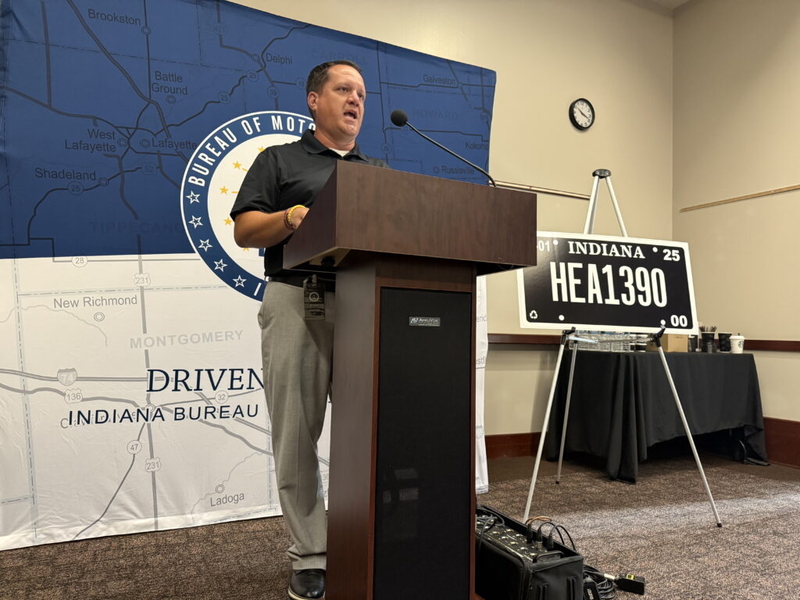
Indiana Bureau of Motor Vehicles Commissioner Kevin Garvey speaks during the unveiling of the state's new blackout license plate on Monday, July 21, 2025, at the Indiana Government Center in Indianapolis.(Casey Smith/Indiana Capital Chronicle)
It was a good week for the Indiana Bureau of Motor Vehicles. The agency is hauling in money from a popular “blackout” plate design and received top rankings nationwide in an analysis of branch Google reviews.
I still have a bone to pick with BMV. But first, let’s focus on the good stuff.
We reported that a review of Google ratings landed Indiana in the top spot. The average score nationwide is 3.8 stars, but the 84 Indiana offices scored highest — averaging 4.16 stars.
The Scottsburg branch came out tops in the state at 4.60. Here are a few reviews I found complimenting the site:
- “Took me nine minutes from car door to car door to renew my license, outstanding!”
- “Love, love this branch!!! All the ladies are so helpful and very friendly!! Thanks for all you do for our community ”

- “Went in to register a vehicle on Saturday morning and the service was phenomenal. In and out in less than 30 mins. Grateful that this office is here…”

This is a long way to come for an agency that really went through it in the early 2000s.
In 2006, Joel Silverman resigned as commissioner of the BMV after closing 20 license branches with little to no community or legislative input. And he oversaw a computer overhaul that was fraught with failure. He also removed the clocks from branches to try to downplay how long transactions were taking.
While Silverman’s tactics were unpopular, eventually the network change was completed and he started customer satisfaction surveys. I contend he laid the groundwork for where the agency is today.
That doesn’t mean there still isn’t room for improvement. But even Indiana’s lowest-rated branch — Batesville, at 3.53 — scored higher than 694 offices elsewhere in the country.
A few Batesville reviews:
- “Staff needs training. I still can’t believe they kept this branch open and not Versailles.”
- “Worst DMV I’ve visited. They tell you that you need 1 paper then they tell you they didn’t need that paper and it is a different one. The people there do not try to help you but make you go through hoops trying to figure it out yourself. The place sucks overall, and I would rather go all the way to Lawrenceburg or Greensburg. Would give it zero stars if I could.”
But there was another review that brings me to what’s really wrong with BMV:
“I recently tagged a vehicle. As soon as I did, I started getting junk mail that listed my new car. They sold my data and you can’t opt out. So, they are sharing private data that you have to register to drive. Great Government at its best. Make as much money as you can from your citizens.”
Indeed, the BMV has been selling your data for years, including your name, address, date of birth, make and model of vehicle, plate number, VIN, purchase date, driver record, license type and more. The data is sold to attorneys, towing services, debt collectors, insurance companies and auto dealers. The practice brings in about $26 million a year.
Lawmakers in recent years have done a lot to protect Hoosiers’ data in the private sector. But they have refused to do the same with BMV data. Other states have allowed an opt-out provision.
Which brings me to the revenue from the blackout plate.
The BMV announced this week that the agency has sold more than 380,000 “blackout” license plates in the year since the minimalist design launched, generating $12.9 million. The black plates with white numerals are all the rage.
The agency plans to use the revenue toward a five-year modernization program that includes an AI chatbot, digital driver’s licenses and improved tracking software.
What they should do is dedicate at least half of the money to covering the $26 million in data sharing revenue. Then ask the Legislature to do the right thing and ban the practice in 2027.
Indianapolis, IN