Indiana attorney general loses appeal in Haitian trafficking investigation
Jul 28, 2026 | 2:02 pm ET
Description
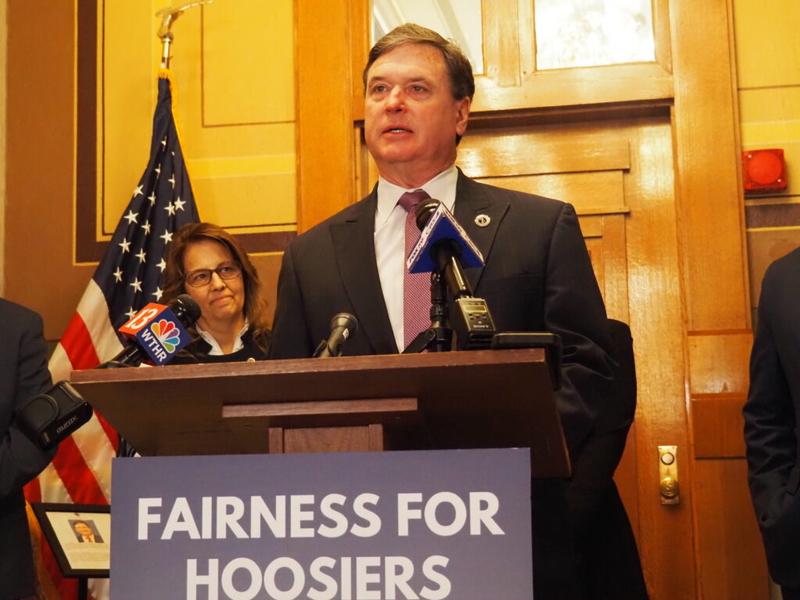
Indiana Attorney General Todd Rokita lost an appeal to compel Evansville manufacturer Berry Global and a migrant support group to cooperate with a migrant labor trafficking investigation. (Photo by Leslie Bonilla Muñiz/Indiana Capital Chronicle)
Indiana Attorney General Todd Rokita can’t compel an Evansville manufacturer and migrant support group to cooperate with a human trafficking investigation in the absence of a specific allegation, the Indiana Court of Appeals ruled Monday.
The three-judge panel’s opinion affirms an earlier ruling from the Vanderburgh Superior Court denying Rokita’s petition to enforce civil investigative demands against Berry Global Group and the Haitian Center of Evansville in a 2024 trafficking investigation.
Judge Nancy H. Vaidik, who authored the opinion, found the attorney general’s demands were “unauthorized, invalid and unenforceable” due to a lack of particularized evidence.
“The record makes clear that the Attorney General is at most trawling for evidence of wrongdoing — looking for information that might eventually trigger an investigation, based on his alleged concern that someone, somewhere might be involved in labor trafficking,” she wrote.
Story continues below.
The attorney general issued the investigative demands, or CIDs, seeking documents and formal written responses from officials at Berry Global and the Haitian Center in November 2024 as part of a purported labor trafficking investigation, but neither complied.
Petitions to compel cooperation cited the increased arrival of migrants and refugees “vulnerable to human trafficking and forced labor,” but did not identify a specific suspect, victim or incident justifying an investigation, the court found.
Instead, the attorney general’s office claimed it had reasonable cause because Berry Global “is a large, sophisticated employer that actively recruits refugees and migrants and works with various migrant resettlement nonprofits” and support groups like the Haitian Center, according to the opinion.
Asked in trial court, state attorneys could not identify a suspect or act of human trafficking either, according to the opinion.
The court held that allowing Rokita to enforce CIDs in the absence of a specific suspect or allegation would violate First and Fourth Amendment protections and burden business.
Indiana law “authorizes the issuance of a CID only if an ‘investigation’ is being conducted,” Vaidik wrote in her opinion Monday.
“For an investigation to exist, there must be a factual predicate — an articulable reason to suspect that particular wrongdoing may be afoot. A mere hunch will not suffice. Here, the Attorney General has not shown that he has information of any sort, he is searching for something to investigate. Therefore, the CIDs issued to Berry Global and the Haitian Center were unauthorized, invalid and unenforceable.”
A spokesperson for the Office of Attorney General said the agency is evaluating the decision as it considers next steps for the investigations.
Thousands of Haitians living in Indiana under temporary protected status this week lost their work authorization after the U.S. Supreme Court cleared the way for the Trump administration to revoke TPS.
This story has been updated to include comment from the Office of Attorney General.

Indianapolis, IN