Incumbents ahead in three WA Supreme Court races
Aug 05, 2026 | 1:29 am ET
Description
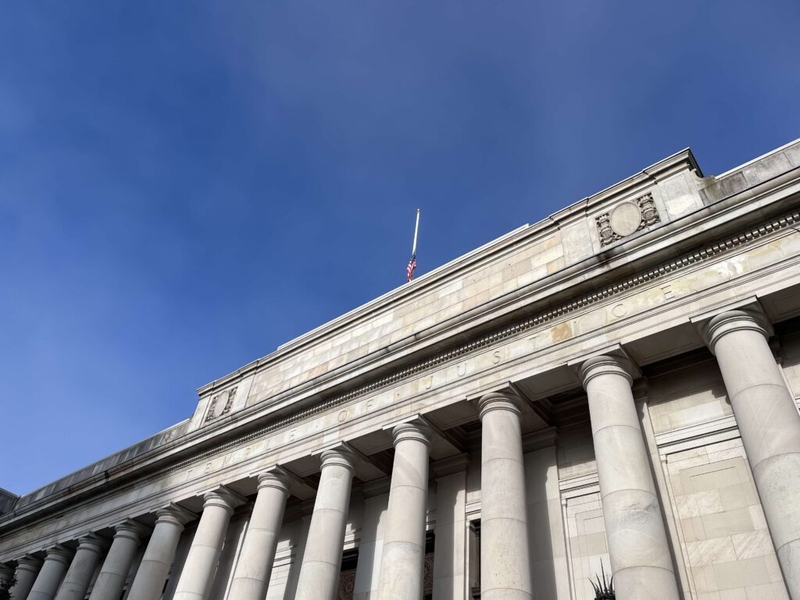
The Temple of Justice in Olympia, Washington where the state Supreme Court convenes. (Photo by Bill Lucia/Washington State Standard)
Washington state Supreme Court incumbents, including two new appointees of Gov. Bob Ferguson, were leading after early primary voting results were reported Tuesday night.
And a King County judge appeared poised to face off with a conservative county judge for an open position on the high court in November, though the race remains close.
Justice Colleen Melody, who Ferguson picked late last year to finish out retiring Justice Mary Yu’s term, is leading attorney Scott Edwards.
Justice Theo Angelis, Ferguson’s other appointee, is narrowly ahead of retired Federal Way Municipal Court Judge Dave Larson, with Thurston County Superior Court Judge Sharonda Amamilo a ways back.
In the only primary for a vacant position on the nine-member court, Mason County Superior Court Judge David Stevens leads, as King County Superior Court Judge Jaime Hawk and state appeals court Judge Mike Diaz split the vote on the left. Hawk leads Diaz by about 2 percentage points.
Chief Justice Debra Stephens, the only previously elected member of the court on the ballot, is sailing through the primary.
The top two candidates for each position will compete in the Nov. 3 general election.
Another open Supreme Court seat wasn’t on the primary ballot, as appeals court Judge Ian Birk and King County Superior Court Judge Sean O’Donnell automatically go on to the general election as the only two candidates running to replace the retiring Justice Charles Johnson.
Often these campaigns pass by with little fanfare as incumbents cruise to reelection. But significant turnover means this election cycle will revamp the court, and litigation over the constitutionality of the state’s new income tax is bringing more attention to the races.
Combined, candidates have already raised over $2.3 million.
The general election will serve as a referendum on the future of the court, which critics feel has shifted further left in recent years. Progressives and conservatives are facing off in multiple races.
The court decides on appeals from lower courts on both civil and criminal matters. It also guides the work of lower courts. For example, the justices last year slashed caseload limits for the state’s overstretched public defender workforce.
Around one million ballots have been counted so far. Votes will continue to trickle in over the coming days, potentially shifting these races.
Position 1
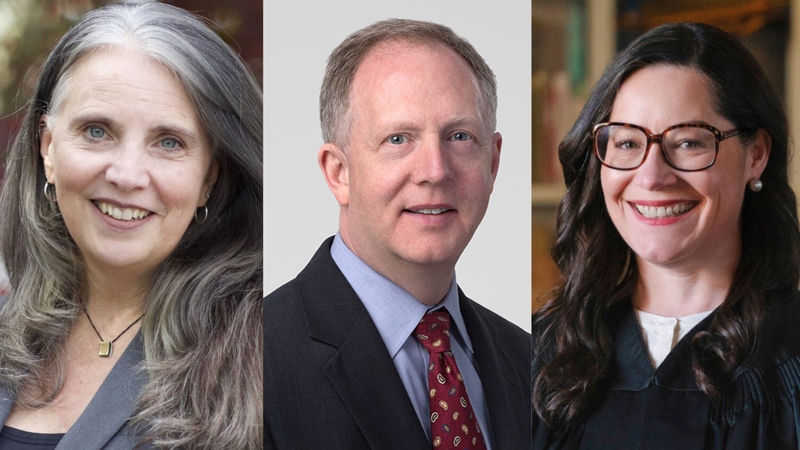
Melody is leading the primary with 51.2% of the vote, with Edwards trailing at 30.3% and family law attorney Laura Christensen Colberg in third with 18.2%.
Melody joined the court in January. She had worked under Ferguson for years as head of the civil rights division in the attorney general’s office. In that role, she helped helm the state’s challenge in 2017 to President Donald Trump’s first travel ban on seven predominantly Muslim countries. She has no prior judicial experience.
Both Edwards and Christensen Colberg are frustrated with justices retiring early so the governor can appoint their replacements, instead of leaving the decision up to voters in the next election cycle. The state Republican Party supports both of them.
Edwards is a tax attorney who has argued before the state Supreme Court, including a challenge to the state’s capital gains tax. He also teaches tax law as an adjunct professor at the University of Washington.
Christensen Colberg has served as a pro tempore court commissioner in Snohomish County for years.
The winner of this race will finish the last two years of Yu’s term. Usually, Supreme Court terms are six years.
Position 3
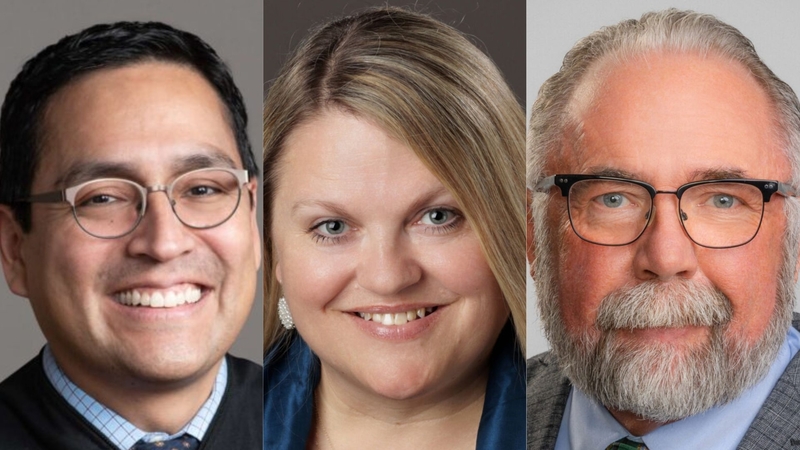
Stevens leads the tight race for this open position with 35.8% of the vote, while Hawk and Diaz fight for second. Hawk has 32.9% and Diaz 30.9% after Tuesday. About 19,000 votes separate second and third place.
A Navy veteran, Stevens has backing from the state Republican Party.
The winner of the race will replace Justice Raquel Montoya-Lewis, the first Native American elected statewide. She announced her retirement in January and endorsed Diaz.
Diaz also boasts endorsements from Attorney General Nick Brown, sitting Justices Sheryl Gordon McCloud and Steven Gonzalez, as well as former Govs. Jay Inslee, Christine Gregoire and Gary Locke. Hawk has support from Gov. Bob Ferguson, Yu, Justice Helen Whitener and U.S. Rep. Pramila Jayapal, D-Seattle.
Before Inslee appointed her to the bench in 2022, Hawk was an attorney for the American Civil Liberties Union.
Inslee also appointed Diaz, first to King County Superior Court in 2017 and the state’s Division 1 Court of Appeals in 2022. Before that, President Barack Obama nominated Diaz, who immigrated from Peru to Seattle as a child, to be a federal court judge in western Washington, but his nomination expired without Senate action. He spent a decade as a federal prosecutor here.
Stevens joined the Mason County court after defeating an Inslee appointee in 2023.
Position 5
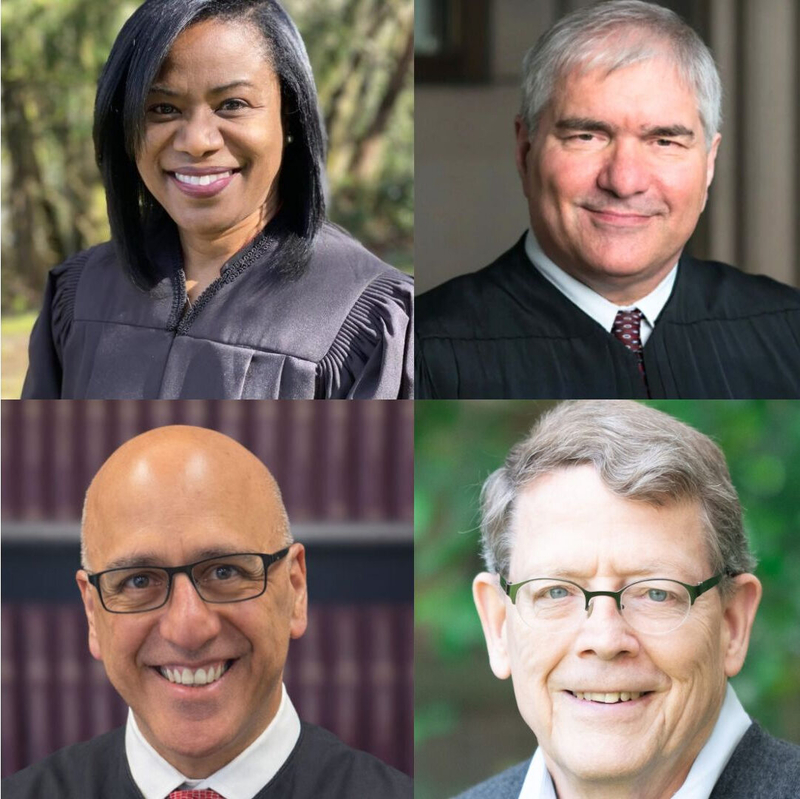
After Tuesday’s results, Angelis is in first place with 34.2% of the vote, Larson is trailing with 32.6% and Amamilo, a family and juvenile court judge, has 21.2%.
Attorney Greg Miller, who describes himself as an “Appeals Court Advocate committed to getting justice under the law for all, big and small,” is last with 11.7%.
Angelis joined the court in April upon Ferguson’s appointment to replace retiring Justice Barbara Madsen, who had been on the court since 1993.
Before becoming a justice, Angelis was a litigator with the law firm K&L Gates, where he worked with Ferguson more than 20 years ago. The two teamed up on a case or two in that time. Angelis, who has no prior judicial experience, focused on intellectual property and appellate litigation.
Larson came very close to joining the court in 2024. He lost a campaign that year to now-Justice Sal Mungia by 20,000 votes out of nearly 3.3 million ballots cast. Larson retired from Federal Way Municipal Court last year after nearly two decades on the bench.
He has called for a Judicial Elections Commission to evaluate candidates for judicial appointments, rather than leaving the decision solely to the governor.
Before being elected a judge in 2020, Amamilo served as a public defender in Thurston County for a dozen years. Her main priorities are strengthening access to the court system and protecting children and families in the foster care system. She also served as a temporary judge in state appeals court. Whitener and Yu endorsed her, along with The Seattle Times and some local Democratic parties across the state.
Similar to Position 1, this election will decide who completes the final couple years of Madsen’s term. If Angelis were to lose in November, he’d be the first Supreme Court incumbent to lose in years.
Position 7
At 54.5%, Chief Justice Debra Stephens has a strong lead over three challengers, with attorney Todd Bloom, at 27.5%, best positioned to advance to the general election.
Former public defender Karim Merchant is in third with 11%, followed by David Shelvey, with 6.7%.
Bloom is an attorney, accountant and Navy veteran. Merchant has decried partisan politics coloring the court’s decisions and says he wants to restore its independence.
Stephens has been on the court since 2008, and has been chief justice since January 2025. She ran unopposed to retain her seat in 2020. Bloom has the backing of the state GOP.
Olympia, WA