Idaho’s wildfires: The risk doesn’t end where insurance does for our small businesses
Sep 07, 2026 | 6:00 am ET
Description
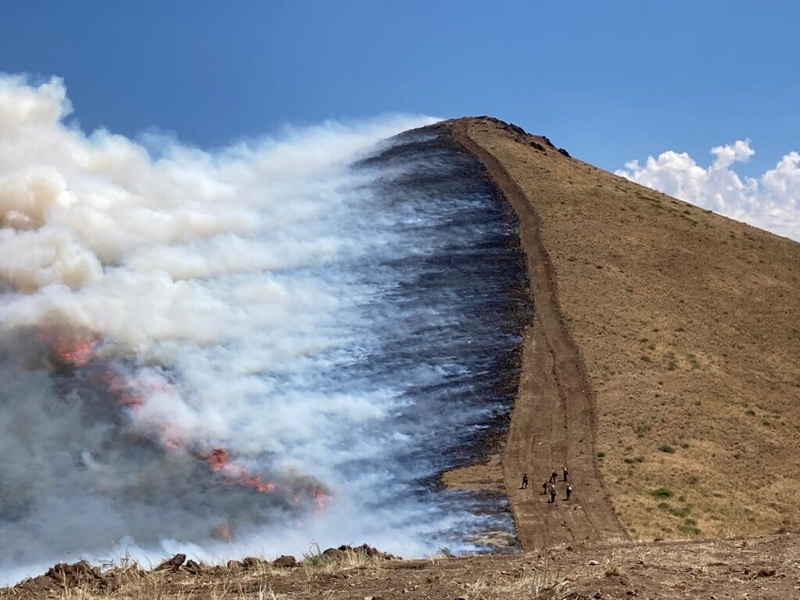
Wildland firefighters perform backfiring operations in July 2026 on the Tartar Fire near Weiser, Idaho. (Photo courtesy of the National Interagency Fire Center)
Wildfires continue to burn across Idaho, consuming hundreds of thousands of acres, forcing evacuations, and disrupting entire communities. The wildfires have forced a reckoning and reminder of the ongoing and evolving risk that countless Idahoans face each year.
Homeowners are often the central focus of media and news cycles following natural disasters. However, small businesses are often the ones facing the quieter crises: catastrophic losses that traditional insurers either limit from coverage or exclude altogether.
Northwest late summer days marred by historic drought, exacerbating wildfires
We saw a similar fact pattern play out on a large scale following the Palisades Fire in Southern California. Risks became too large for traditional insurers to cover, so they increased premiums while decreasing coverage, leaving thousands of small business owners uninsured and vulnerable to significant risk and losses.
For many companies, particularly those with specialized operations, traditional insurers are failing to keep pace with the needs we are seeing from our local businesses.
By nature, insurance is a reactive industry. Insurers collect data, organize coverage offerings, and roll out plans once they assess the risks – all while reviewing data by looking in the rearview mirror.
In today’s volatile landscape, a reactive approach no longer works, and it’s the primary reason why we are seeing a crisis in the insurance market.
Congress also recognized this shortcoming in insurance and risk planning, which is why it created Section 831(b) of the Internal Revenue Code. This provision allows small businesses to self-insure against fortuitous risk through the creation of captive insurance plans, providing them the ability to tailor their policies to match their unique needs and otherwise difficult-to-cover risks.
We see these plans successfully implemented across a variety of industries. Notably, industries that have seen significant growth of micro-captive insurance are the ranching and agriculture industries.
Pointedly, as the Tartar Fire burned, Idaho’s ranchers were some of the most affected, being hit with devastating losses and inadequate coverage. This fire, which has now burned more than 158,000 acres, caused damages that will take years to repair.
Going through the process of rebuilding is challenging enough; coupled with inadequate insurance, it becomes even more of a daunting task.
Risks will continue to rise and as communities across Idaho, the West, and the rest of the country continue to navigate these challenges, our policymakers should recognize and support our small business owners proactively.
By leveraging a forward-focused approach to risk management and supporting existing tools like 831(b) plans, we can ensure that resilience is built long before the next disaster strikes.
Small businesses need access to practical risk management tools to help them prepare – not simply respond. That is the crux of an effective risk management strategy. As crises and risks continue to evolve, it is critical that our policies and approaches evolve alongside them.
By clarifying the rules surrounding Section 831(b), our lawmakers can help ensure that America’s small businesses are ready the next time disaster strikes, because it will, guaranteed.
Boise, ID