Idaho Senate will consider establishing Medicaid expansion work requirements by 2027
Mar 26, 2026 | 6:58 pm ET

Description
Protesters gather on multiple levels of the rotunda of the Idaho Capitol on Jan. 12, 2026, to rally against budget cuts to the state's Medicaid program and health services. (Photo by Pat Sutphin for the Idaho Capital Sun)
Under a bill quickly advancing through the Idaho Legislature, the state may adopt federal Medicaid work requirements for adults enrolled in Medicaid expansion by the end of the year.
House Bill 913 calls for Idaho to adopt Medicaid work requirements that were part of President Donald Trump’s cornerstone law, the One Big Beautiful Bill Act. The policy could remove up to 44% of Idahoans — or 34,000 people — from Medicaid expansion, researchers say.
The bill is heading to the Idaho Senate, which is the bill’s last stop before it could advance to Gov. Brad Little for final consideration. The Idaho House passed it on a near party-line vote last week.
Lawmakers pushing for the change say they want to make sure that people who are receiving Medicaid and can work are working.
But advocates say Medicaid work requirements are effectively costly administrative barriers to access the program. The rules, they say, could kick Idahoans who are working off the program because many would fail to submit the right paperwork.
Medicaid work requirements and other changes in the “Big Beautiful Bill” could kick 20,000 to 34,000 Idahoans off Medicaid expansion by 2028, according to an analysis published Wednesday by the Urban Institute and the Robert Wood Johnson Foundation. Idaho Medicaid expansion covers nearly 79,000 Idahoans.
About 48% of able-bodied adults on Idaho Medicaid are working, according to a December report by the Idaho Department of Health and Welfare.
In 2018, nearly 61% of Idaho voters approved Medicaid expansion through a ballot initiative meant to close a health care assistance gap that affected a population commonly called the working poor.
Other states’ experiences and a federal watchdog report suggest costs for Medicaid work requirements are high.
These work requirements might not require federal approval
In the past, the Legislature had made similar calls to require able-bodied adults on Medicaid expansion to prove they are working to receive benefits through the public assistance program. But those rules need approval from the federal government, which is often a lengthy process that Idaho hasn’t succeeded with.
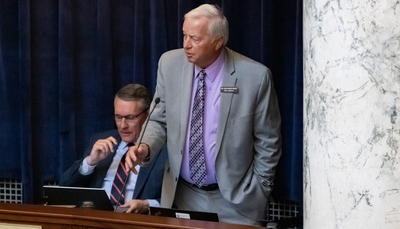
Rep. John Vander Woude, a Nampa Republican who’s sponsoring the Idaho bill, hopes the state wouldn’t need federal approval for this iteration of work requirements.
In 2019, Idaho failed to receive federal approval — then by the first Trump administration — for Medicaid work requirements. In 2025, the Idaho Legislature and the governor approved another bill that called for Idaho to seek federal approval for Medicaid work requirements.
Medicaid enrollees would need to prove they are working twice a year to maintain coverage, because the federal law requires enrollment renewals every six months. Idaho’s bill would require state health officials to verify work history for Medicaid enrollees over a period of three months — the longest “look back” time allowed under the federal law.
That language in the bill drew some pushback in a Senate Health and Welfare Committee hearing Thursday.
Idaho Hospital Association President Brian Whitlock asked senators to amend that period down to one month, saying he worried the requirement would be too much for the Department of Health and Welfare, which is tasked with privatizing Medicaid benefits over the next few years.
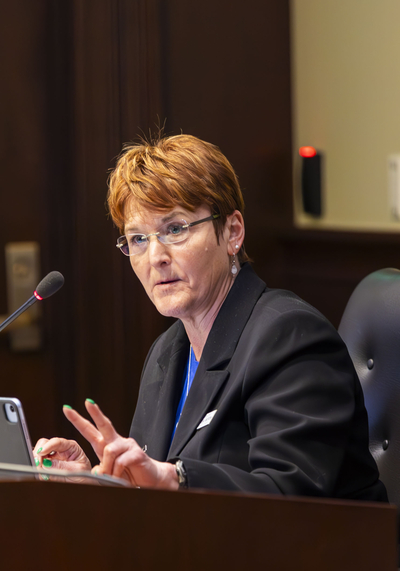
Sen. Melissa Wintrow, a Boise Democrat, attempted to send the bill for amendments to shorten the reporting time period required down to one month. But the committee widely rejected her motion.
“Sometimes we add so much red tape, this could be — I don’t want to say it — but a back door to drop people off of Medicaid expansion,” Wintrow said.
Vander Woude called for a staggered implementation of the work rules. The Department of Health and Welfare could do an early review later this year, before the work requirements officially take effect in January. Vander Woude says that would give people time to fix their work status to remain on the program.
What would the Medicaid work requirements look like?
The bill calls for Idaho to adopt by Dec. 31, 2026, Medicaid work requirements included in the One Big Beautiful Bill Act. The federal law requires the work requirements to take effect by 2027.
The federal law’s work requirements will require that people enrolled in Medicaid expansion work or do community service at least 80 hours per month, according to health policy research group KFF. Several exemptions would apply, such as for people who are:
- medically frail;
- enrolled in school at least half time;
- caretakers or parents of dependent children younger than 13 years old or people with disabilities;
- pregnant or receiving postpartum coverage;
- veterans with disabilities;
- and those under age 26 who are or were in foster care.
The Idaho bill would require that people comply with the work requirements for three months before they apply to Medicaid. The Idaho Department of Health and Welfare would remove “any person … who is unable to demonstrate compliance” from Medicaid.
If passed into law, the bill would take effect immediately.
Boise, ID