ICE separated nursing mom from infant, toddler, against its own rules, advocates say
Jul 31, 2026 | 6:01 am ET

Description
Human rights organizations are calling for the release of a Nashville breastfeeding mother of two young children detained in Louisiana since May. Pictured: ICE agents during a raid at Hamilton Crossing apartments in Nashville
(Photo: John Partipilo/Tennessee Lookout)
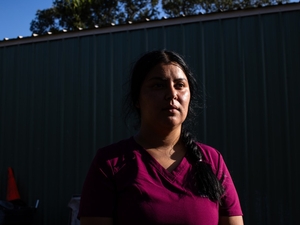
Five human rights organizations are seeking the immediate release of a breastfeeding mother with a pending asylum claim, who was detained in May by immigration agents at her home in Nashville as she was putting her two young children into a car to get to a doctor’s appointment.
In a formal complaint filed Wednesday with the Department of Homeland Security’s Office of Inspector General, the organizations — which include Amnesty International, the Robert F. Kennedy Human Rights Center and the Tennessee Immigration & Refugee Rights Coalition — allege that Immigration and Customs Enforcement is violating its own policies against detaining pregnant, postpartum and nursing parents and requiring it to facilitate visits between children and parents.
The woman, whose name is redacted in the five-page complaint, is currently being held in a Louisiana facility 700 miles from Nashville and has not seen her two young children since her May 19 arrest, the complaint said. She has no criminal record. The woman has had a pending asylum claim after clearing a “credible fear” interview with immigration officials after she entered the United States from Guatemala in 2022, the complaint said.
At the time of her arrest, she was actively breastfeeding both of her daughters, a then-8-month-old infant and a two-year-old toddler with Down Syndrome who suffers from multiple medical problems.
“The separation of an infant from a nursing mother, and of a medically fragile toddler from her primary caregiver, causes significant and ongoing harm to all three family members,” the complaint said.
“We implore DHS to act immediately. Every day of delay increases the risk of irreversible harm to (the woman) and her two U.S. citizen children,” the letter said.
Other organizations signing onto the complaint are Sanctuary of the South, Southern Poverty Law Center and the ACLU of Louisiana, where the woman is entering her third month of detention.
A spokesperson for the Department of Homeland Security responded to a request for comment about the woman’s detention by asking for her name and A-number, the unique number assigned to all non-citizens who interact with the federal government. The spokesperson did not respond to a subsequent message noting that information was not available.
The spokesperson also did not respond to a request for data on the number of nursing mothers currently being held in immigration detention facilities.
ICE guidelines generally bar detaining nursing mothers
ICE’s rules say that the agency may only detain nursing parents under narrow “exceptional circumstances” such as risks to national security or an imminent threat to others.
“Generally, ICE should not detain, arrest, or take into custody for an administrative violation of the immigration laws, individuals known to be pregnant, postpartum, or nursing unless release is prohibited by law or exceptional circumstances exist,” the policy says.
Advocates say the agency is routinely flouting those rules, which were reinstated at the agency in 2021 during the Biden administration in 2021 after the first Trump administration vacated similar rules barring the detention of pregnant, postpartum and nursing parents in 2017.
Anthony Enriquez, vice president of U.S. advocacy and litigation for the Robert F. Kennedy Human Rights Center currently represents two people challenging their detention under the rules for pregnant, postpartum and nursing women. The organization does not represent the Nashville mother.
There are likely many more, but ICE is failing to follow rules that require it to keep data on the number of pregnant, nursing and postpartum detainees, Enriquez said.
“How many is a question that only DHS is going to be able to answer, but I suspect it doesn’t know the answer because it’s not tracking that,” he said. “We’re just seeing flagrant violations of that directive.”
‘Punishing not just the woman but the child as well’
In February, in response to a demand for data by U.S. Senator Patty Murray, a Democrat from Washington State, ICE provided snapshot data that showed, as of February 16, there were 86 were pregnant women, 35 postpartum women and 15 nursing women in ICE facilities.
The data includes only women in the 23 facilities served by the ICE Health Services Corps, a medical provider that serves a fraction of ICE detention centers. It does not include pregnant, postpartum and lactating detainees at more than 200 other immigration detention facilities whose medical care is provided by private contractors.
Enriquez believes there are now many more, citing litigation brought across the nation, media reports and a high volume of calls from potential clients to his organization.
Enriquez also cited a Government Accounting Office report from 2020 that tracked a steep increase in the immigration detentions of pregnant women after the first Trump administration repealed guidelines that limited detention of pregnant, postpartum and nursing moms.
In 2016, before the Trump administration repealed the rules against detaining most pregnant, nursing and postpartum detainees, ICE had detained 1,380 pregnant women. After its repeal in 2018, it reported detaining 2,097 pregnant women.
“The reason this is important is we’ve seen women who have reported waiting weeks for prenatal appointments. Women have reported bleeding for days before being hospitalized or received medical follow-up up to two weeks after a miscarriage,” he said.
“We’ve heard reports of women being shackled at their angles, writes and waists during medical exams. There are reports of women not receiving adequate prenatal nutrition. And we’ve seen nursing mothers taken from their breastfeeding infants. Lactation is, by definition, the infant’s food source, so it’s punishing not just the woman but the child as well,” Enriquez said.
The advocacy organization’s letter demands that ICE confirm in writing whether the Nashville mother meets any of the criteria of the “exceptional circumstances” required for her continued detention. It also demands her immediate release to resume nursing her infant daughter and her toddler.
The children have not been able to see their mother since her detention, they noted. A neighbor is caring for both children.
After more than two months in detention, the woman is “experiencing the physical effects of the abrupt cessation of breastfeeding,” compounded by her existing diabetes, the complaint said. Her oldest daughter with Down Syndrome has a history of medical complications and has missed ongoing weekly therapies since her mother’s detention, it said.
The complaint
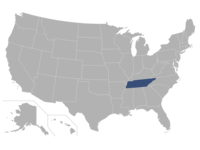
Nashville, TN