‘Hurry up, but don’t rush:’ Lawmakers wrestle with how to handle AI in schools
Mar 19, 2026 | 8:10 am ET
Description
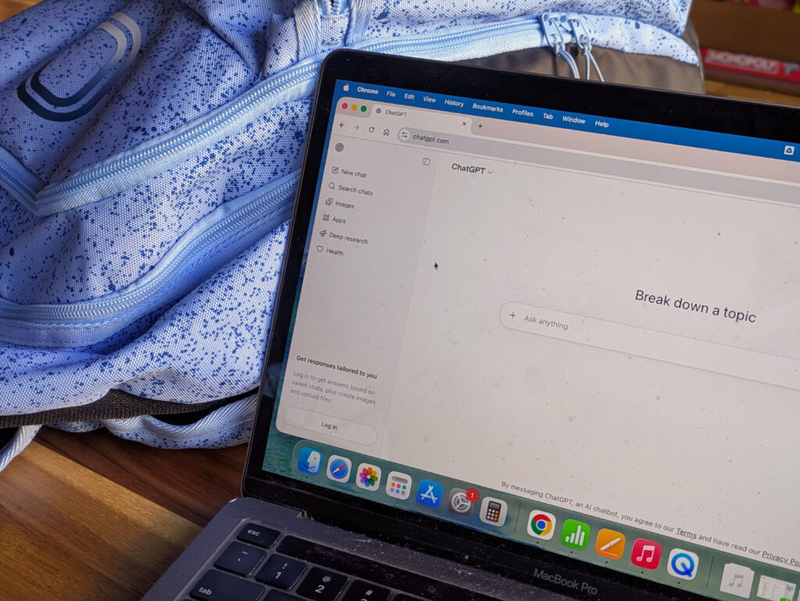
(Photo: April Corbin Girnus/Nevada Current)
Nevada needs to get serious about AI’s use in education.
That might have been the main takeaway of a legislative Interim Education Committee meeting this week on the spread of artificial intelligence in Nevada schools.
Lawmakers were encouraged to consider policies for the next legislative session that better protect youth’s data and privacy information, require AI training for educators and students alike, and ensure tools aid, but don’t replace, human interaction.
The recommendations presented were geared toward “we are all for sure going to use this” rather than examining the ethical concerns around if it should be used altogether, said Democratic Assemblymember Selena La Rue Hatch.
AI has prompted countless concerns, from copyright infringement and plagiarism as the models scrape and paste from the internet to the environmental impacts of data center water and power usage.
And policymakers must acknowledge and confront how AI can harm student’s learning process, La Rue Hatch said.
“There’s real concern about the cognitive decline that we’ve seen in students becoming overly reliant on AI,” said La Rue Hatch, who is also a teacher. “Where is the option of teachers saying ‘I don’t think this is appropriate to use in this case,’ or ‘I don’t feel ethically right using it’?”
Lawmakers on Tuesday heard from members of the Nevada Department of Education and the Guinn Center for Policy Priorities, a nonpartisan think tank that released a report on AI in education in November.
“Our students will graduate into a workforce where AI is already common,” Victor Wakefield, the state Superintendent for the Nevada Department of Education, told lawmakers Tuesday. “Teachers are experimenting with AI. The question is not how AI will appear in classrooms but how we guide its responsible use.”
“Moving too slowly could leave students unprepared for a rapidly changing workforce and world, while moving too fast could expose them to unintended harm,” said Todd Butterworth, a senior research analyst with the Guinn Center.
“A recurring theme in our research was the tension between urgency and caution, the need to act swiftly, but without sacrificing deliberation and transparency and collaboration. The thought that kept occurring to me was, hurry up, but don’t rush.”
A majority of states have sought to implement some guidance for the use of AI in education.
The Center for Universal Education at the Brookings Institution released a report in January that indicated the “potential risks to students overshadow the benefits,” adding that it is not too late to set up guidelines for the use of AI in the classroom to ensure it is used as a tool to enrich learning.
The Guinn Center’s analysis found that while the use of AI in the classroom has “tremendous potential,” given how rapidly AI is spreading through work, education, and society, “there is no reliable, long-term data about its effectiveness or a fundamental understanding of possible unintended consequences.”
The research showed educators in Nevada are using chatbots like ChatGPT and Gemini to aid in administrative work, lesson plans and tutoring, Butterworth told lawmakers.
“It can make instructors more effective, yet we don’t know what its effect will be on the vital human interaction and relationships in the classroom,” he said. “It can make administrative functions much more efficient, but it may also eliminate jobs.”
La Rue Hatch questioned the prospect of teachers using AI to generate mandatory reports to school administrators, who turn around to use AI to summarize those reports.
“We just have computers reporting to computers, when we could just eliminate the report entirely,” La Rue Hatch said.
Last year, the Nevada Department of Education released guidelines called STELLAR, which aim to promote ethical and responsible use of AI tools in the classroom.
Potential guardrails discussed during the interim committee meeting include requiring contracted vendors to adhere to privacy and security provisions in contracts, and implementing better data collection on classroom AI use.
“AI investments are an opportunity to pursue equity,” Butterworth said. “If possible, make your AI and technology investments first in lower performing and under-resourced schools.”
Even as more schools use AI, Butterworth said there is an opportunity for teachers to educate students about fact-checking the content produced and developing media literacy around these tools.
“There is a lot of stuff that’s on the internet that’s created by AI that may be not completely true or may be completely false,” Butterworth said. “Hopefully we can learn to identify slop, and we can teach our kids to identify it.”
Las Vegas, NV