How New York’s First-of-Its-Kind Organ Donation Program Helped a Family Stay Afloat
Nov 10, 2026 | 5:00 am ET
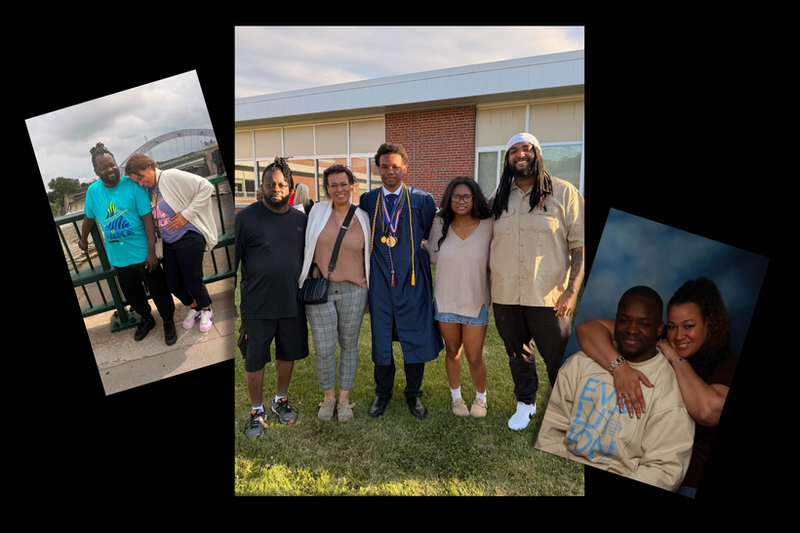
Description
Photo courtesy of New York Focus
Upstate New Yorkers Amy and Zamar Turner have worked hard to achieve financial stability for themselves, their three kids, and their five English mastiffs.
After Zamar retired from two decades of military service in 2017, he started a medical transportation business. Amy got a master’s degree and began working as a therapist. They bought a house in 2021, in Dexter, New York, a few miles from the Canadian border, and moved out of the military housing they had been renting in nearby Fort Drum.
But when Zamar’s chronic kidney issues turned into full-blown organ failure, the crisis threatened to undo all their effort. He had to give up his business, and Amy cut back her therapy hours to care for him. They fell thousands of dollars behind on phone and electric bills, and had to refinance their mortgage at a steeper rate.
Amy qualified as a kidney donor for her ailing husband, but the costs associated with the operation and her recovery time threatened to push the family thousands of dollars further into debt.
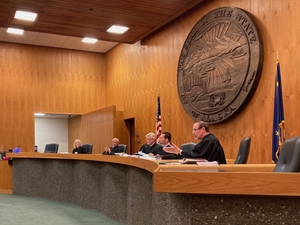
In the past, there would have been no alternative. But several years ago, state lawmakers passed legislation to reimburse organ donors’ medical and recovery costs. In a state with one of the longest waitlists for donation, they hoped to make it possible for more families, friends and strangers to volunteer. After the law passed in 2022, however, it faced years of bureaucratic delays, detailed by New York Focus.
No longer. The Living Donor Support Program launched last year, and has already approved over 240 applications — more than twice the number health department officials were expecting.
The Turner family is one of them. The program covered Amy’s missed paychecks, travel expenses to and from the hospital in Rochester, and the cost of having Amy’s sister come from Maine to help care for them during recovery.
“It helped a lot,” Amy said. “It filled the gap on not having our electric turned off.”
The program allows organ donors to claim up to $14,000 in reimbursements from the state to cover costs like lost wages, travel, and caretakers.
In its first year, the program paid out more than $714,000 in reimbursements, according to a health department spokesperson.
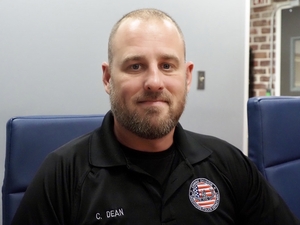
Program staff were only expecting 100 applications in the first year, so getting more than twice that number kept them very busy, said health department employee Loretta Mosher, one of three staffers devoted full-time to the Living Donor Support Program.
Mosher joined the department of health in 2024 specifically to help launch the program. She had spent the previous 20 years as a hospital nurse, sometimes witnessing organ donation up close.
“Working in the emergency room, you see a lot of people who are donors,” she told New York Focus. “You just gain a really deep respect for it.”
Now, she spends all day corresponding with donors and the 15 transplant centers that coordinate the procedures around New York state. Mosher and her colleagues try to respond to all applications and reimbursement claims within a day.
Donors and their families seem to appreciate the work. “Probably weekly, there’s emails back to us thanking us,” she said. Mosher and her team hope to grow the program by 10 percent per year.
At least one New Yorker has expressed his appreciation directly to Governor Kathy Hochul, who signed the program into law in late 2022.
During Hochul’s recent visit to a kosher supermarket in Queens, a man who said he had donated his kidney to a stranger thanked her for signing the bill.
“I got to give my kidney to someone I don’t know. You gave me this check,” the man said while holding up a check, according to jns.org. “You’re the only governor who has a law like that.”
While other countries such as New Zealand and Israel have similar programs, which have been found to boost donation rates, New York is the only state that reimburses organ donors.
Kidney issues had dogged Zamar for years before the organ totally failed. Several years before he retired from the military — where he served in Iraq, Korea, and Okinawa — he found out he had diseased and low-functioning kidneys, but he shrugged it off
“That’s the mentality you develop when you’re in the military,” he said. “Someone tells you you’re sick, you’re kind of like okay, whatever.”
But last year, chronic vomiting and back pain forced him back to the hospital, where he learned his kidneys were failing, and that he would need to start dialysis. It was a brutal process: He would get crippling cramps, often couldn’t sleep for more than a few minutes at a time, and at one point needed surgery to remove an infected catheter.
While Zamar was on dialysis, Amy was undergoing testing to see if she could be his kidney donor. After several rounds, she learned in April that she was a match. They set the surgery date for July, after their son Devon’s high school graduation.
As they prepared for the transplant, a member of the hospital’s staff told Amy about the Living Donor Support Program, and suggested that she apply. Initially Amy wasn’t interested — it just seemed like one more bureaucratic task to deal with. But as the transplant date approached, their financial struggles mounted. When a hospital employee mentioned the program again, she decided to apply and was approved right away.
Two weeks after she began submitting claims, she started getting reimbursement checks in the mail. A Department of Health staff member quickly responded to any questions that came up.
“It was a lot easier than I thought it was going to be,” Amy said. “It’s just really a couple pieces of paper.”
The roughly $3,000 the Turners ultimately received from the program was far less than the $14,000 cap, but it was enough to make a real dent in the bills that had piled up while Zamar was sick.
“The smoke has cleared up,” Amy said. “We’ll get there eventually.”
Zamar is still recovering from the transplant surgery, but he can already feel the difference. He’s started doing a bit of yard work again, and recently went out to lunch with his family for the first time in about a year. Most importantly, he’s able to stay awake rather than sleeping for half the day, as he often would when he was on dialysis.
“I used to have raccoon eyes,” he said. “I don’t have those no more.”
Albany