High court says public comment on Arizona elections manual is not required
Jul 17, 2026 | 7:32 pm ET
Description
Photo by Getty Images
The Arizona Secretary of State is not required to allow public comment on new versions of the state’s elections rulebook, the state’s highest court wrote in a Friday opinion that explained an order the court issued nine months prior.
In the October order, the Arizona Supreme Court said that the state’s Election Procedures Manual, which tells local elections officials how to implement state law, doesn’t have to follow the standard rule-making process laid out in the Arizona Administrative Procedures Act.
That order overturned a previous ruling from the Arizona Court of Appeals in a lawsuit brought by the Republican National Committee. Alongside the state and Yavapai County branches of the party, the RNC alleged that the 2023 EPM was “designed to undermine election integrity in Arizona.”
Every two years, the secretary of state, an office held by Democrat Adrian Fontes since 2023, is tasked with putting together a new EPM, which outlines procedures and rules by which county elections officials should conduct elections in the state. The manual carries the force of law, and must get approval from the governor and attorney general — offices also held by Democrats since 2023 — before it’s published.
In its 2024 lawsuit, the RNC argued that Fontes violated the Administrative Procedures Act when he drafted the 2023 EPM because he only allowed 15 days of public comment on it instead of the 30. The RNC asked the court to rule that the 2023 EPM was unlawful, and to block Fontes from using it.
The trial court sided with Fontes, saying the APA didn’t apply to the elections rulebook, but the appeals court overturned that ruling.
In response to the Court of Appeals decision, Fontes allowed 30 days of public comment on changes to the 2025 version of the EPM, although he maintained that it wasn’t legally necessary for him to do so.
The 2023 manual, as well as the 2025 version, have both been heavily criticized by Republicans, who take issue with multiple guidelines and rules that Fontes added. Fontes deleted some portions of the 2023 EPM from the new version in response to other court cases that challenged or blocked those provisions.
Just last week, a federal judge blocked a provision in the 2025 EPM that prohibits people at polling places from “wearing clothing, uniforms or official-looking apparel intended to deter, intimidate, or harass voters.” The judge left in place other parts of the newest elections rulebook challenged in a lawsuit by the Pima County Republican Party.
Both the trial court’s decision and the Arizona Supreme Court ruled that the EPM is exempted from APA rulemaking procedures because the legislature laid out a separate process specific to the creation of elections rulebook.
“Mandating EPM compliance with APA rulemaking requirements risks undermining the purpose and effect of the Legislature’s time-sensitive regulation of elections,” Justice William Montgomery wrote in the high court’s Friday opinion.
That process requires new drafts of the EPM to be submitted to the governor and secretary of state in October of odd-numbered years, and for them to sign off on it to be published by the end of that year. State law requires the secretary of state to develop the manual in consultation with the county officials who administer elections.
The unanimous opinion made clear that Fontes was not required to provide a 30-day public comment period, or any at all.
“Although the Secretary has invited public comment on draft EPMs in recent years, that practice is not statutorily required,” Montgomery wrote. “The Legislature, thus, prescribed consultation with a defined group of officials, reflecting a process tailored to election administration rather than the broadly participatory framework the APA imposes.”
The justices noted that members of the public could still share their opinions on the elections rulebook with their county election officials, who could relay those to the secretary of state.
The high court also pointed out that even though the Arizona Legislature has amended laws concerning both the EPM and the APA several times over the years — sometimes during the same legislative session — none of the amendments to one of them mentioned or indicated any connection to the other.
“The Legislature has treated the APA and EPM, throughout their respective statutory existence, as separate schemes sailing on their own charted course to their own respective destinations,” Montgomery wrote.
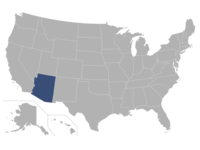
Phoenix, AZ