Healthcare changes, affordability worries highlight race for US House seat in Arkansas
Oct 14, 2026 | 6:00 am ET
Description
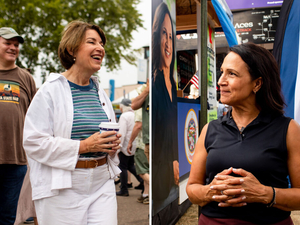
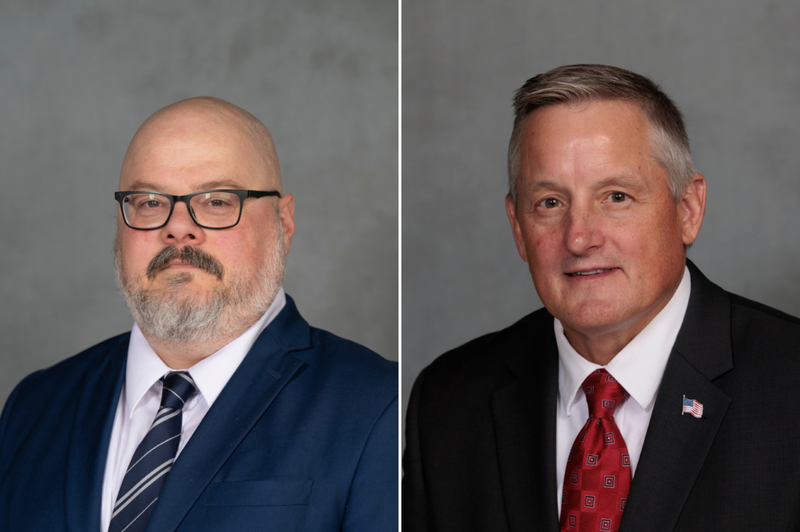
Republican U.S. Rep. Bruce Westerman (right) is being challenged by Democrat James Russell (left) to represent Arkansas' 4th Congressional District. (Photos courtesy of the Arkansas Secretary of State's office)
Republican U.S. Rep. Bruce Westerman said he wants to continue working on forestry and healthcare concerns for constituents in Arkansas’ 4th Congressional District, even as he acknowledged the challenge his party faces nationally with voter discontent over affordability.
“They drive by our biggest network of campaign signs, I think, in the country when they drive by gas stations every day and they see the price of gasoline and diesel,” he said.
His opponent, Democrat James Russell, said the work the Republican from Hot Springs has done in his 11 years representing the rudy-red district doesn’t justify another term.
Westerman, a licensed engineer and forester who has represented the 33-county district since 2015, is a Garland County native and former state legislator who played football for the University of Arkansas Razorbacks. After receiving his bachelor’s degree he went to work for Riceland Foods, then later obtained a master’s degree in forestry from Yale University.
The district covers large parts of south, west and north Arkansas. Westerman defeated his 2024 opponent, Democrat Risie Howard, with more than 72% of the vote and President Donald Trump won the district by nearly 40 percentage points.
Forestry needs, fuel prices
Westerman, who chairs the House Natural Resources Committee, said he’s running for a seventh term because he has a proven track record and there’s still more work to be done, including efforts on reforming the National Environmental Policy Act that he hopes will make it into law by the end of the year.
The measure, which passed the House last year, is awaiting Senate approval. He said he also wants to work on reauthorizing the Great American Outdoors Act, first passed in 2020, to continue addressing the maintenance backlog at national parks and forests.
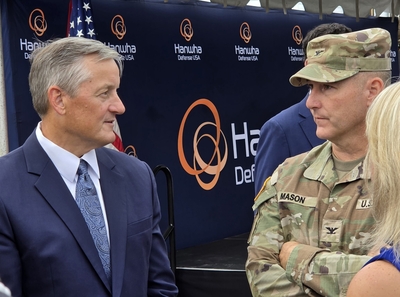
“I will continue working on forestry issues,” he said. “Having the forestry expertise gives me a lot of stuff to work on in that space.”
Russell, who is waging his second bid for public office, said he decided to run because he “got tired of not finding a politician that I could believe in, and I wanted to go and be that politician.” If elected, Russell said he will work to reassert Congress’ power over tariffs and “getting corporate money out of politics.”
“For me that means getting in there and taking back control as a co-equal branch of government, restricting executive overreach like we’ve had, and enacting things like the War Powers Act to make sure that the aggression we’ve got going on with Iran gets shut down,” Russell said, while also “tackling the affordability crisis that we’re running into.”
Russell served in the Arkansas National Guard and has owned and operated a mental health business with his wife in Little Rock for more than 10 years. The Jan. 6 riot at the U.S. Capitol drove him to seek the Democratic nomination for Arkansas governor in 2022.
He lost in the gubernatorial primary to Chris Jones, who is challenging Republican U.S. Rep. French Hill to represent central Arkansas’ 2nd Congressional District.
Affordability is a top concern weighing on voters in an election cycle where polling shows the cost of everything from gasoline to housing has left Americans angry, two years after Trump was elected on promises to lower prices.
The mood has raised Democrats’ hopes that they can win the U.S. House in November, though political forecasters like the Cook Political Report and Larry Sabato have rated Westerman’s race as safely Republican. Still, Arkansans have soured on Trump and his handling of the war in Iran, according to an August poll from Talk Business and Politics and Hendrix College.
US House and Senate split on ending Trump’s war in Iran, as gas prices rise
The conflict in Iran in February spiked gas and diesel prices, increasing the cost of moving goods worldwide. Diesel currently averages nearly $6 a gallon in Arkansas, up from $3.33 a year ago, according to the AAA.
Westerman acknowledged the difficult electoral environment, and said his party’s failure to address the cost-of-living concerns that won them control of the government in 2024 could cost Republicans nationwide in November.
“Cost-of-living is front and center on people’s minds, and it very well could cost our party across the country in the election,” Westerman said. “People were sick and tired of inflation and high prices with the Biden administration, and they got a new administration. Republicans are in control in the House, the Senate and the White House, and prices are still high.”
Still, Westerman said prices aren’t increasing “as much as they were,” and he believes the economy is stronger now than it was during the Biden administration. He also said the tax and spending cut legislation Trump signed last year known as the One Big Beautiful Bill Act would help “alleviate” the impacts of the war in Iran.
“There’s a tremendous effort being made to produce more domestic oil right now, and gas, but it takes a long time to get those projects up and running,” Westerman said.
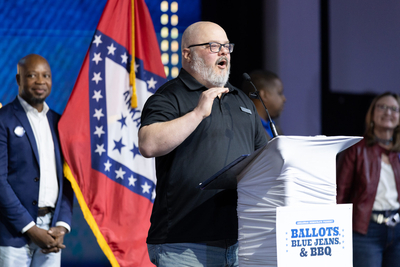
Russell said he supported enacting a war powers resolution that would halt military action without congressional approval. Westerman and the rest of the state’s Republican U.S. House members have voted against such a measure.
Russell said Congress must also tackle the rising costs of fuel and healthcare.
“The war hawks have just gone nuts,” the Democrat said. “We need to get everything back under control because we’re causing escalation of crises that we had no business creating in the first place.”
Healthcare changes
Healthcare ranks at the top of costs voters are worried about according to a poll released by KFF last week. Westerman and Russell both pointed to it as an area that they considered a priority — though for different reasons.
Westerman linked the ballooning cost of healthcare to the nation’s growing debt, an area he hopes to pay more attention to if reelected. Westerman said constituents tell him the increased cost of healthcare isn’t leading to more benefits.
US House Dems’ campaign chief predicts they’ll gain majority control in midterms
“If we’re ever going to address the debt, we have to address healthcare spending,” Westerman said. The U.S. government spent $1.8 trillion on Medicare in fiscal year 2025. Stabilizing the Medicare and Social Security trust funds, both of which are currently expected to run out in the 2030s, is crucial to resolving America’s longstanding deficit, Westerman said.
If the Medicare trust fund runs out of money as it’s expected to do in the 2030s, the program could reduce benefits but Westerman said he believes the more likely scenario is that the government would borrow more money to make up the shortfall. The Fair Care Act, which Westerman has introduced every Congress since 2019 but hasn’t yet made it out of committee, “addresses a lot of these things,” the Republican said.
“Congress is the world’s best organization at kicking the can down the road until they get in a crisis situation, and we have a crisis situation on the horizon,” he said, adding that he is considering swapping some of his committee assignments if reelected to be in a better position to push for the bill’s passage.
The 434-page Fair Care Act would end the Affordable Care Act’s requirement for large employers to offer health insurance. The legislation would also allow for pre-tax dollars in a health savings account to be used for insurance premiums, among other changes.
But Russell said Westerman’s solution for the nation’s healthcare cost woes would not solve the multitude of problems that have made the cost of care one of Americans’ top affordability concerns.
“You’re trying to promote something that’s a health savings account to people who are already so economically strapped that they cannot afford to put anything into savings,” Russell said. “That’s not a genuine solution.”
Russell supports a Medicare-for-all system instead, arguing it would save trillions in taxpayer dollars and thousands of lives. The only reason America didn’t have one when other developed countries did, Russell said, was due to a lack of political will.
“It would start helping the healthcare deserts that we’re seeing cropping up because people would be able to go and get the healthcare they need,” Russell said. “That would incentivize and keep rural healthcare facilities opened up.”
Russell said such a system could be paid for using a 1% “progressive wealth tax” on incomes starting at $200,000 — though he said a universal healthcare system would ultimately pay for itself by lowering health costs and keeping people in the workforce.
“We have this habit of anytime we’re talking about making sure that everyone is covered with healthcare, we’re constantly talking about how are we going to afford it?” Russell said. “Nobody questioned how are we going to afford going to war with Iran again. Nobody questioned how are we going to afford arming countless ICE agents and throwing them out into the street.”
AP Graphics may not be republished
Little Rock