Hawaiʻi Welcomed These Students To College. They Said No Thanks
Nov 05, 2026 | 11:48 am ET
Description
Photo courtesy of Honolulu Civil Beat
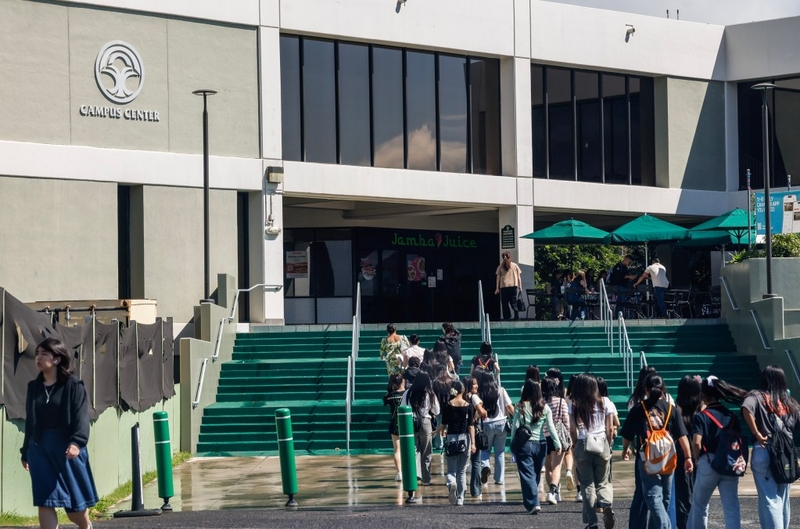
Last fall, thousands of Hawaiʻi high school seniors who had never filled out an application to the University of Hawaiʻi received big news: They’d been accepted to UH.
The letters were part of the university's initiative offering local students guaranteed admission to UH's seven community colleges and certain four-year campuses, depending on their GPA. University officials hoped streamlining the admissions process would boost enrollment in the UH system and reach more students who hadn't previously considered higher education.
The program, called Direct2UH, is now in its second year and has expanded to include guaranteed admissions to UH's flagship campus in Mānoa. But so far, it has not caused an influx of new students in Hawaiʻi’s public university system.
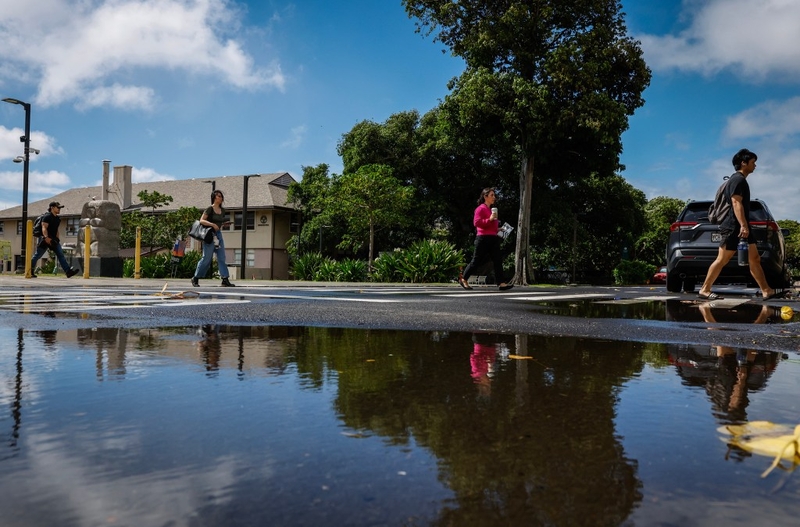
While the number of applications from Hawaiʻi public high seniors increased by 18% over the past year, data shows, the number of local students enrolled fell by 6% this fall. University leaders say it's still too early to determine the success of the program, which initially excluded the flagship UH Mānoa campus and wasn't open to charter school students last year.
"I don't think that we have sufficient data to really explain — or, even to ourselves — exactly what's happening with that," said Interim Vice President of Academic Strategy Kim Siegenthaler.
In total, UH enrolled more than 50,600 students this fall, a slight 2% decline from last year. Enrollment is 5% lower than it was a decade ago, although numbers have remained fairly stable over the past few years.
Guaranteed admissions alone won't be enough to entice more students to attend college. State leaders are preparing for a sharp decline in Hawaiʻi high school graduates, who currently make up the bulk of UH's freshman class. The state could see the largest drop in high school graduates in the nation by 2041, according to the Western Interstate Commission for Higher Education. But UH says it has no plans to reduce course offerings or shrink its programs, even as colleges across the nation make those kinds of difficult decisions amid falling enrollment.
UH is working to broaden its reach, targeting adult learners, online students and community college transfers who may have historically faced greater challenges accessing higher education. At the same time, the university is pushing back against a growing public sentiment that higher education simply isn't worth the time and money, emphasizing that a community college credential or associate's degree can be a low-cost way for students to prepare for the workforce.
"It's worth going to college to an extent, but I do also get the point where students are thinking that the value of a college degree is worthless," said Grace Won, a recent graduate from Kalani High School who plans to attend UH Mānoa next fall. "I think it's fear of all this effort, for what?"
Put Off By Cost?
At Roosevelt High School, college and career counselor Dayna Kaneshiro said it's hard to tell if Direct2UH had an impact on seniors' decisions last year. But the program seems to be raising some students' awareness around college admissions, she said. Some younger students are already asking if they'll receive guaranteed admissions to UH next year.
"I already have juniors asking me, 'Are we going to have Direct2UH also?'" Kaneshiro said. "And I'm like, 'Yeah, I'm pretty sure it's here to stay.'"
Students have until May 1 to complete the free Direct2UH form, which allows them to select the college of their choice. Unlike other college applications, Kaneshiro said students do not need to input their high school transcripts, simplifying the process.
All public school seniors receive guaranteed admissions to UH's seven community colleges. Those with a 2.7 GPA or higher also receive automatic admission to UH West Oʻahu and UH Hilo. A 3.2 GPA guarantees admissions to UH Mānoa.
The program aims to help more high school students realize college is a viable option after graduation, Siegenthaler said, even if they don't end up enrolling at UH. Half of Hawaiʻi students attend college immediately after high school graduation, with roughly a third enrolling at a UH campus. That's slightly below the national average of roughly 60% of high school graduates enrolling in college, according to the most recent data available.
The number of applications to UH’s system was significantly higher with Direct2UH than in past years, but that could partly stem from a quirk in the data collection. Many students selected at least two campuses on the Direct2UH form, which counted as more than one application, said UH spokesperson Dan Meisenzahl.
There's several reasons why students might not take advantage of the guaranteed admissions, said Steve Schatz, executive director of Hawaiʻi P-20 Partnerships for Education, which tracks students' progress from preschool to the workforce. Oftentimes, students don't realize the affordability of higher education, he said, since they think of college as a traditional four-year degree costing many thousands of dollars.
The average cost of community college tuition is $3,100 for Hawaiʻi residents, although students may qualify for scholarships covering most or all of their expenses. Students can also opt for shorter workforce training or credentialing programs, which can provide them a direct path to their chosen careers, Schatz said. Tuition at UH Mānoa is over $11,760 this year for Hawaiʻi residents.
Moving forward, it would be ideal to package students' Direct2UH admissions letters with their financial aid awards, said Alex Harris, president of the Harold K.L. Castle Foundation, which supports public education and career preparation programs in Hawaiʻi. The program already sends high schoolers a powerful message that they're qualified for college and welcome at UH, he said, but students need additional information to make informed choices.
"I think we underappreciate how important that message is for an 18-year-old that is still trying to figure out their future," Harris said.
The state should strive for roughly 70% of high school students to attend college in order to grow its economy and ensure young people are able to remain in the state.
Some students also faced delays in receiving financial aid leading up to this school year, Harris said, which may have made it more challenging for them to enroll and understand the true cost of college. The university said it has no data indicating that the delays significantly impacted the slight decline in freshman enrollment this fall, and all students received their financial aid in time for the new school year.
Looking Ahead
Hawaiʻi is projected to see a 33% drop in its high school graduating class size between 2023 and 2041 – the largest decline in the nation. That reduction could have significant implications for UH, where Hawaiʻi residents made up nearly 80% of the freshman class this fall.
Direct2UH is only a small part of the university’s larger enrollment strategy, Siegenthaler said. Right now, she said, the focus is on expanding access to more Hawaiʻi residents: providing more online classes, strengthening the transfer pipeline for community college students and offering training programs aligned with employers and students' needs.
Last fall, 10,000 Hawaiʻi residents enrolled in online college courses, Siegenthaler said. If the university could do a better job of catering to these students and allowing them to earn their degrees completely online, it could boost enrollment and expand access to more residents, she said.
"Everything is on the table," Siegenthaler said, emphasizing that UH would still be focused on expanding college access even if it wasn't facing a decline in high school seniors. "It's on the table because we believe that it is our imperative for UH to serve all of the residents of Hawaii."
The possibility of declining enrollment – and declining tuition revenue – is always a concern, Siegenthaler said. But unlike some struggling colleges on the mainland, program closures or consolidations aren't being considered at UH, she said.
Tuition also makes up a relatively small part of UH's funding. This year, state dollars made up 71% of the university's base budget, which excludes additional sources of funding from the federal government or philanthropy. State funding for the university is not directly tied to its enrollment.
Rep. Andrew Garrett, who serves as chair of the House Higher Education Committee, said it's difficult to predict if the Legislature would significantly increase UH's funding if the school system's tuition revenue plummeted. UH's financial needs may shift in the coming years depending on whether more students shift to online instruction, he said, or campus buildings need more maintenance and repair.
At the same time, he said, UH needs to better market itself to local students, especially as they're questioning the importance of higher education. Legislation passed earlier this year requires UH to develop a public dashboard specifying programs' expected costs, completion times and outcomes to help students make better informed decisions around college.
UH President Wendy Hensel echoed similar sentiments in a recent Board of Regents meeting, emphasizing that UH needs to communicate its value more effectively.
"The good and the bad of this is we are a monopoly in the state of Hawaiʻi, in that we are the sole system of public higher education," she said. "The bad side of that is we open the doors, and we think people will come."
Honolulu, HI