Harris County’s cashless bail policy for misdemeanors upheld
Oct 05, 2026 | 12:00 pm ET

Description
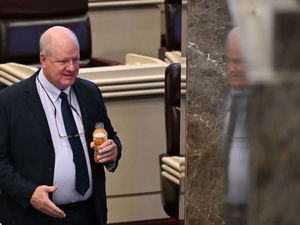
Under a federal court agreement, most low-level defendants arrested in Harris County are released without having to pay bail. (Callie Richmond for The Texas Tribune)
A federal judge on Monday denied a request by Texas Attorney General Ken Paxton and four Harris County Criminal Court-at-Law judges to vacate a landmark settlement on misdemeanor bail reform in the county.
U.S. District Judge Lee H. Rosenthal’s ruling preserves the 2019 ODonnell consent decree, which allows most people facing misdemeanor charges in the state’s most populous county to be released from jail prior to trial without having to pay cash bail. The consent decree settled a 2016 class action lawsuit after a federal court found Harris County’s misdemeanor cash bail system exacerbated poverty while not “meaningfully” promoting public safety or ensuring court appearances.
In 2023, the 5th U.S. Circuit of Appeals overturned a similar case that challenged Dallas County’s cash bail system as well as aspects of its previous ODonnell decision under a legal doctrine known as the Younger abstention, which largely bars federal courts from intervening in pending state criminal proceedings.
Paxton asked Rosenthal in August 2025 to end the consent decree, pointing to the appeals court’s ruling. He also argued that the county’s bail reform conflicts with two state laws: Senate Bill 6 from 2021, which requires those accused of violent crimes to pay cash to get out of jail, and Senate Bill 9 from 2025, which limits who is eligible for low-cost or cashless bail.
Paxton’s move also came a day after President Donald Trump issued an executive order looking to end cashless bail.
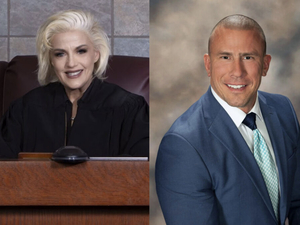
Harris County Criminal Court-at-Law Judges Paula Goodhart, Jessica Padilla, Leslie Johnson and Linda Garcia joined the attorney general’s push to vacate the consent decree later that year.
“Under the Decree, almost every type of class A and B misdemeanor charge is treated the same, even though some cases involve serious conduct, some arrestees have extensive criminal histories, or other circumstances may show that a person could pose a danger to the victim or community,” the judges’ filing said.
Rosenthal denied their requests in Monday’s ruling, saying they were not made “within a reasonable time” because they came years after the appeals court’s ruling.
The attorney general’s office didn’t immediately respond to a comment request.
Travis Fife, an attorney with the Texas Civil Rights Project who defended the consent decree, called the Monday decision a “big win.”
Around 28,000 people are released under the policy each year, allowing them to return to their family and their jobs, he said.
“Our heart and our joy in the outcome is really because of what the consent decree does and now will continue to do for people’s liberty in Harris County in decreasing all of the downstream negative consequences of pretrial detention,” Fife said.
County officials such as Sheriff Ed Gonzalez, District Attorney Sean Teare and the remaining 12 Harris County Criminal Court-at-Law judges also supported maintaining the bail reform.
“At the end of the day, as a law enforcement executive, my North Star is making sure that we can truly keep the community safe from those who are accused of crimes while the person is in the pre-trial phase of their case, whether they have money or not,” Gonzalez wrote in an Aug. 27 court declaration.
The sheriff added that since the consent decree’s implementation, the Harris County jail has become “significantly less congested with low-risk defendants.” Ending the settlement, he wrote, would only “create unnecessary safety risks” for jail personnel and incarcerated people — especially as the detention facility faced a chronic staffing shortage.
Teare shared similar sentiments, telling the judge that his office would have to prepare for dozens of bail hearings a day if the consent decree was voided.
A court-appointed monitor’s report — most recently released in March — found that the consent decree has not led to a rise in repeat misdemeanor offenders, while the number of misdemeanor arrests has declined since 2015.
“The bail reforms under the ODonnell Consent Decree have saved Harris County and residents many millions of dollars and improved the lives of tens of thousands of persons arrested for misdemeanors, and these large-scale changes have produced no increase in new offenses by persons arrested for misdemeanors,” the March report said.
Bail reform has also been a priority at the Texas Legislature, though state leaders and lawmakers have focused on passing stricter bail rules for people accused of violent crimes and repeat offenders.
For instance, SB 9 from 2025 expanded the list of offenses that bar defendants from getting cashless bail to include unlawful possession of a firearm, violation of a family violence protective order, terroristic threat and murder as a result of manufacturing or delivery of fentanyl.
Texans also voted last year to amend the state Constitution to require judges to deny bail for people accused of certain felonies, such as murder, aggravated assault and indecency with a child.
Ahead of the next legislative session, Gov. Greg Abbott has prioritized more bail restrictions when he unveiled his public safety wishlist in May. Top of the list is legislation to deny bail to all unauthorized migrants accused of certain felonies.

Austin, TX