Hageman wins Wyoming’s Senate race
Nov 03, 2026 | 9:10 pm ET
Description
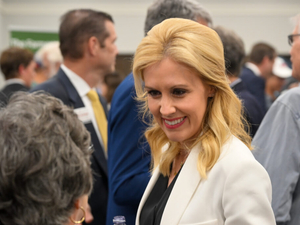
Photo courtesy of WyoFile
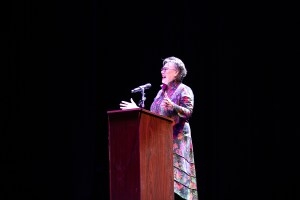
Republican U.S. Rep. Harriet Hageman will become Wyoming’s next U.S. Senator after defeating Democrat James Byrd in Tuesday’s election.
The Associated Press called the election for Hageman at 7 p.m. with 0% of the votes counted. AP calls an election “the moment the trailing candidates no longer have a path to victory,” according to the news organization’s policy.
“The people of Wyoming have hired me to do a new job,” Hageman said in a social media post shortly after polls closed. “I am grateful, and I will not let you down.”
She used the moment to bash Democrats on energy, immigration, taxes and other issues.
“I can’t wait to join the Republicans in the Senate in January to fight these battles ahead,” her statement reads.
Byrd, at 8:30 p.m., said the Associated Press call was BS.
“We’ve got less than 10% of the vote in,” he said in a telephone interview. “I’m behind by about 800 votes.”
The Associated Press listed Hageman with 60% of the votes with 12% of statewide votes counted.
Hageman, 64 and a two-term representative, will succeed Sen. Cynthia Lummis, another Republican who decided last year not to seek a second term. Byrd, 72, is a former state representative who served from 2009-2019.
Hageman won the election in the country’s reddest state, where President Donald Trump in 2024 won with more than 71% of the vote. She was Trump’s pick to defeat one of his biggest political enemies, Rep. Liz Cheney, in 2022 and earned his endorsement for Senate late last year.

Hageman aligned with Trump on most issues. An attorney, she has fought federal regulations on public land use, regulations she says hold back Wyoming’s economy. Fully 48% of Wyoming is owned by the federal government, public land on which miners, drillers and ranchers depend, land that’s also cherished by hunters and recreationists.
The U.S. Forest Service Roadless Rule that protected about 3.2 million acres in Wyoming from development or exploitation was just one issue that divided her and Byrd.
Hageman backed elimination of the roadless rule, calling instead for development of land that many value for its wildlife habitat. “The Roadless Rule has devastated America’s forests, watersheds, and rural communities,” she posted on Facebook. She characterized roadless areas as poorly managed forests that spawn devastating wildfires.
Byrd said the opposite was true, citing a Forest Service official’s testimony and agency statistics. Hageman “has no problem standing up there and flat out being dishonest and lying,” he said.
Hageman also sided with the state of Utah, which in 2024 sought to take over 18.5 million acres of federal property, an effort critics said would ultimately turn Western public lands private. The U.S. Supreme Court would not hear the case.
A fervent supporter of the president, she’s criticized the “far-left’s scarcity agenda” and boosted Wyoming’s fossil fuels in the face of rising global temperatures. Hageman sits on the House Natural Resources and Judiciary committees and Select Subcommittee on the Weaponization of the Federal Government, along with several other subcommittees.
She’s been a constant presence in the state, despite some rocky town hall meetings. “I have now completed 89 town halls in just 3.5 years,” she said in social posts.
She has touted work for constituents, claiming to have returned more than $18 million to constituents while in office.
Hageman took the debate stage in the primary, but ducked a debate with Byrd in the general election.
“We have one word for that in Wyoming: b—shit,” Byrd said after PBS cancelled the event. “If Harriet Hageman wants to hide behind silent non-responses, that’s her choice.”
Byrd said Hageman and the rest of the state’s federal delegation does not represent Wyoming but instead “the Beltway interests, the corporate boardrooms and the silicon bros.”
A Cheyenne resident, Byrd has worked in the fields of computer networking, geophysical exploration and software management.
He criticized the One Big Beautiful Bill Act, saying it cost the poorest Americans $1,200 on average while boosting income for the richest by $13,600. He laid high fuel prices and inflation on the sitting administration, saying it was responsible for beef imports, reliance on Russian fuel and threats to federal grazing leases.
“Wyomingites are being squeezed at every turn — at the grocery check-out, at the doctor’s office, and at the fuel pump,” he said. “Nobody gets a Republican or Democrat discount at the pump. We are paying way too much, and Washington did it to us.”
Cheyenne, WY