Clark County approves quicker, easier short-term rental application process
Nov 04, 2026 | 8:00 am ET
Description
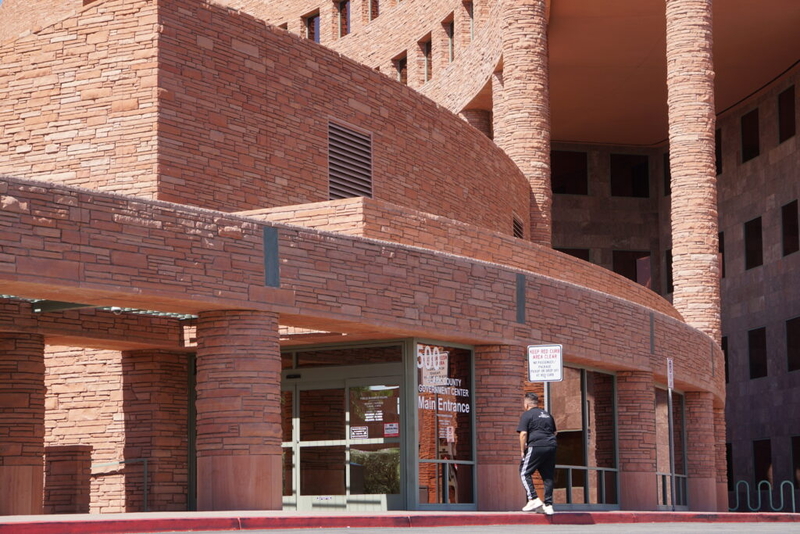
Clark County Government Center (Photo: Jeniffer Solis/Nevada Current)
The Clark County Commission on Tuesday unanimously approved new rules attempting to simplify the short-term rental application process amid an ongoing federal court case.
The commission first adopted an ordinance in 2022 seeking to rein in short-term rentals, which critics warned had become oversaturated with corporate out-of-state investors who bought up affordable housing stock.
The process the county initially set up to apply for a license led to a backlog of applications and prompted a U.S. District Court last December to impose an injunction on efforts to regulate the industry.
The Ninth Circuit Court of Appeals in October ruled the district court’s injunction was “unnecessarily broad” and ordered the lower court to narrow its scope.
The ordinance approved Tuesday by the county, which requires in-person appointments for new short term rental applicants, is a response to federal court rulings, said Jeff Rogan, the deputy district attorney with Clark County.
The changes address the concerns of the court and allow people with “a meaningful opportunity to apply for a short-term rental license and to have their applications processed in a reasonable time,” he said.
With new procedures in place, Rogan hoped the district court would “lift that injunction or at least narrow it down, so we can continue to enforce our short-term rental ordinance.”
“The court did say that short-term rentals still may be regulated despite the concerns the court had with our process,” he said. “We’re keeping those regulations today.”
The ordinance requires new applications for short term rentals to be received by appointment rather than applying online.
Dec. 15 is slated to be the first day applicants can schedule an appointment, which will be available starting Jan. 5, 2027.
State lawmakers first passed legislation in 2021 that required municipalities to develop short term rental regulations.
When Clark County adopted its first ordinance in 2022, there was a backlog on processing applications, Rogan said.
“The bill itself had an effect of opening licensing all at one time, and we knew that there was a large demand for these licenses,” he said. “And because it opened at one time, we received an influx of a large number of applications.”
What was supposed to be about a six-month application period “turned into about a 10- or 11-month application period where people submitted it and they waited before we even reviewed it,” he said. “We’re getting rid of that.”
The county is implementing a rolling application period that will remain open instead of a lottery system.
The ordinance also imposes a 14-day deadline for applicants to respond to requests for additional information and to schedule an inspection.
Under the previous procedure, an application wouldn’t be approved until the fees were paid after a final inspection, which slowed down the process, Rogan said.
Instead the county is “going to approve or deny the application at the time that they pass their fire inspection” and the license itself won’t be administered until all fees have been paid, he said.
If an applicant for a short term rental is denied, they have 30 days to appeal. The county is considering a separate ordinance seeking to shorten the appeal period to 14 days.
“A person who is denied an application has a right to an appeal, and we have to honor that,” Rogan said. “We can reduce some of those timelines.”
Las Vegas, NV