The ground in front of you: How the Wassmuth Center’s H-RISE program teaches Idaho students dignity
Jun 25, 2026 | 6:00 am ET
Description
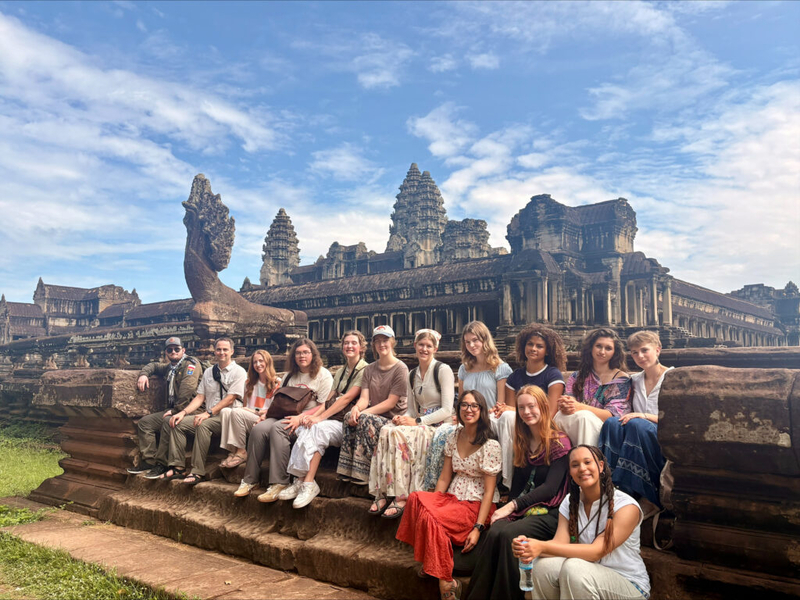
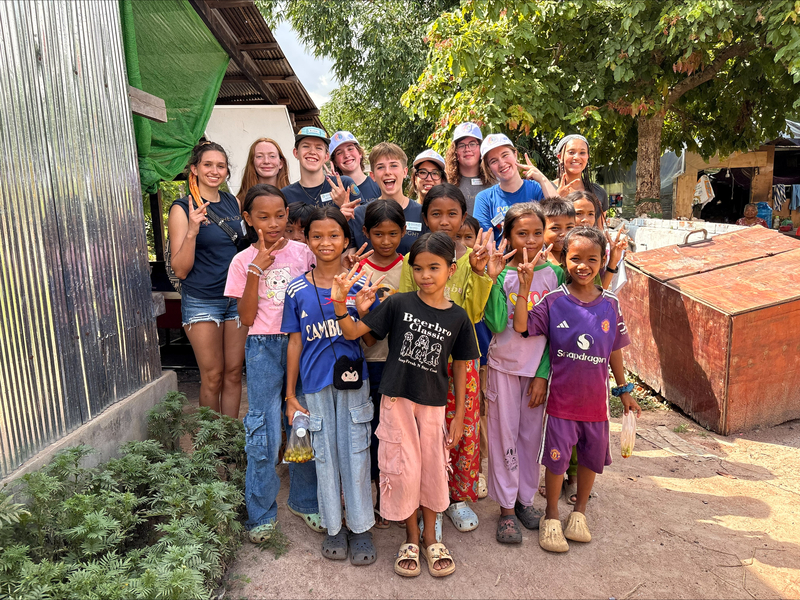
The Wassmuth Center’s H-RISE youth leaders crossed the world to understand how human rights are stripped away, and how they are built back — the culmination of a year spent studying human rights and Cambodian history, writes guest columnist Jess Westhoff. (Photo courtesy of the Wassmuth Center for Human Rights)
In Siem Reap, every one of our Idaho high school students held a rat in both hands — bigger and gentler than they expected, and the reason a stretch of Cambodian land is safe to walk across today.
These rats are trained to smell the explosive inside a buried landmine, and they are too light to set one off. A rat is able to find what is hidden, mark it, and trot off for a treat — and a patch of the earth is safe to live on again.
Cleared ground becomes a field to farm, a path to a well, a road a child can take to school. Decades of war left hundreds of thousands of landmines in Cambodia’s soil, and clearing them happens slowly — meter by careful meter, by people and rats who give years to the patch in front of them. Since 2014, the APOPO humanitarian organization and its Cambodian partners have cleared more than 33 million square meters this way.
The reward isn’t simply the danger removed. It is everything that can grow once the ground is safe.
The Wassmuth Center’s H-RISE youth leaders crossed the world to understand how human rights are stripped away, and how they are built back — the culmination of a year spent studying human rights and Cambodian history.
The landmines were never really the subject. They were how something larger came into focus: dignity itself.
Every person is born with equal dignity and rights. This is the founding promise of the Universal Declaration of Human Rights.
But being born with a right is not the same as being able to live it. A child has every right to an education; a minefield between her home and her school can still keep her from it. The dignity is already hers.
The conditions to live it are what people have to build — and learning to build them is what we came for.
In Cambodia, we learned beside the people doing the work. We followed their lead, lent our hands and listened to the survivors who had rebuilt their own lives. In Kampot, we waded into the coastal mud to plant mangroves, fragile slips of green that take years to root and will one day shelter a whole shoreline and the village behind it. The pepper farm’s vines bear nothing for years and then give for decades; at a silk farm outside of Siem Reap, a single thread is unwound from a single cocoon.
None of it is fast. All of it begins small. And all of it lasts only because someone chose to nurture it and to stay and tend it.
At three schools in the Svay Leu District, 150 bicycles stood in rows, kickstands down, waiting for their riders. We tightened bolts, fixed baskets to the handlebars, and played with the kids before they hopped on their new bikes and wobbled down the road.
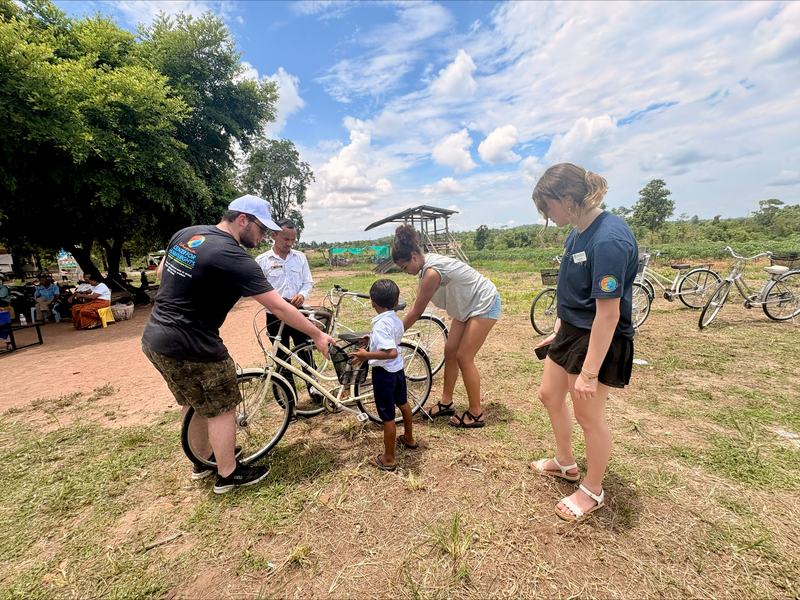
Many of them can now safely reach a classroom that used to be too far to walk. A bicycle is a simple thing. It is also a child’s education made suddenly possible, joy and opportunity rolling down the same road. The teachers told us plainly about that distance and the other obstacles between a student and a full day of learning. Their hopes are much like ours at home.
You can read in an American textbook that all people are born equal in dignity and rights. You understand it differently with mud on your hands. Sometimes you have to leave home to see your own community clearly — and to understand that a Cambodian child’s dignity is bound up with your own, that none of it stops at a border.
Now the H-RISE youth leaders are home, where the lessons have to prove themselves. They did not come back with the whole world figured out. They came back with something smaller and more useful: the knowledge that repair is ordinary work, and that it starts with people who decide to begin. What they learned among the landmines and the mangroves applies to their own streets.
The barriers to dignity in Idaho are not buried in the ground. They show up in a classroom where a student doesn’t feel safe, a workplace that treats someone as less than equal, a state’s history that leaves people out. But we can overcome them with the same steady, shared effort.
This summer, these young people are getting started, turning what they saw into initiatives of their own. They are not waiting to be older, or for someone with more authority to go first. They are beginning with the ground in front of them.
The rats never see the whole minefield. Each one knows its own patch, clears it and leaves the ground ready for whatever comes next — a crop, a footpath, a child on a bicycle.
You tend the patch in front of you. You plant what will outlast you. You do it beside others. And somewhere, a child pushes off, finds her balance, and rides.
The Wassmuth Center is accepting applications for the 2026-27 cohort of H-RISE youth leaders. Interested 9th-12th grade students can learn more and apply at : https://www.wassmuthcenter.org/H-RISE/. Applications are due July 7.

Boise, ID