Greater Chaco Cultural Landscape named one of country’s ‘most endangered’ historic places
May 20, 2026 | 6:43 pm ET
Description
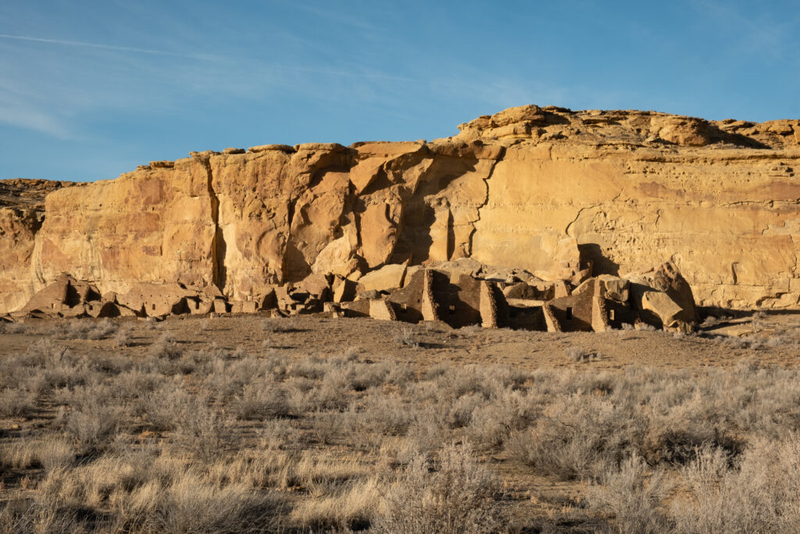
The National Trust for Historic Preservation included the Greater Chaco Cultural Landscape in its 2026 list of the top 11 most endangered historic places, citing the federal threat to reverse a ban on new oil and gas leasing around the site. (Pueblo Bonito in the Chaco Culture National Historical/Photo by Avi Farber courtesy of The National Trust for Historic Preservation)
The National Trust for Historic Preservation on Wednesday included the Greater Chaco Cultural Landscape in its 2026 list of the top 11 most endangered historic places. The designation — the area’s second since 2011 — came as leaders from all of New Mexico’s 20 Pueblos urged the public to continue applying pressure to prevent the reversal of a ban on new oil and gas leasing around Chaco Culture National Historical Park.
The Trump administration, for the last year, has floated a proposal to reverse a Biden-era order that issued a 20-year ban on oil and gas development on federal lands within 10 miles of the site, which holds paramount spiritual and cultural significance for numerous tribes and pueblos. The federal government also proposed merely shrinking the protected area.
Tribal leaders said they expect a decision in June and have criticized the process for failing to recognize Pueblo sovereignty.
New Mexico officials, tribes accuse feds of rushing to reverse Chaco Canyon drilling ban
“The decision would not be made by people who hold a thousand years of cultural responsibility for that land, it would be imposed on us,” said Pueblo of Acoma Gov. Charles Riley.
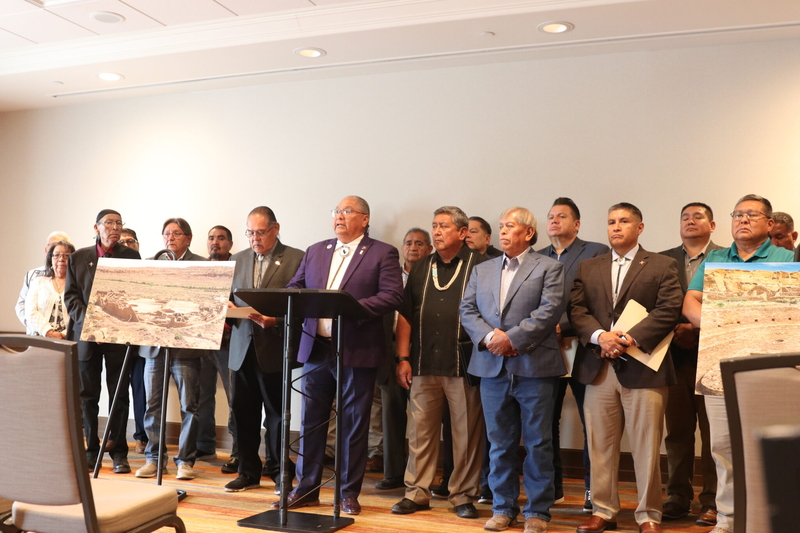
All Pueblo Council of Governors Chair Gov. Joey Sanchez (Santa Ana) urged both public pushback to the reversal of the drilling ban and support for federal legislation creating permanent protections recently introduced by New Mexico’s congressional delegation.
“Contact your representatives, submit comments to the BLM, speak up for the places that cannot speak for themselves,” Sanchez said. “We cannot do it alone and we should not have to.”
The Pueblo leaders also acknowledged Chaco’s designation as both historic and endangered.
“The most endangered designation is not memorial, is not a eulogy — it is a call to action,” said Pueblo of Tesuque Gov. Mark Mitchell, flanked by photos of the site. “The national trust listings have helped us save irreplaceable American places for nearly 40 years.”
In its explanation for including Chaco, the Washington D.C.-based nonprofit said “federal and state management of the cultural landscape have historically treated Chaco as an isolated archaeological park, ignoring the broader landscape and the living Indigenous communities who continue to hold cultural responsibilities to these places.”
If protected, “and interpreted holistically,” the organization said, the Greater Chaco Cultural Landscape “could serve as a national model for Indigenous-led stewardship, intertribal collaboration, and public education grounded in respect and consent.”
The National Trust for Historic Preservation also issued a $25,000 grant for the Pueblo of Acoma to amplify awareness and organizing to save the site.
Riley said the listing is “an important signal” that he hopes will bring international awareness to the area, which is a UNESCO World Heritage Site.
“When we speak of Chaco, we are not merely speaking of ruins,” Riley said. “We are speaking of the spirits of our ancestors, who are still present, still teaching, and still caring and asking us to carry forward what they entrusted to us.”
Santa Fe, NM