Gov. Walz bans state employees from using insider information to place bets
Jul 28, 2026 | 5:25 pm ET
Description
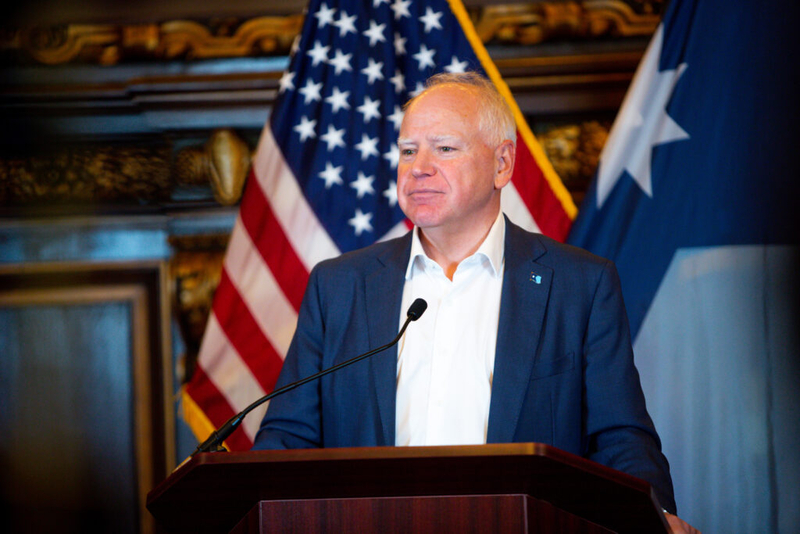
Gov. Tim Walz speaks after the end of the special session in June Tuesday, June 10, 2025 at the Minnesota State Capitol. (Photo by Nicole Neri/Minnesota Reformer)
Gov. Tim Walz signed an executive order Tuesday prohibiting state employees from using inside information to bet on prediction market sites like Kalshi and Polymarket.
The executive order comes a day after a federal judge granted a preliminary injunction halting the implementation of a new Minnesota law that bans prediction markets. The law, which was aimed at stopping the spread of legal, lightly regulated gambling offered by the prediction markets, was due to take effect on Aug. 1 after gaining bipartisan support in the Legislature. It is the first of its kind in the nation.
Walz’s executive order singles out state employees from using nonpublic or confidential information to bet on prediction markets, regardless of whether they profit. Violators may be subject to disciplinary action, including termination.
Walz said in a press release that state employees should not be able to use nonpublic information to benefit financially.
“I am taking executive action to reinforce the strong ethical standards we have in Minnesota,” Walz said.
Kalshi banned politicians and athletes from betting on themselves in March, although there are no existing limitations for staffers.
Minnesota state Sen. Matt Klein, a Democrat from Mendota Heights, was suspended from Kalshi in April after the prediction market found that the candidate for Congress in the 2nd District bet on the outcome of his own election.
Klein told the Reformer that he placed a $50 bet last October that he would win the DFL primary. Klein agreed to a five-year suspension and a $539.85 fine as part of a settlement agreement, according to Kalshi.
The U.S. Senate banned senators and staffers from trading on prediction markets in April.
Stories of political staffers using confidential information to net financial gain culminated in a recent report that President Donald Trump’s teleprompter operator made more than $100,000 betting on the content of Trump’s speeches, according to ABC News.
Kalshi and Polymarket joined the Trump administration in the suit against Minnesota, arguing they provide a platform for futures contracts — a common financial instrument for buying or selling a commodity at a fixed price in the future, which helps investors hedge against risk. Prediction markets allow people to speculate on the outcome of an event — in sports, elections and pop culture — rather than just the future price of a commodity.
The Trump administration and the companies argue that the federal Commodity Futures Trading Commission has jurisdiction to regulate the prediction markets, preempting states.
In his announcement, Walz took a jab at the prediction markets and the Trump administration after losing in court this week.
“It is clear that the Trump administration and companies like Kalshi are more interested in lining their pockets than protecting public trust and keeping people safe,” he said.

Saint Paul, MN