The future of the Northwest’s power grid is at risk. Where is the leadership?
Aug 21, 2026 | 7:23 pm ET
Description
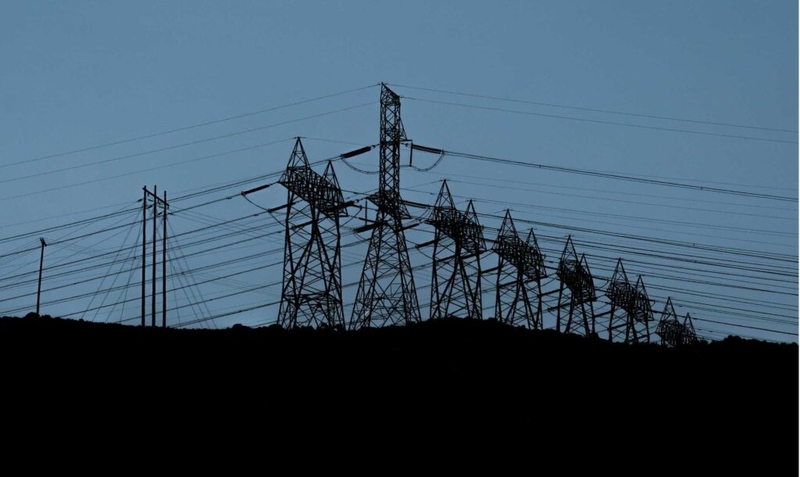
Powerlines above the Columbia River move electricity from the Bonneville Dam to customers across the region in Hood River County, Oregon, on Thursday, July 25, 2024. (Jordan Gale/Oregon Capital Chronicle)
The Pacific Northwest is drifting toward an energy crisis of its own making. The newly appointed leader of the Bonneville Power Administration, Travis Kavulla, with support from Secretary of Energy Chris Wright, has the background and ability to stop the drift and return BPA to the leadership role it has traditionally played.
Congressional lawmakers need to step up. Most of BPA’s customers are in Washington state. Yet both of our senators, Patty Murray and Maria Cantwell, seem silent about the slow-cooking crisis afflicting the grid. Cantwell’s silence is particularly perplexing, as her tenure as chair of the Committee on Energy and Natural Resources provided her with a close-up view of the region’s energy developments.
We have known this reality for some time but have done too little to address it. Electricity demand is rising rapidly, yet our region is not adding generation and transmission line capacity fast enough to keep pace. Rather than confronting this reality, much of the public debate has focused on scapegoats — data centers and other large electricity users.
The real issue is not who just consumes power, but whether we have the foresight and resolve to build the infrastructure needed for reliable and affordable service.
The Northwest has scores of small and large electric utilities — private, public, rural and urban — as well as many interest groups with skin in the game.
Large industrial customers, technology companies, independent power providers, environmental advocates, labor unions, farmers, and other interest groups all have their own agendas. They often pursue separate solutions for their own specific challenges and prioritize their parochial concerns over those of the region as a whole.
The inevitable result is fragmentation, delay, and higher costs.
Congress anticipated this very problem when it enacted the Northwest Power Act of 1980, providing the framework and the tools for a coordinated response.
Forty-six years later, the effective use of that law, together with the original Bonneville authorizing statute and the Transmission System Act, is falling short.
Inexplicably, Bonneville has walked away from its legal authorities and mandates, retreating under the pretext of listening to its customers.
Congress gave BPA $10 billion of borrowing authority in the 2021 infrastructure law, yet BPA is not using these funds. Instead, it plays conservatively out of an abundance of caution regarding its obligation to repay the Treasury annually.
Paying debt versus using this borrowing authority to serve the region is a false choice for BPA. Bonneville has never missed a Treasury payment. And to forgo needed upgrades to its existing infrastructure and its failure to build new east-west transmission for renewable solar and wind at this critical time is indefensible.
Here is but one example. BPA was originally an in-part owner of the critical Boardman-Hemingway 500 kilovolt line, but gave up ownership to Idaho Power and PacifiCorp. Ownership would have protected its public utility customers from rate increases and provided accessibility to this infrastructure. No ownership, no protection.
For its public utility customers, BPA also failed to secure additional electricity resources despite, according to the Northwest Power and Conservation Council, the region needing to increase supply from today’s average 22,000 megawatts to 40,000 by 2046. Instead, BPA has chosen to divide up its current supplies and tell customers to fend for themselves for the rest of what they need.
Kavulla is a former Montana utility commissioner. He knows these issues and, with a reengaged congressional delegation and BPA stakeholders, can work to solve these challenges.
For decades, the Northwest prospered under a coordinated “one utility system” that delivered reliable, low-cost electricity and broad economic benefits. We have solved challenges like this before by working together. The choice is clear: restore regional cooperation and leadership now or wait for the lights to go out and explain why we failed to act while there was still time.
Olympia, WA