Former Platner volunteers turn grassroots energy into independent organizing machine
Oct 15, 2026 | 4:29 am ET
Description
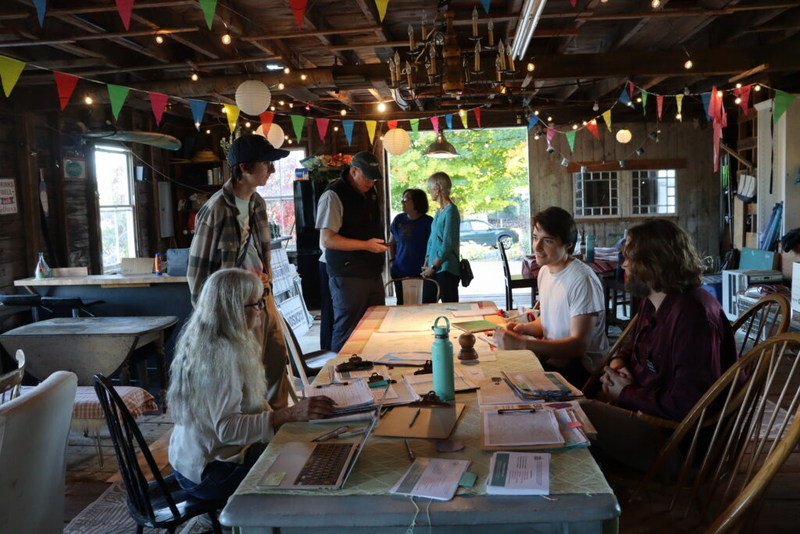
People Powered Maine volunteers convene in a converted barn in Cumberland after door knocking on Oct. 3, 2026. (Photo By Emma Davis/ Maine Morning Star)
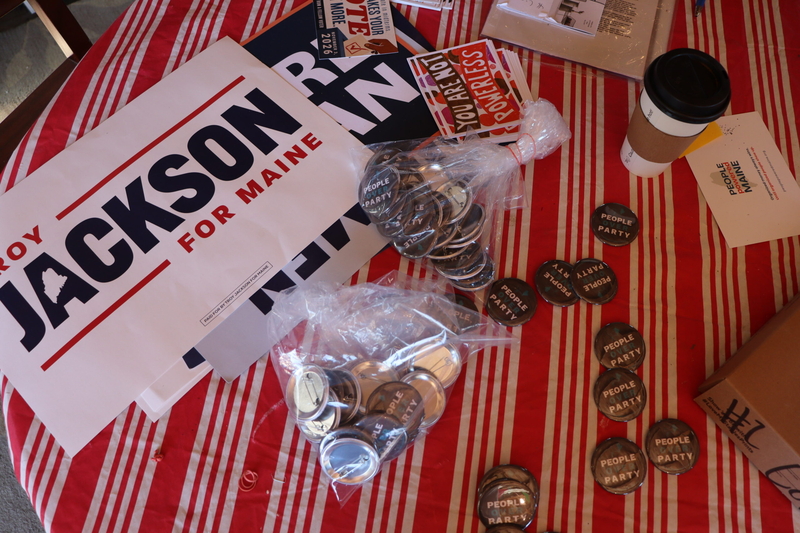
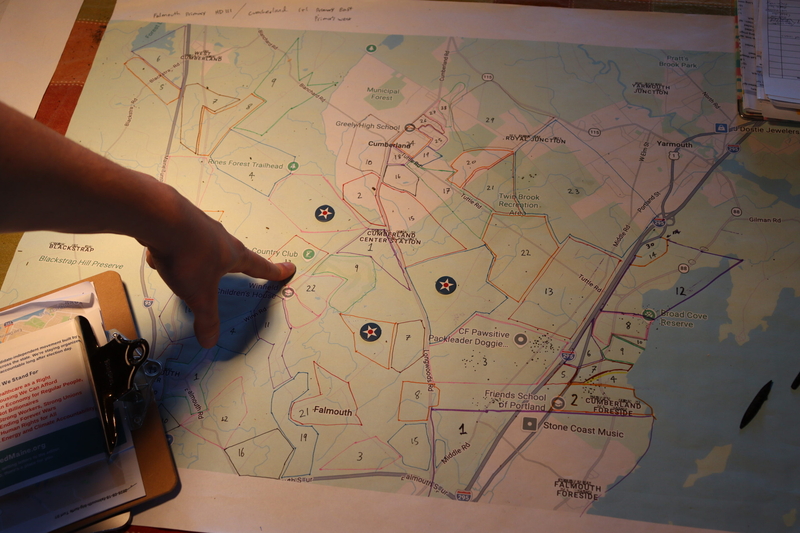
One by one, people returned to a barn in Cumberland as cows wandered on a neighboring farm. But this barn, with maps of canvassing turfs and “people over party” pins covering tables inside, serves a different purpose.
It has become one of several hubs across Maine for former volunteers of Graham Platner’s campaign. His candidacy for U.S. Senate ended in July, but the grassroots organizing he energized has not. Now operating as an independent nonprofit known as People Powered Maine, his former volunteers are still pushing for change outside the two party system.
“Getting back to what Graham always said, ‘Win or lose in November, my objective is to create an organizing apparatus in the state of Maine,’” said Crystale Lapham, one of the lead organizers of the offshoot effort. “I was like, mission accomplished. And we cannot let that die.”
That pitch, that Platner’s campaign had not been about him but about building an organizing effort to sustain beyond his candidacy, had drawn many Mainers in, even those who had been otherwise skeptical of the Sullivan oysterfarmer and veteran, given the litany of controversies surrounding him before the accusation of sexual assault that ultimately tanked his bid.
The former nominee’s vow to rally against corruption, regardless of political affiliation, is another aspect that the volunteer-run independent field organization has taken to heart.
The percentage of political independents in the U.S. has increased significantly over the past 15 years, with a record high of 45% in Gallup’s 2025 poll, heavily driven by young voters. In Maine, voters not enrolled with a political party make up roughly one-third of the electorate. Even voters registered with a party are dissatisfied with the two-party system.
“We think it is really important to have a space that doesn’t have a label of party that some people may or may not resonate with, but they do resonate with the platform,” Lapham said.
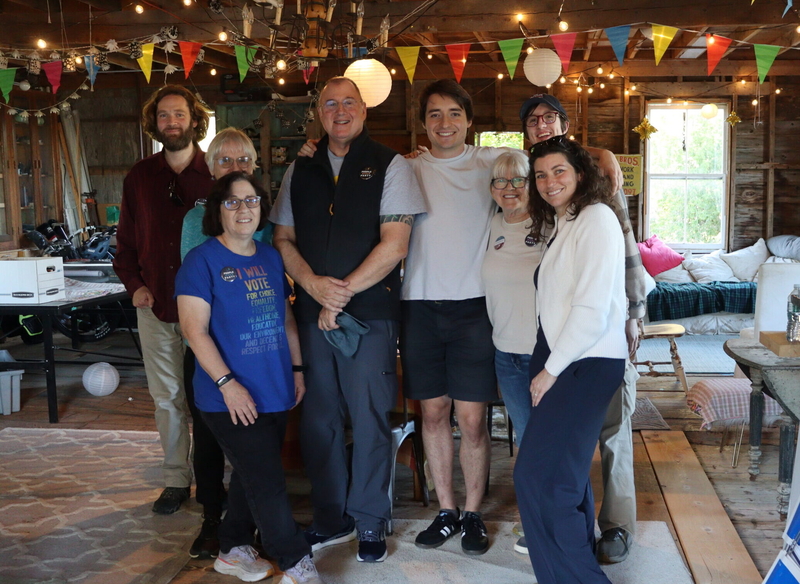
An economy that works for regular people, healthcare as a human right, ending forever wars, and energy and climate accountability are a few of the core facets of that platform. As Lapham and seven other volunteers returned to the barn in Cumberland to regroup after a day of canvassing, the takeaways they shared were personal stories of how these issues impacted their neighbors’ daily lives. Someone struggling to pay for medication, another for gas as prices rise.
The group does not endorse candidates but advocates for those who sign onto their platform. That includes the new Democratic U.S. Senate nominee, Troy Jackson, and Democratic nominee for Maine’s 2nd Congressional District Matt Dunlap. But as they doorknock, people are often more interested in their organizing effort than any one candidate.
When Gioacchino Brennan explained the goal of People Powered Maine at one door, the person who answered “was less interested in Jackson and far more interested in the fact that we are an all grassroots organization and that we’re out here trying to do a year-round advocacy organizing operation,” Brennan said.
Unlike most campaign field operations, People Powered Maine does not plan to fold after the Nov. 3 election. With a goal to remain organized in order to hold elected officials accountable and push for policy change, the Maine group essentially hopes to do on the state level what the grassroots organizers behind former President Barack Obama’s campaign had tried to do, but never fully achieved, on the national level: create a permanent, mobilized network.
“This energy that Graham tapped into and the policies he was talking about, similar to my old boss, existed before he became a thing,” said Ronnie Cho, who organized for Obama in Maine and is now advising the Maine group. “This hunger for change — for real, bold, principled stands on issues that are vitally critical to the day-to-day lives of ordinary Mainers, none of this should live and die with any one person.
“The test is whether we can sustain that.”
How it started
When Politico published an accusation of sexual assault against Platner on July 6, Lapham and other volunteers had been instructed by the campaign to cancel all events. Platner had weathered an array of earlier controversies, but this time, Democrats pulled their support and his top strategists behind-the-scenes urged him to drop out.
Not wanting to forgo the community the campaign built, Lapham went ahead with an event, nixing any Platner affiliation, to collect donations for Maine Needs at her house on July 8 — what ended up being the night Platner released a video announcing his intention to end his bid.
The group watched the video together and Lapham said they recognized they still had power, both because Platner had not yet officially withdrawn and inherently as an organized group.
They penned two letters the next morning. One to the Maine Democratic Party asking them to be transparent about the replacement process and one to the aspiring candidates asking them to pledge to the platform at the center of Platner’s campaign that 150,000 Mainers had backed in the primary. One of the candidates who signed their pledge, Jackson, eventually went on to secure the nomination at the party’s state convention later that month.
“Maine People Powered Movement was just the name that we put on the letter. We had no intention of creating an organization,” Lapham said. “But after all of this happened, everybody was like, ‘What’s next?’”
They set up meetings across the state to crowdsource feedback to answer that question. Out of that came the idea for a 501(c)(4) organization, called People Powered Maine, and its associated political action committee, called Maine People Powered Movement.
Roughly 2,000 people have signed up or expressed interest in the organization, according to Lapham. They are people of various ages, including recent high school graduates and retirees, with disparate political experience.
Jim Eaton had done some organizing for his union but never a political candidate until Platner. “I was pissed off,” Eaton said.
Many volunteers now see People Powered Maine as the most effective means to harness that frustration. Another former Platner volunteer, Robin Swearingen, moved to Maine earlier this year after leaving a job in public health in Washington, D.C., amid Elon Musk’s Department of Government Efficiency cuts. “It really struck a nerve,” he said, “and I vowed to become a better activist.”
People Powered Maine trains new volunteers to talk to voters in much the same way Platner’s team had: build relationships first and connect on issues that matter before attempting to persuade.
“That takes a lot of training because you’re not asking people to open a door and read a script,” Lapham said. “But it is way more effective.”
These types of genuine, off-the-cuff conversations at doors have been gaining traction, including in Zohran Mamdani’s victory in New York’s mayoral race — as has the type of relational organizing, leveraging personal connections, that People Powered Maine is also focused on.
The group prioritizes knocking doors in their own neighborhoods, Lapham said. They also send handwritten postcards to follow up. These notes — such as a stack on one of the barn tables with artwork reading, “You are not powerless” — also include basic information on how to vote.
Not another field program
Rather than being run by the Democratic Party, Obama’s presidential campaigns relied on an independent grassroots apparatus called Obama for America, drawing power from 2.2 million volunteers who organized their own neighborhoods during the 2008 and 2012 election cycles.
Some saw the decision to create a separate bottom-up organizing model as redundant or wasteful. But Cho said, “Clearly this organizing wasn’t happening before. The state parties weren’t mobilizing millions of people out of the woodwork before.”
Rather than dismantle Obama’s grassroots army after the election, the team turned it into permanent, year-round infrastructure to advocate for the president’s policy agenda. However, the apparatus withered overtime and eventually folded into the National Democratic Redistricting Committee to focus on fighting partisan gerrymandering. Cho sees that outcome not as a glitch but a feature of a change-averse system.
Like Obama’s grassroots organizing operation, People Powered Maine aims to appeal to people who have been alienated by traditional party systems.
You will not hear or see the term “progressive” when volunteers of People Powered Maine discuss their effort, Lapham said. “It puts you in a box that means you automatically don’t apply to somebody who’s unenrolled or more centrist.” Instead, Lapham summed up the group’s identity as, “We believe in an economy that works for everybody, in basic human rights.”
Cho and his team took the same approach when they launched Obama’s organizing apparatus.
“We wanted everyone — Republicans, unaffiliated, Democrats, everything in between — to have a home, to be civically engaged in the way that we needed to in order to win,” Cho said, “and that structure isn’t able to really thrive under traditional Democratic Party campaign infrastructure.”
Benta Lundh, now a volunteer for People Powered Maine, has canvassed and done other work for the Democratic Party as a lifelong member. But she said she had an “aha moment” this year when she realized those efforts were often focused on mobilizing already supportive people, rather than persuading undecided voters.
Lundh’s work now feels less affirming, she said, because she and other People Powered Maine volunteers specifically seek out people who aren’t enrolled in a political party or are likely to skip voting altogether. However, Lundh said she feels it is more impactful.
As the group in Cumberland debriefs in the barn, they discuss upcoming plans to offer free rides to the polls and pitch ideas to build community, such as group meals.
“One of our big founding ideas is if people are going to hold power, they have to stay organized together,” Lapham said, “and the entire way that a campaign is run around a single candidate and then a single election cycle, and then the structure dissipates — that isn’t helpful for people retaining power.”
By staying organized year-round, Lapham and other volunteers said they hope to get involved in local races, ballot questions, legislation and holding those who are elected accountable. Regardless of what comes up, Brennan said, “We’re going to be able to leverage a lot more, a lot quicker.”
Pointing to President Donald Trump’s efforts to restrict voting access, Lapham added, “Heaven forbid something actually happens with Trump refusing fair elections, there’s a network of people who know each other, who trust each other, who can, on a moment’s notice, organize.”
As Lapham described it, their effort is not just about getting a candidate elected or holding that one candidate accountable. “It’s actually about,” she started before other volunteers jumped in, “democracy.”
Augusta, ME