Former Nebraska school buildings help change affordable housing equation
Sep 29, 2026 | 6:45 am ET
Description
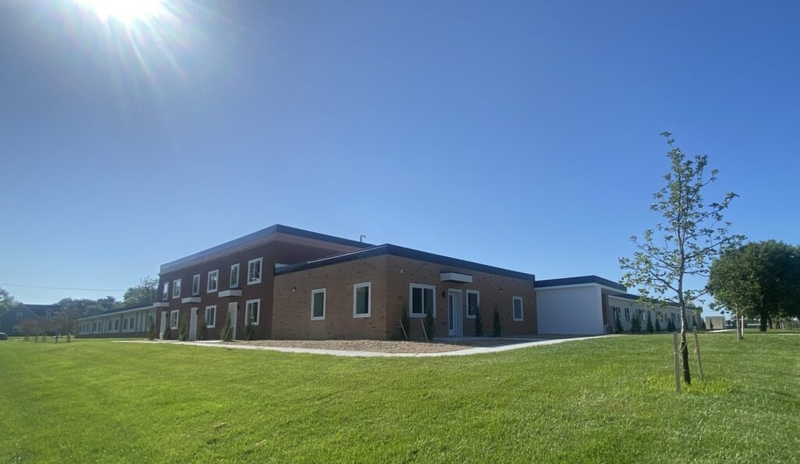
An old elementary school was repurposed into Stoddard Place, a residential site for seniors 55 and older in Beatrice, Nebraska, helping the affordable housing crunch in the southeastern Nebraska city of about 12,300 residents. (Courtesy of Hoppe Development)
The project’s name rings a bell. Its exterior shell and playground area also look familiar to neighbors who live in Beatrice, Nebraska.

But the town’s former Stoddard Elementary School underwent a $6.4 million renovation to reopen last week with an entirely new purpose — as Stoddard Place residences.
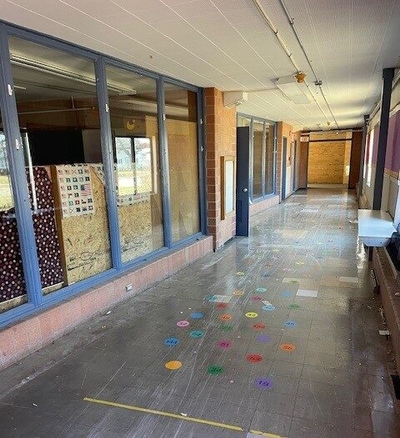
Now instead of kids marching down the hallway to the principal’s office or math class, senior tenants age 55 and older will be strolling to their apartments or perhaps the community room to socialize.
Converting the longtime school and gym — built around 1957 and shut down in 2024 when the school district consolidated four aging educational campuses into one newer facility — is one way Beatrice is taking a bite out of an affordable-housing crunch.
And the southeast Nebraska community is not alone.
“With the cost of new infrastructure being really high, you’ve got people looking at every building and asking, ‘Could this be converted to housing?’ — schools fall into that,” said Jake Hoppe of Lincoln-based Hoppe Development.
Family-focused phase on deck
Hoppe is the private development company leading the Stoddard transformation, which was boosted by competitive low-income housing tax credits covering more than half the cost. Of the 25 units, 20 are to go to seniors with incomes below the area’s median income. The rest will be leased at the market rate.
Rents overall range from $645 to as high as $1,300 for the market rate units, said project manager Connor Menard.
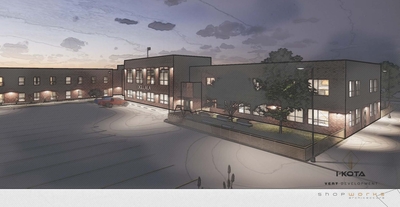
Hoppe Development soon will start a second Stoddard phase. That batch of 45 townhome-style rental dwellings, roughly an $11.7 million project, will rise south of the senior units and be reserved largely for families that earn less than the median income. Equity from low-income tax credits will cover about $7 million of the later phase, which also taps city-approved tax increment financing.
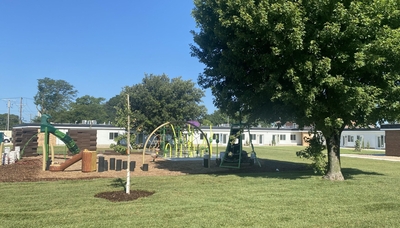
Seven of the southern units will be rented at market rate, creating a mixed-income environment, Menard said. A feature of the new-construction townhomes will be a medical exam room staffed by Beatrice Community Hospital, as well as a food pantry. A new city-owned playground area sits between the two sites.
Beatrice’s residential infusion comes as Nebraska and the nation continue to combat a housing shortage fueled by factors including high land, labor and construction expenses, low and aging housing stock, and financing barriers.
Various efforts have flowed since a wide-ranging group of government and other Nebraska leaders in 2023 declared a housing crisis and developed a strategic plan, goals and working groups. The latest housing study of Beatrice and the broader Gage County identified high lease amounts and scarcity of available and decent properties as barriers for renters. That 2021 report also pointed out that the county’s fastest-growing age group is 55- to 64-year-olds.
New wave
Keith County’s Ogallala is another Nebraska city partnering with a private developer and tapping various economic development tools to repurpose a school building. Key to many such projects is the low-income housing tax credit program, a public-private partnership where the state and federal governments trade tax breaks for low-rent housing commitments.
The program is administered locally by the Nebraska Investment Finance Authority. NIFA Executive Director Shannon Harner calls the tax credit the most important single tool in bumping up the state’s affordable housing supply.
The Keith County Housing Development Corp. learned in late August of its tax credit award of roughly $9 million. That in combination with other sources including historic tax credits will help finance the $16 million redevelopment of a former Ogallala middle school expected to open around 2028. The agency is partnering with Big Red Development on the 40-unit Schoolhouse Apartments.
Hastings is home to yet another ongoing school conversion. A few years ago, Plattsmouth’s old high school became apartments with a financial lift from state historic tax credits.
The new wave follows decades-old examples in larger cities like Omaha, Lincoln and Grand Island where schools were retrofitted to house people. Omaha’s historic Rosewater School was called a pioneer when it became apartments in 1985.
Among Hoppe Development’s earlier projects was the 2005 conversion of a three-story brick Grand Island structure, originally built in 1925 as a high school. The nearly 90-unit Old Walnut Apartments were financed by historic and low-income tax credits that also helped repurpose the school theater into shared community space. Tax increment financing was tapped as well.
Often driving schoolhouse transformations is a desire to preserve history or an icon valued by a community.
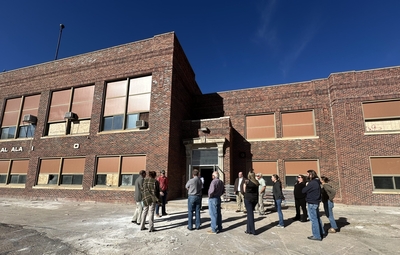
As was the case with Stoddard in Beatrice, some Nebraska towns “built up” or grew up around a school, said Hoppe.
“The nice thing for the community there is we’re able to use a fundamental structure in the middle of town,” he said.
While not always the case when converting obsolete or historic structures, Hoppe said, the senior-focused Stoddard Place was less expensive per unit to build, coming in at about 80% of what newly constructed residences would cost.
That’s partly because the existing shell and utility structure were reused, he said. The developer’s experience in adaptive reuse also has sharpened efficiencies.
Environmental cleanup adds up
Repurposed properties often face complications that can raise development costs.
The Hastings school project, for example, leaned on a $475,000 Brownfields grant to clear asbestos and make way for the planned $15 million conversion of the 1917-era middle school into a mix of 68 affordable and market-rate apartments. Queen City Development is spearheading the venture that City Planner Ember Batelaan believes is the first school-to-housing conversion in Hastings. The project’s capital stack includes Rural Workforce Housing and Nebraska Affordable Housing Trust loans.
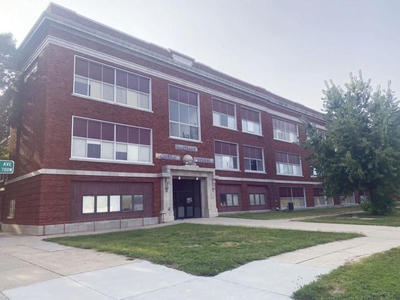
City funds are helping with the environmental cleanup at Ogallala’s century-old middle school, which has sat vacant for a decade. Mary Wilson, executive director of the Keith County Housing Development Corp., said area leaders invested much time and effort in finding ways to preserve the property the corporation bought in 2023.
“We’ve seen so many historic buildings in Ogallala get knocked down to save a buck,” Wilson said. “We really wanted to do our best to make this happen.”
While a recent project update on the housing corporation’s Facebook page drew mostly positive responses, a few questioned the cost. One critic commented: “So at $400,000 per an apartment???”
When participating in the low-income tax credit program, dwellings for decades must abide by rent restrictions and are limited to residents of certain income levels, which can elevate upfront costs, Wilson said.
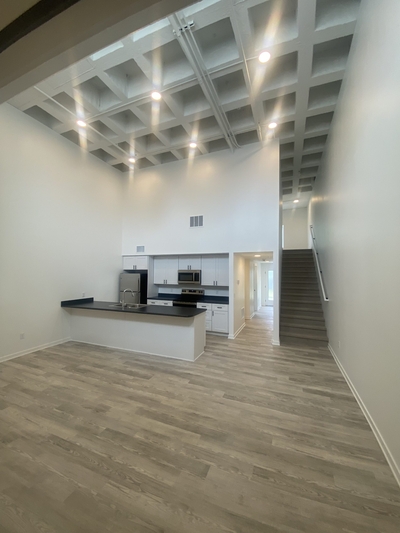
Tobias Tempelmeyer, Beatrice city administrator, said the Stoddard housing joins other recent initiatives in bringing a variety of housing styles and price points to the town of about 12,300.
“A house on a quarter-acre lot with a picket fence is not what everybody wants or needs,” he said.
What is a common theme, he said, is the call for more housing to attract residents and workers who can expand the tax base and grow business. Tempelmeyer said a segment of the current Beatrice workforce lives elsewhere and local officials would like them to move within the city limits.
Domino effect
He said new senior housing could create a chain reaction, opening up houses of empty nesters or retirees who want to downsize or shed maintenance chores.
Other new growth includes a $10 million repurposing of the historic downtown Paddock Hotel into 36 affordable rental apartments, a startup business incubator and commercial space. Ground broke on the venture last November with the city, Hoppe Development and Gage Area Growth Enterprise as partners. Funding sources include historic tax credits, Rural Workforce Housing funds, tax-increment financing and a USDA grant.
Construction recently started on Beatrice Commons, an 11-acre site for 31 subsidized senior rental units and 32 for-sale townhomes led by Excel Development Group.
The rowhouse-style Crest addition has added about 21 residences with seven more expected to start in the fall, Tempelmeyer said.
“We’re excited about what’s going on down here,” he said, adding that the area has seen industrial growth and the city is pushing to add more amenities, including water parks.
Employers are “begging for more employees,” Tempelmeyer said. “We just gotta find you a place to live.”

Lincoln, NE