As Flood Aid Trickles Out For North Shore, Southeast Asian Farmers Are Left Behind
Jul 30, 2026 | 6:01 am ET
Description
Photo courtesy of Honolulu Civil Beat
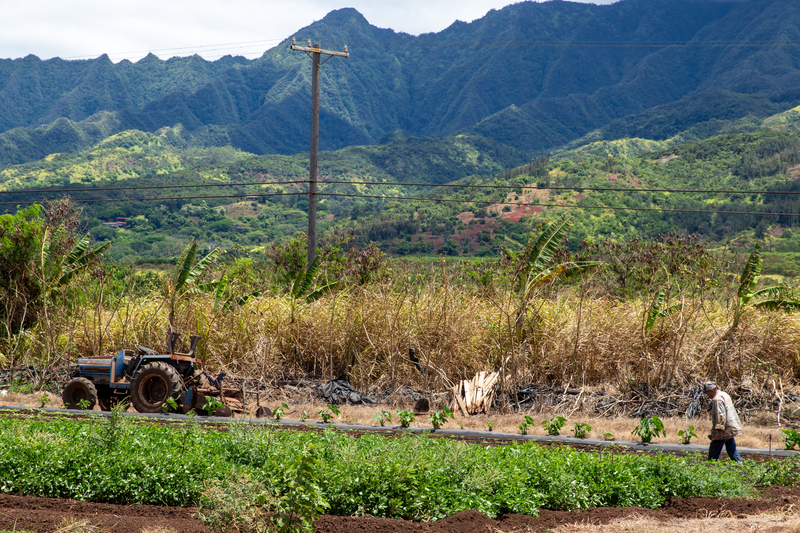
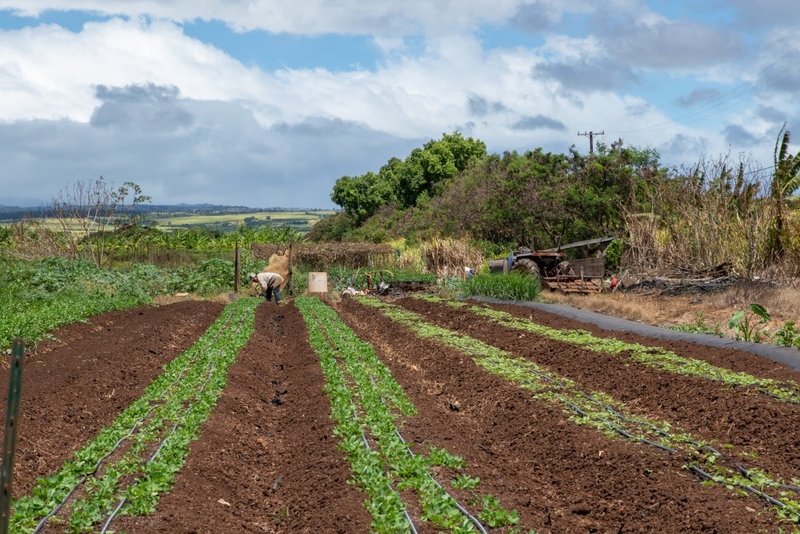
Phet Souksamly has settled into a new daily routine at Mahiko Farms. Most nights, friends and neighbors gather under his tent-like pavilion to sip lukewarm Heineken and grill what’s on hand, after which the 68-year-old climbs into the trunk of his silver Nissan to sleep.
On other nights, after working his three acres of farmland, the Laotian-born farmer leaves his cluttered living space to bathe in the ocean’s cool saltwater, soothing his calloused hands after long days of toiling under the sun.
This has been his reality for the past four months, after the first floor of his rental home in Otake Camp was inundated by floodwaters of March’s Kona low storms. The settlement, next to Kaukonahua Stream, became emblematic of the disaster. His home became unlivable and his farm, two miles away, was no better off.
The day the weather cleared, he returned to find that all of his crops – cilantro, bitter melon, eggplants, peanuts among them – drowned, pressed into the mud and completely unsalvageable.
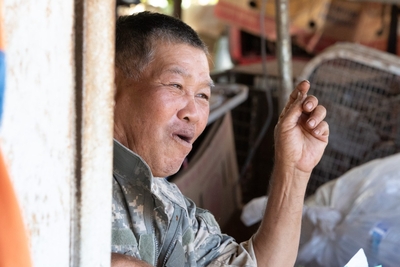
His farm, which hasn’t provided any income since the flooding, is finally starting to show some signs of life. But he has yet to return home.
“I’m used to it now. They haven’t told me when I will be able to,” he said in Thai, the language Thai and Laotian farmers use to communicate with one another.
Souksamly is one of the dozens of Southeast Asian farmers on the North Shore who have emerged from the floods as among the hardest hit and least-equipped to recover.
The Kona low storms caused over $42 million in damage statewide, through lost crops, broken-down machinery, flooded vehicles and the lifeless soils and invasive grasses it left behind. That destruction is just the beginning of the Southeast Asian farmers’ challenges, aggravated by a loss of income and the struggle to find assistance -- government or otherwise.
Most do not have alternative income sources and few carry any kind of insurance. Some find the bureaucracy of seeking aid difficult to navigate because their English is not strong. Others, due to their ambiguous immigration status, are afraid to even ask. Most have relied on the community's goodwill to get by.
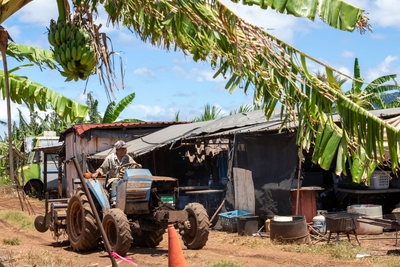
The farmers’ customers have felt the impact, too, with their specialty crops virtually disappearing from shelves and plates, from Waikīkī and Chinatown to farmers markets islandwide.
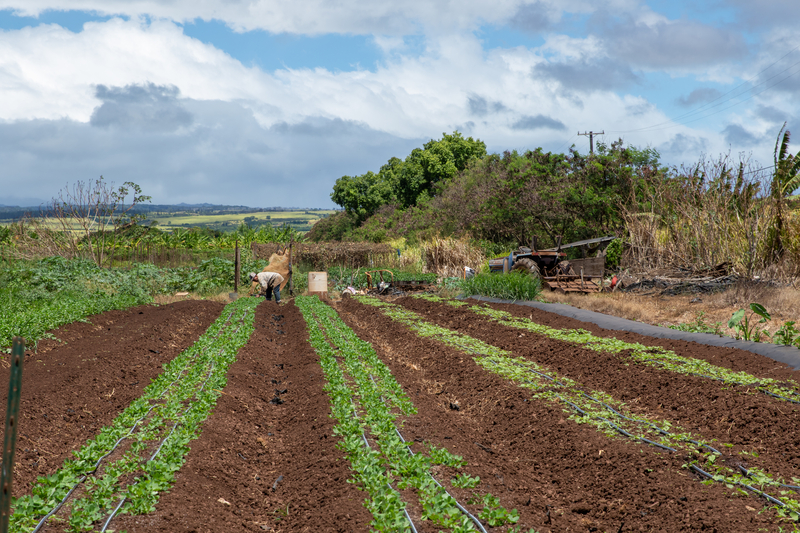
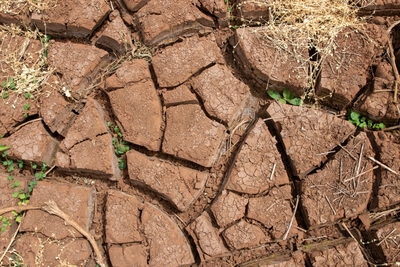
The floods coated Souksamly’s fields in mud and silt, which then baked into clay under the harsh sun. To rehabilitate the land has so far cost him $1,500 in new soil alone, with an acre left to restore.
That’s not counting the cost of other farm supplies, from seeds to irrigation lines, or the monthly rent for land and the porta potty he shares with his neighbor. He counts himself lucky to still have a functioning tractor.
He pays almost $1,000 monthly for his bills and will have to wait to harvest his cilantro before he sees any income – in about six weeks. He also has seedlings for Thai eggplant – popular in local restaurants – growing in his makeshift shaded living space.
Souksamly hasn’t applied for any government assistance, instead relying on friends sharing information about nearby churches and nonprofits giving out cash, potable water and toilet paper. He said that a few people have stopped by his farm to take down his name, which he assumes is why he’s gotten a few checks, but he doesn’t know for sure.
“Sometimes I understand, sometimes I don’t,” he said.
Born in Pakse in southern Laos, near the border with Cambodia, Souksamly crossed into Thailand as a refugee after the Vietnam War before immigrating to the United States in 1981 as a young man — becoming part of the largest refugee resettlement effort in American history.
“Bad things have happened before,” he said, “and I have overcome them.”
Cobbling Together Cash
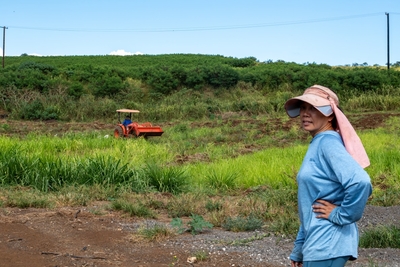
Noy Soukrasmy estimates her North Shore farm suffered about $100,000 in damage during the floods, just two years after she and her husband, Chai, moved here from Iowa. They are now drawing on retirement savings to restore their 15 acres next to Otake Camp.
The Soukrasmys’ losses are a small slice of the total $28 million in reported damages to Oʻahu farms from the March storms.
Noy Soukrasmy, 53, who was born in Laos but came here as a toddler in the 1970s, speaks English fluently. She has applied for just about every relief program she can.
The Soukrasmys were among the many who set up a GoFundMe page to help with their own costs of recovery, raising roughly $7,000.
Noy Soukrasmy also spent days volunteering at the Waialua Courthouse recovery hub, helping translate and interpret for other Laotian and Thai farmers. She remembers personally submitting at least 25 applications for government and community aid.
According to Agriculture Stewardship Hawaiʻi, which helped coordinate aid and quantify the damage in the wake of the floods, about one-quarter of the 300 farmers they have assisted so far were non-English speakers.
The nonprofit worked with the University of Hawaiʻi and other foundations to deploy translators, said Dave Dutra Elliott, the group's executive director.
“That really avoided it being a terrible situation where folks were almost entirely closed out” from accessing relief, Dutra Elliott said. “The barrier that's still significant is a lot of these programs, if you haven't worked with them… they feel really risky.”
A lot of the paperwork involved requires documented record-keeping and much of the funds are reimbursed after the land is rehabilitated, not before. Adding language barriers on top of that makes the process feel even riskier.
The state, meanwhile, has offered low-interest emergency loans but just four have been approved statewide, totalling $200,000. Thirteen more – worth $538,000 – remain in the application process.

In the Filipino farming community, the idea of taking a loan to rehabilitate farms is almost repellent, said Nelson Salvador, organizing director for Hawaiʻi Workers Center, which helped form the Filipino Farmers & Farm Workers Association of Waialua in the wake of the floods.
“They support their families back home in the Philippines,” Salvador said. “Having a loan would drag down their fiscal acumen.”
For Thai, Laotian and Cambodian farmers, the response is similar, Soukrasmy said.
“My first kind of reaction is, ‘Are they crazy?’” she said. “Who wants to go into debt if they’re certain they’re not going to make any income?”
The state Department of Agriculture delivered $1,500 checks to nearly 1,200 affected farmers in the floods' aftermath. Agricultural advocacy groups raised hundreds of thousands of dollars for flood victims, some of which also went to farmers. The City and County of Honolulu facilitated cleanup and other services but rejected a $5 million farmer relief fund proposal for this year’s budget.
Yet what the state, county and foundations together have provided is dwarfed by the need.
“We saw the math,” Dutra Elliott said. “The best chance to get bigger dollars involved is to really get the federal dollars deployed … and the federal dollars have the most strings attached.”
Agricultural groups identified the U.S. Department of Agriculture’s Emergency Conservation Grant program as the most fitting source of relief funding for the North Shore farmers. The program encourages them to rehabilitate their land by covering 75 to 90% of the cost of removing debris.
So far, about 250 farmers have applied for the program, said Arthur Keyes, acting state executive director for the USDA Farm Service Agency. Of those applications, 154 have been approved, representing $3.5 million. USDA staff are working “full throttle” to process applications and, Keyes said, the agency plans to extend the deadline for Oʻahu farmers past July 31.
“Where I am sitting, as long as I have the authority, we will continue to extend deadlines,” Keyes said, so long as there’s demand. He encouraged everyone to stop by the Honolulu office and take a few minutes to apply, and to take pictures of all the work they are doing on their own to revive their farms.
Soukrasmy has signed onto the USDA program and helped others follow suit. She doesn’t know how many from the Southeast Asian farmer community have applied but believes language and record-keeping requirements make it prohibitive for most.
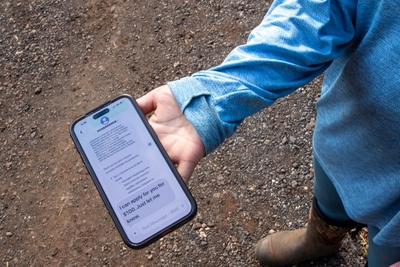
Language is such a known hurdle that farmers have received texts with offers to help them apply for federal programs. Just last week, Soukrasmy received a message from an anonymous number, offering to apply for a nonprofit’s grant program on her behalf – for $100.
Translating after the floods eventually became too much for Soukrasmy, especially when she started having to manage the community’s expectations, too. She pulled back to focus on her own farm.
“People were thinking, ‘We had a disaster, recovery’s going to happen in two weeks,’” she said. “It doesn’t work like that.”
‘It Won’t Amount To What We Lost’
Many don't know if they’ll ever recover. Noy and Chai Soukrasmy believe they’re barely halfway finished with their clean up, let alone the long process of revitalizing their soils and replanting their crops. All but their bananas and a few well-established trees perished.
In a five-acre field once abundant with eggplant, squash, bitter melon, green beans and okra, five-foot-tall guinea grass has taken hold. It would be impossible to even enter the field, had the Hawai’i National Guard not cut a path into it before they left.
The couple suspect the grass hides glass, metal and other debris — swept onto the land during the floods — so mowing the lot could be dangerous to them, or their mower. They’ll have to do it all by hand, meaning more weeks of 14-hour days.
They will be lucky if this tract of land yields a harvestable crop by the end of the year.
Before March, the Soukrasmys would haul their produce to markets every day of the week. They delivered to vendors at Waipahu Festival Marketplace, Marketplace at City Square and Pacific Supermarket, among others; on the weekend, they would ply their wares at the Aloha Stadium Swap Meet.
“If we don't rebuild, then a lot of the locals get hit” with higher grocery costs, Noy Soukrasmy said.
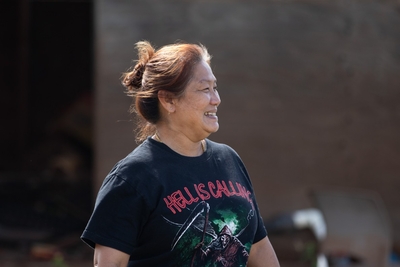
Even with her hands full with her own farm, Soukrasmy still assists other farmers where she can. She recently had sweet peppers delivered to her from a neighboring farm to help her Thai friend, Wan Kundet, satisfy standing orders with customers.
“If I don’t sell, I will get replaced,” Kundet said.
Kundet has had nothing to harvest on her land at Mahiko Farms since March, when six-feet-high floodwaters destroyed her lilikoʻi, okra and 200 recently planted papaya trees.
She and her partner Yai Sisombath had invested tens of thousands of dollars into their two-acre plot since 2019. So far they have received about $10,000 in assistance checks, from nonprofits and the government.
Their home was ruined, along with two cars, a delivery van and their tractor. Even if Kundet received triple what she has already gotten, she said, it would not be enough.
“Everything is so slow,” she said. “But even if we get money, it won’t amount to what we lost.”
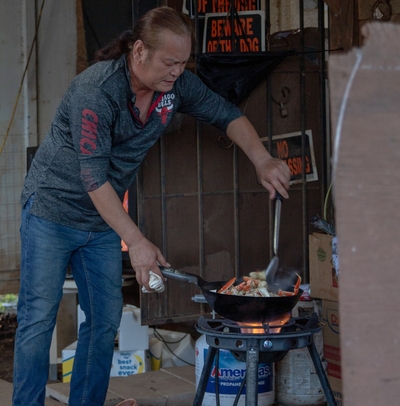
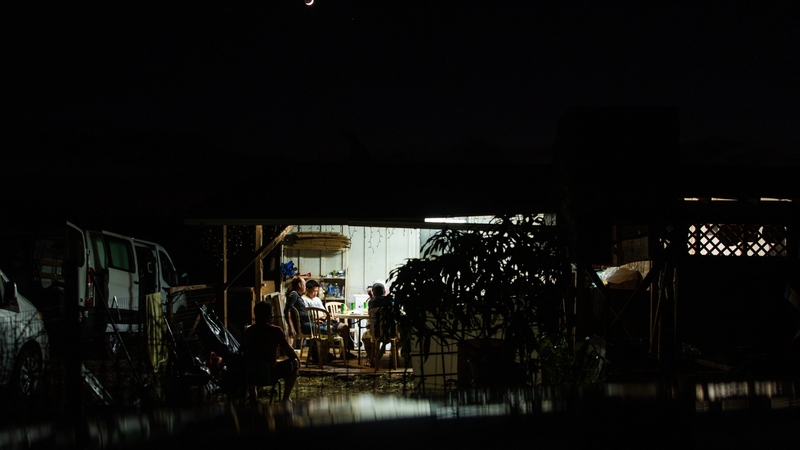
On a recent evening, their energetic dog Khao Neow – Thai for “sticky rice” – ran around greeting about a dozen Thai and Laotian farmers from across the North Shore, as they gathered for dinner on Kundet’s property. Sitting at a plastic table as the sun started to set, Sisombath, once a chef at a Thai restaurant in Kailua, prepared a meal while ’90s Thai karaoke music played.
The meal included poo pad pong karee, a savory crab stir-fry, spicy som dam with fermented fish paste, and deep fried dried pork. Drinks flowed.
Kundet, who immigrated to Hawaiʻi with her daughter in 2005, tries to recreate Thai life whenever she can: in the food, the language, and in building community relationships.
Amid the conversation and laughter, Phet Souksamly, the Laotian farmer who sleeps in his car, said he wants to improve his English — if he could ever find the time.
But the idea of doing anything other than resting after a day of hard labor is exhausting, he said. The others all agreed.
Honolulu, HI