Finance reports: Tennessee Democrats boost funding for key races in final push to election day
Oct 16, 2026 | 6:01 am ET
Description
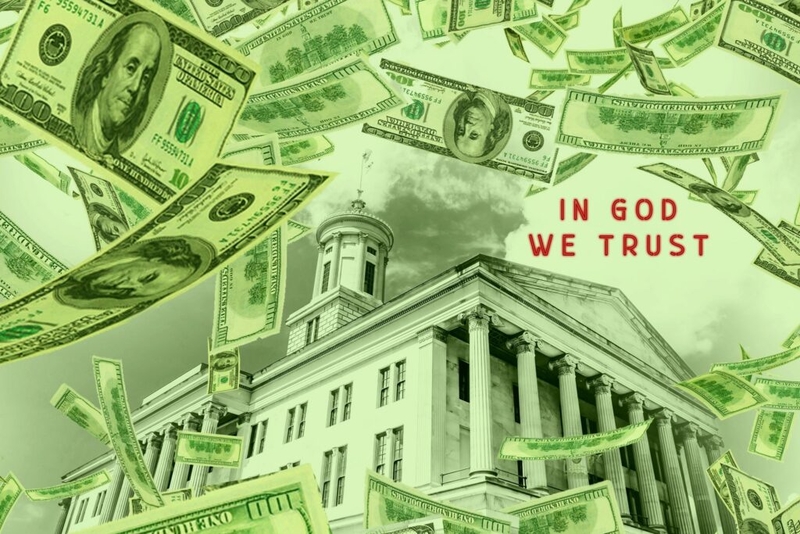
Tennessee Democrats are pouring money into a handful of target state House races in an effort to flip seats from Republicans. (Photo illustration: John Partipilo/Tennessee Lookout)
Campaign finance reports released Wednesday show Tennessee’s Democratic party and legislators pouring tens of thousands of dollars into select campaigns in an effort to flip Republican house seats.
Here’s a run-down of the most competitive races.
House District 97: John Gillespie (R) vs. Jesse Huseth (D)
Republican incumbent John Gillespie is once again facing Democratic businessman Jesse Huseth in the race to represent central Shelby County, parts of East Memphis and part of Cordova.
Tennessee’s House Democratic Caucus has made flipping this seat a priority in the 2026 election cycle, funneling $27,000 into Huseth’s campaign. Gillespie is the only House Republican to hold a seat in a district won by then-Vice President Kamala Harris in the 2024 presidential election.
The pair are evenly matched in terms of cash on hand leading up to Nov. 3: Gillespie has just over $84,000 left in his coffers and Huseth has a slight funding edge with nearly $88,700. Gillespie has an outstanding $25,000 self-endorsed loan, and Huseth has a $3,600 loan.
Huseth first challenged Gillespie in 2024, but Gillespie held onto the seat with 51.7% of the vote to Huseth’s 48.3%.
Gillespie brought in $50,800 in the third quarter of 2026, including a $5,000 contribution from Tennessee House Majority Leader William Lamberth’s political action committee. Other notable donations include $2,500 each from the Memphis Police Association PAC and the Memphis Fire Fighters Association PAC and a $1,500 contribution from the TIM PAC, associated with State Rep. Tim Hicks.
Huseth brought in $98,072 in the same fundraising period, with contributions coming from multiple states. This includes the $27,000 contribution from the state House Democratic Caucus, $15,400 from the Tennessee Education Association Fund for Children and Public Education PAC, $5,000 from The Progress Fund (a PAC funded by Knoxville developer Phil Lawson), $1,900 from the Ready PAC (tied to Nashville Mayor Freddie O’Connell), and other contributions from labor union PACs.
Huseth also received individual contributions from some notable Memphis and Nashville officials, including state House Minority Leader Karen Camper, Shelby County District Attorney Steve Mulroy, former Shelby County Mayor Lee Harris, District 8 Congressional candidate Heidi Kuhn and former Metro Nashville Law Director Wally Dietz.
Huseth reported more than $29,640 in in-kind contributions, including $22,000 of research and polling from the House Democratic Caucus and roughly $7,500 in voter mail from the Tennessee Democratic Party. Huseth’s largest expenditure this quarter was a $41,000 contribution to the Tennessee Democratic Party.
House District 80: Andrea Bond Johnson (D) vs. Julian McTizic (R)
Democrat Andrea Bond Johnson is vying against Republican Bolivar Mayor Julian McTizic for the District 80 seat being vacated by Democratic Rep. Johnny Shaw, who announced his retirement this year after serving since 2000.
The district includes portions of Hardeman, Haywood and Madison counties.
Bond Johnson raised nearly $28,000 in the third quarter, going into the Nov. 3 election with nearly $22,200 on hand. McTizic raised nearly $23,500, bolstered by thousands of dollars in contributions from Republican legislators hoping to flip the seat.
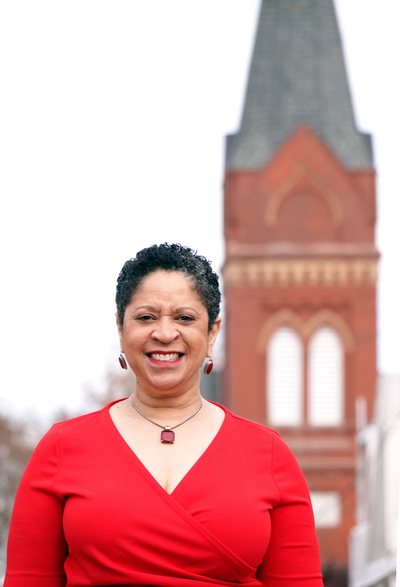
Bond Johnson reported receiving $1,000 from House Minority Leader Karen Camper and $2,500 from Madison United, a political action committee linked to a group of Jackson business owners.
Other contributions include $1,000 from O’Connell’s Ready PAC, $1,000 from former Tennessee State University President Glenda Glover, and $750 from the Davidson County Democratic Women Gwen McFarland fund. Beverly Shaw of Stephenson-Shaw Funeral Home donated $200, and former Madison County Sheriff David Woolfork donated $200.
Tennessee Sen. Page Walley, a Bolivar Republican, personally contributed $1,000 to McTizic’s campaign in addition to funneling $7,500 through his PBW PAC. A PAC connected to Rep. Clark Boyd, a Wilson County Republican, gave $1,500. McTizic also received contributions from local officials: $500 from former Madison County Mayor Jimmy Harris, $500 from Atoka Mayor Brett Giannini, and $300 from Richard Holland, vice mayor of Sardis.
Both candidates received $250 contributions from the Tennessee Forestry Association PAC.
House District 75: Michael Lankford (R) vs. Allie Phillips (D)
Republican incumbent Michael Lankford is running against Democrat Allie Phillips to keep the seat he was appointed to after the November 2025 death of Rep. Jeff Burkhart.
The district covers Western Montgomery County, including parts of Clarksville and Ft. Campbell.
Phillips, who is running for the seat a second time, goes into the election with more than $66,600 on hand after raising nearly $113,000 during the third quarter. Lankford raised about $40,500 and reported nearly $64,800 remaining.
Phillips’ contributions come from multiple states and include $15,000 from the House Democratic Caucus and thousands of dollars from various union-affiliated PACs. Phillips also received $1,000 from O’Connell’s Ready PAC, contributions from current Democratic legislators and donations from philanthropists Frank and Amy Garrison, Ripley Mayor Craig Fitzhugh, former Metro Nashville law director Wally Dietz and Nashville Council members Mike Cortese and Brenda Gadd.
She also received $1,900 from actress Amanda Seyfried, who produced a documentary about Phillips’ campaign. Phillips entered politics after losing her unborn daughter and being forced to travel out of state to terminate the pregnancy due to Tennessee’s near-total abortion ban.
Phillips spent $135,900 in the third quarter, including $30,000 for video ads, about $30,000 for digital fundraising and a $38,000 donation to the Tennessee Democratic Party.
Lankford’s funding includes thousands of dollars in contributions from Republican legislators, including $5,000 from Lamberth’s PAC. Other contributions include $1,000 from Amazon.com Services LLC, $1,000 from the Excellence in Public Education PAC, $500 from ATT Services INC, $100 from Circuit Court Judge Robert Bateman, and donations from trade association PACs and government relations firms.
Lankford spent around $39,800, including more than $11,500 on advertising and roughly $18,500 in contributions to the Montgomery County Republican Party.
House District 67: Ronnie Glynn (D) vs. Chris Lanier (R)
Democratic incumbent Ronnie Glynn is defending his seat against business owner and Clarksville-Montgomery County School Board member Chris Lanier. The district covers Clarksville and Austin Peay State University in Montgomery County’s core.
The House Democratic Caucus and Tennessee Democratic Party bolstered Glynn’s campaign with around $58,000 in advertising and mail in the third quarter, according to Glynn’s report.
Glynn has just over $34,600 on hand going into the election and reported raising nearly $42,000 this quarter. Lanier has $30,700 and raised $14,600.
Glynn received a $5,000 contribution from The Progress Fund, $1,900 from O’Connell’s Ready PAC, $1,000 from Amazon.com Services LLC and contributions from Camper, Rep. Bob Freeman, Rep. Jesse Chism and union PACs.
Glynn also recorded donations from Dietz, Fitzhugh, Glover, Clarksville Mayor Joe Pitts and Nashville Council member Burkley Allen.
He spent nearly $43,500, including a $20,000 contribution to the Tennessee Democratic Party.
Contributions to Lanier’s campaign include $5,000 from Lamberth’s PAC, $1,500 from Rep. Clark Boyd’s PAC and $1,500 from Rep. Tim Hicks’ PAC. Another $5,000 came from Republican Women’s groups and $500 came from the National Federation of Independent Business Tennessee PAC.
Lanier spent about $7,000, mostly on advertising.
House District 60: Shaundelle Brooks (D) vs. Eva Romero (R)
Democratic incumbent Shaundelle Brooks is facing Republican real estate broker and businesswoman Eva Romero for the District 60 seat, which represents eastern Davidson County.
Brooks, who entered politics after her son, Akilah DaSilva, was killed in a mass shooting at a South Nashville Waffle House in 2018, has held the seat since 2024.
Brooks has roughly $15,800 on hand compared to Romero’s $61,800, though Romero also has $40,100 in self-endorsed outstanding loans.
Brooks raised around $22,000 this quarter, including $1,250 from Davidson County Democratic Women, $1,000 from Camper, $1,000 from O’Connell’s Ready PAC, and several contributions from union and trade association PACs.
The Democrat also gained support from Davidson County Clerk and former Metro Nashville Council member Sharon Hurt, Nashville Council member Zulfat Suara, Metro Nashville Public Schools Board member Zach Young and gun safety advocates. She spent just under $8,000 this quarter, mostly on campaign work, travel and constituent meetings.
Romero was appointed to the Tennessee Housing Development Agency by Gov. Bill Lee, and her third quarter report shows contributions from real estate developers and builders. She also received $2,500 from Lamberth’s PAC, $500 from Rep. Aron Maberry, $500 from Latinos for Tennessee and $250 from conservative social media activist Robby Starbuck.
Romero spent around $23,600, including $8,500 on direct mail and $5,000 on consultants.
House District 59: Bill Hancock (R) vs. Mark Proctor (D)
Republican Bill Hancock and Democrat Mark Proctor launched their first campaigns to vie for Rep. Caleb Hemmer’s seat representing southern and western Davidson County. Hemmer announced he would not run for reelection after representing the district since 2020.
The House Democratic Caucus gave Proctor’s campaign a $65,000 infusion this quarter, bringing the caucus’ total contributions to Proctor to $81,200 this election cycle.

Proctor has more than $126,700 on hand going into the election compared to Hancock’s $157,300 war chest.
Hancock’s donors include Former CoreCivic CEO Damon Hininger and Carrie Hininger, several owners of real estate and development companies, the Davidson County Republican Party and Republican legislators. He also received $1,000 from Thomas Lehrman, a member of the Tennessee Public Charter School Commission and co-founder of investment firm Teamworth Ventures. Lehrman previously served as director of the Office of Weapons of Mass Destruction Terrorism in the U.S. Department of State.
Hancock spent nearly $106,300 this quarter, mostly on direct mail, digital advertising, canvassing and consulting.
Proctor’s contributions include $1,900 from Hemmer, $15,400 from the Tennessee Education Association Fund for Children and Public Education, $1,900 from Dietz, $1,900 from Ingram Industries Chairman John Ingram and multiple contributions from Democratic legislators or their affiliated PACs.
He also earned support from Metro Nashville Vice Mayor Angie Henderson, Metro Council member Burkley Allen, Fitzhugh, Metro Nashville Clerk Howard Gentry, Metro Judge Lynda Jones, Metro Council member Sheri Weiner and multiple union and trade PACs.
Proctor spent $92,000 this quarter, including a $40,000 contribution to the Tennessee Democratic Party, direct mail, databases and campaign workers. In-kind contributions include $16,200 in research from the House Democratic Caucus and $10,200 in mail from the Tennessee Democratic Party.
House District 18: Elaine Davis (R) vs. Bryan Goldberg (D)
Republican incumbent Elaine Davis faces another challenge from Democrat Bryan Goldberg for House District 18, which represents part of Knox County.
Davis was elected to the seat in 2022 as a Republican after switching party affiliations; she ran for Knox County Commission as a Democrat in 2006. Davis has about $64,300 on hand going into the election compared to Goldberg’s $79,800.
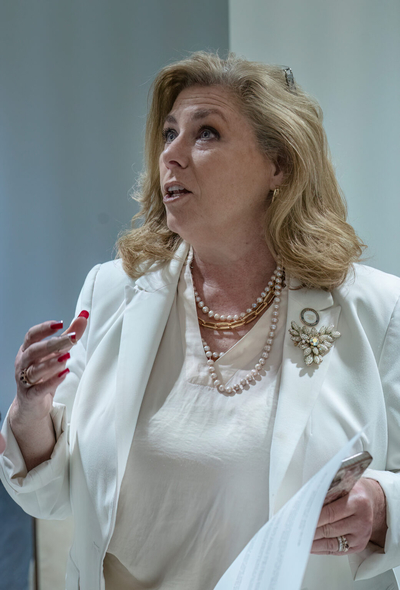
Goldberg’s total $75,500 third-quarter contributions include a $25,000 boost from the House Democratic Caucus, $5,000 from The Progress Fund and $1,900 from O’Connell’s Ready PAC. His donors also include former Knoxville Mayor Victor Ashe, philanthropists Stephen and Ann Bailey, Dietz, and H.M. Hashemian, president and CEO at nuclear engineering firm AMS Corporation.
Goldberg spent $88,000 this quarter, $40,000 of which went to the Tennessee Democratic Party. The party also provided Goldberg’s campaign with roughly $8,150 in in-kind contributions.
Davis’ $60,700 in third-quarter contributions includes $10,000 from Tennesseans for Student Success Action, $5,000 from Lamberth’s PAC, $2,000 from the Knox County Republican Party, and thousands of dollars from Republican legislators or their affiliated PACs.
Davis also received $1,900 from Knox County Chief Operating Officer and Harris Restaurant Group President Doug Harris, and $1,900 from hospitality business owner David Colquitt.
Davis spent $63,700 and has $20,000 in outstanding self-endorsed loans.
Senate District 13: Dawn White (R) vs. Angela Wynn (D)
Republican incumbent Dawn White brings a considerable war chest of more than $260,400 into the final pre-election push against Democrat Angela Wynn.
Wynn, a nonprofit executive and director of stewardship and donor relations for Tennessee State University, has roughly $3,600 on hand, and $3,000 in outstanding self-endorsed loans.
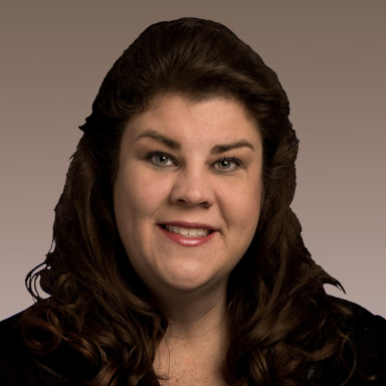
White’s $20,000 in third-quarter contributions include $3,000 from Middle Tennessee Business Leaders for Common Sense, $2,500 from the HCA Tristar Fund, $2,000 from a PAC funded by Texas-based short-term lender Community Choice Financial, and a combined $2,200 from John and Laura Arnold, co-founders of Arnold Ventures LLC.
White spent more than $86,000, including a $50,000 contribution to DawnPAC, her political action committee, and a $15,000 contribution to the Senate Republican Caucus.
Wynn recorded roughly $8,400 in contributions in quarter three, with around $1,500 coming from the Senate Democratic Caucus and $1,112 from Marlayna Trego, who ran for the House District 37 seat but lost in the Aug. 6 primary.
Nashville, TN