FEMA won’t help Texans after July 2026 floods as agency tells states to lead disaster response
Oct 21, 2026 | 2:51 pm ET
Description
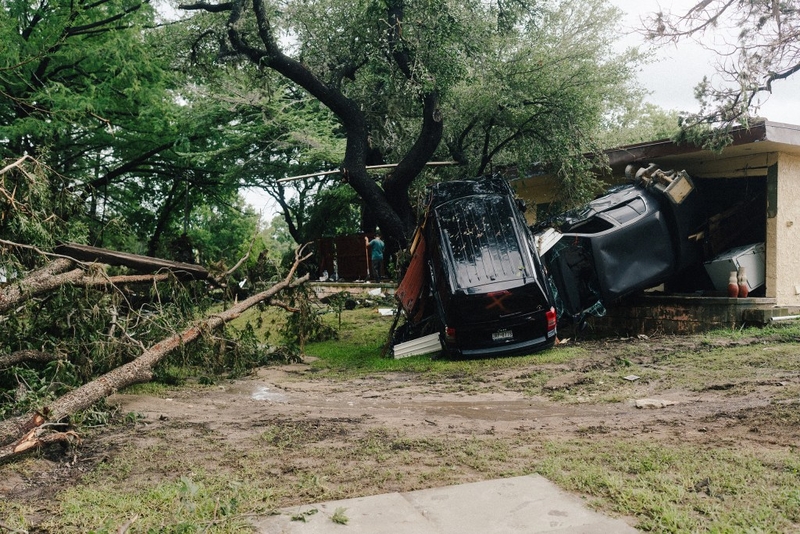
Damaged cars that washed away in the flood in Kerrville on July 16, 2026. (Brenda Bazán for The Texas Tribune)
The Federal Emergency Management Agency has decided against opening up funding for individuals needing help after the July 2026 floods in Texas, which swamped homes in Uvalde and damaged properties across Kerr County — in some cases for a second time in two years.
Gov. Greg Abbott and the Texas Division of Emergency Management are reviewing the decision and the process for appealing it, according to a statement from the governor’s office.
Disaster recovery experts say FEMA individual assistance funding is a critical way for residents to cover short-term costs such as making houses livable again, paying for hotels or other temporary housing and replacing lost items.
“FEMA individual assistance was the big thing people were counting on and looking towards to be able to help them rebuild in a significant way,” said Allison Brim-Estelle, a field director with a national association for disaster survivors called Rebuild.
FEMA said in a statement it was committed to helping the state recover and reviews requests for help closely, including by considering factors such as insurance coverage, other recent disasters, the profile of the population impacted, disaster-related unemployment and state fiscal capacity.
“FEMA remains focused on empowering states to take the lead on their community response and recovery activities and is dedicated to providing support when federal assistance is warranted,” the agency said in a statement.
The Trump administration has shifted expectations to states to play a bigger role in disaster recovery. FEMA Administrator Cameron Hamilton at a National Emergency Management Association conference on Tuesday said states “must have the appropriate financial reserves” to get the recovery process going after a disaster, Politico reported.
“FEMA individual assistance was the big thing people were counting on and looking towards to be able to help them rebuild in a significant way.”
Allison Brim-Estelle
Texas Division of Emergency Management Chief Nim Kidd, along with Abbott, served on the FEMA Review Council assembled by President Donald Trump to recommend ways to overhaul the agency. The council’s report released in May said states and local governments need to lead disaster response, rather than always relying on or expecting the federal government to do so.
Last month, Kidd warned state legislators during a public hearing that they would have to start changing how they fund disaster recovery. Texas only pays $37 million of the state’s budgeted $1.9 billion for emergency response for 2027, Kidd said — or 2 percent.
The difference is covered by federal funding.
“With changes at the federal level, and some of the slowdown in reimbursements from the federal government, we will be in a place where we could find ourselves in a very different situation this time next year,” Kidd said.
Kerr County community leaders and residents were among those already grappling with the lack of FEMA funding for individuals. Residents and businesses there were rebuilding from devastating flooding in July 2025, which killed more than 100 people and wiped homes from their slabs, when storms struck again in July 2026 across a wide area and caused further damage to businesses and homes.
Kerr County had received an outpouring of support from nonprofits and individuals in 2025, but leaders found themselves with less financial assistance and volunteer help in 2026 and a much longer wait for FEMA aid.
Abbott announced in September — more than six weeks after the recent flood — that FEMA would help some local governments recover costs, but the decision on whether to help individuals was still pending then.
The Community Foundation of the Texas Hill Country last week said it had so far provided about $1.3 million for emergency financial assistance for 947 households in the Hill Country, along with temporary housing help for 58 households.
“Families are continuing to recover without FEMA individual assistance, and philanthropy and local nonprofits are helping fill critical gaps,” Chief Executive Officer Austin Dickson said.
Still, most communities after disasters “raise just a fraction of the dollars that are needed for recovery, which is long and expensive,” Dickson said at the Texas Tribune Festival in September.
Rebuild, the survivor association, has been advocating for the state to create a fund for disaster relief for individuals, Brim-Estelle said. She said her work in Kerr County has shown the need “is absolutely still very real” as people try to piece together funds out of pocket or from churches or organizations to repair their homes as they can.
Many are crowded in with other family or have left the area, she said.
“The bottom line is that Governor Abbott owes Texas families and flood survivors an explanation and a plan here,” Brim-Estelle said. “Do you believe FEMA should provide individual assistance to survivors in Texas or … is the state going to pick up the tab?”
In a statement, Abbott’s spokesperson Andrew Mahaleris pointed to Abbott’s Oct. 15 request to suspend federal tax deadlines and waive late fees for people and businesses affected by the flood, and a July 22 announcement extending the window for people receiving Supplemental Nutrition Assistance Program, or SNAP, benefits in some counties to apply for help replacing food lost or destroyed in the floods.
“Texas will deliver every necessary resource to communities impacted by the July storms and floods,” Mahaleris said.
Disclosure: Austin Dickson has been a financial supporter of The Texas Tribune within the past five years. The Texas Tribune is a nonprofit, nonpartisan news organization that is funded in part by donations from members, foundations and corporate sponsors. Financial supporters play no role in our journalism. Find a complete list of them and more information about our financial and disclosure policies here.
Austin, TX