Federal judges revoke key permit for natural gas pipeline project
Sep 08, 2026 | 3:20 pm ET
Description
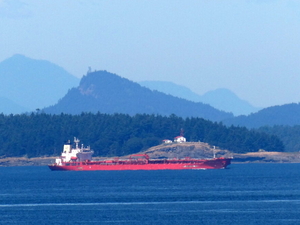
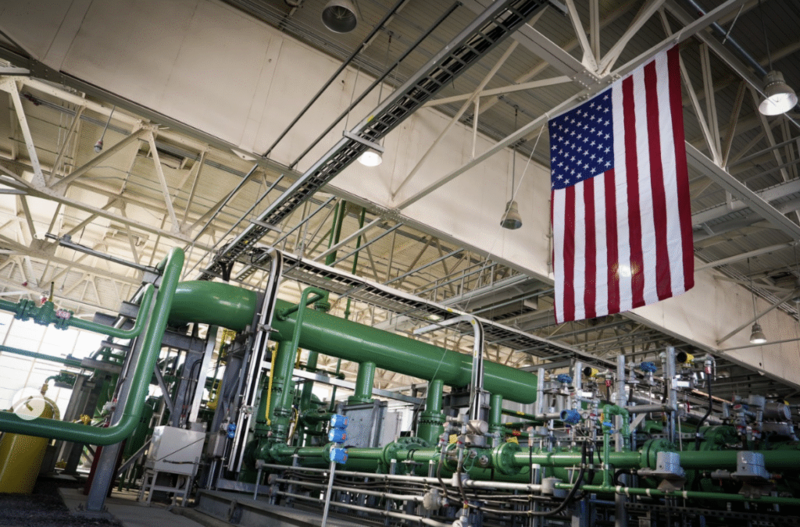
A appeals panel on Tuesday vacated a state permit that energy developer Williams needs to build its proposed Northeast Supply Enhancement pipeline. (Photo courtesy of the U.S. Department of Energy)
A federal appeals panel on Tuesday vacated a key permit an energy developer needs to build a controversial $1 billion underwater natural gas pipeline between New Jersey and New York.
U.S. 3rd Circuit Court of Appeals Judge Jane Richards Roth, writing for a three-judge panel, said the New Jersey Department of Environmental Protection acted in an “arbitrary and capricious” way last fall when it issued a water quality certification to energy developer Williams to build its proposed Northeast Supply Enhancement pipeline through the Raritan Bay.
State environmental officials failed to require Williams to prove it has adequately protected the bay from buried contaminants before it begins to dredge the seabed, Roth wrote.
“A key safeguard is missing: no prescribed NJDEP approval stands between the unfinished plans and dredging,” she wrote.
The state’s decisional documents also do not explain how the project complies with New Jersey’s water quality standards, she added.
“Technical expertise does not relieve an agency of its obligation to articulate the basis for its decision,” Roth wrote.
While the judges vacated the permit, their decision doesn’t kill the proposed pipeline altogether. Instead, it boots the project back to the Department of Environmental Protection for officials to fully explain why they approved the permit, or act otherwise.
“On remand, NJDEP remains free to supplement its explanation, require additional submissions or analyses, issue a new or revised certification, or reach a different result. We leave those specific choices to NJDEP,” Roth wrote.
Larry Hajna, a department spokesman, declined to comment.
Williams spokeswoman Cherice Corley said the company is reviewing the court’s decision, adding that the project “remains critical to strengthening energy reliability and meeting the region’s growing energy demand.”
Critics have complained the project would not directly benefit New Jersey residents because it would link gas supply between Pennsylvania and New York City.
Environmentalists also have warned it would endanger marine habitats, expose toxins buried in the bay floor, threaten wetlands in Somerset County where Williams plans to build a compressor station, and degrade the environment in Middlesex and Monmouth counties, where a new pipeline would be built to connect existing lines.
They celebrated Tuesday’s ruling, noting that state officials had rejected the project in 2019 and 2020 in part over concerns about its impact on water quality before approving the water quality certification last November. Another state environmental panel in May approved the final permit Williams needed to proceed with the project, which Williams subsidiary Transcontinental Gas Pipeline Company first proposed in 2017.
Attorney Jackson Garrity represented the Natural Resources Defense Council in a lawsuit it filed in November challenging the water quality certification. He called Roth’s ruling “a win for the waterways of New Jersey, the people who rely on them, and the rule of law.”
“This pipeline would not only have destroyed wetlands across New Jersey, but also would tear up the sea floor of Raritan Bay. The DEP’s approval of the water quality permit failed to address key water quality concerns that the public has been raising for years,” Garrity said.
Another group of environmentalists, including the New Jersey League of Conservation Voters, New York/New Jersey Baykeeper, and Food & Water Watch, filed a similar lawsuit the same day as the National Resources Defense Council, and the appellate court consolidated those challenges.
Allison McLeod, who heads the New Jersey League of Conservation Voters, called Roth’s decision “a monumental victory for New Jersey’s environment, public safety and working families who are tired of paying higher prices to further enrich billionaire oil and gas executives.”
She urged state officials to reject the project altogether and commit to renewable energy.
“This project would represent a capitulation to Donald Trump’s extreme fossil fuel agenda — sacrificing our public health and driving up costs to make billionaires even wealthier,” McLeod said. “As today’s decision demonstrates, New Jerseyans’ right to clean water is not negotiable. Now, the state has a prime opportunity to deliver a major win for affordability, public safety and clean air and water.”
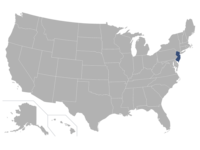
Trenton, NJ