Federal judge says AI deepfake election law violates First Amendment
Sep 18, 2026 | 3:19 pm ET
Description
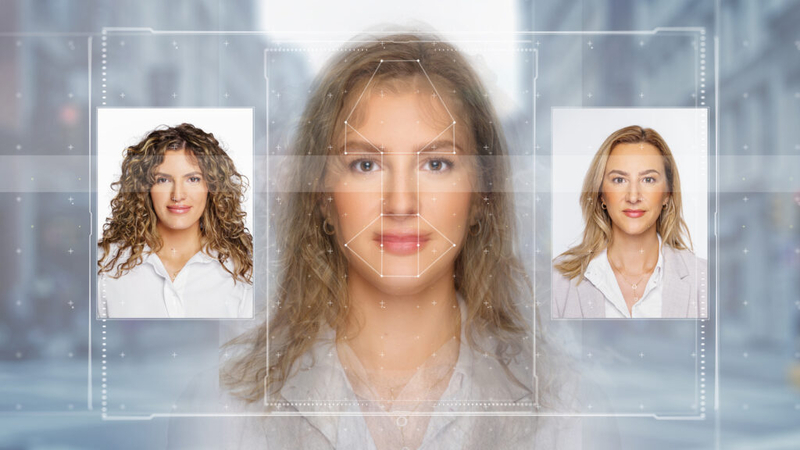
Photo illustration by Getty Images.
A federal judge ruled in favor of a political action committee accused of breaking a new election law regulating the use of AI deepfakes this week. U.S. District Judge Susan Watters said that the new Montana law violates the First Amendment and infringes on the most protected speech of all – political speech.
However, the ruling was narrow and only impacted thethe plaintiffs in the case.
The case centers on mailers that were sent out in Montana before the June primary that used AI to alter images of candidates, and several lawmakers targeted by the political action committee filed complaints with the Commissioner of Political Practices.
Artificial-intelligence assisted programs can create realistic-looking images, video and audio of a person, something lawmakers across the country have looked to address.
Rep. Eric Albus, a Hi-Line Republican; former legislator Jennifer Carlson, running for a state House seat in the Bozeman area; and Rep. Llew Jones, running for state senate, filed the complaints earlier this year.
The committee, which lists Dan Bartel, a former Republican legislator, as its treasurer, ran mailers depicting some of those candidates with Pride flags and buttons.
Watters ruled in favor of Bartel and the PAC, saying that because the law treats “identically deceptive media differently based solely on whether its message is weaponized or deployed to elevate a candidate” that the plaintiffs are likely to succeed in establishing that it constitutes “viewpoint-based” discrimination.
She went on to write that it was “presumptively unconstitutional.”
Yet, the ruling only applies to Dan Bartel and his PAC, and does not impact the law for the rest of the state. The decision, and its limited reach, Watters said is part of recent Supreme Court case law, calling on federal court judges to limit or curtail the use of broad preliminary injunctions to strike down laws.
Injunction, or not?
A recent Supreme Court case, Trump v. CASA, which dealt with a presidential executive order regarding immigration, drastically changed how injunctions are handled in the country’s highest court.
In that case, the conservative majority said that a district court should have decided the case in favor of only the organizations that were party to the case, not to the general public. The court held that the Judiciary Act of 1789 doesn’t give federal courts the right to impose universal injunctions.
Watters mentioned both Trump v. CASA and the Supreme Court’s ruling on injunctions in her decision.
The state, which defended the bipartisan AI law passed by the Legislature, argued that a preliminary injunction “be no more burdensome than necessary,” and asked Watters to limit the scope of the ruling, pointing to Trump v. CASA. The Plaintiffs in the case had asked for an injunction which would have made the new law moot.
Watters wrote the court lacked authority under the Judiciary Act of 1789 to issue a “universal injunction” and, “to comply with the mandate that equitable relief be no more burdensome than necessary, relief must be limited to the named plaintiffs.”
Plaintiffs in the case were represented by the Hamilton Lincoln Law Institute and Montana attorney Matthew Monforton.
“This is an important victory for political speech and the First Amendment,” said Adam Schulman, a senior attorney at the law institute. “The government cannot censor speech just because that speech uses AI technology.”
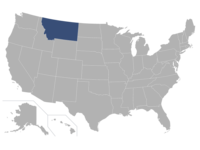
Helena, MT